



Decoding The Debate On Electoral Reforms
Dr. Rafique Khan
16 Dec 2025 4:00 PM IST
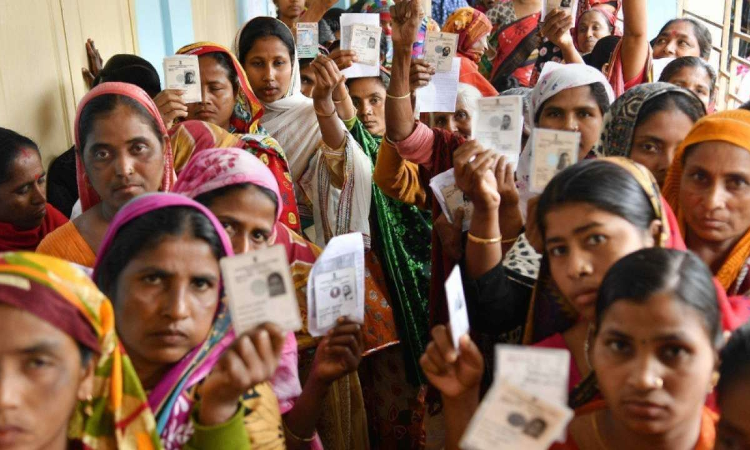
The winter session of Parliament has reopened an expansive debate on electoral reforms, with the Opposition repeatedly stressing that reform must strengthen not weaken the institutional foundations of Indian democracy. As members flagged concerns about voter roll revisions, the functioning of the Election Commission, and broader issues of electoral integrity, it became clear that reform cannot be confined to isolated procedural adjustments. Instead, India now stands at a juncture where questions of transparency, autonomy, accountability, and representational fairness must be examined holistically. The push for reform is driven by a dual reality: the electoral system's enormous operational scale and its growing vulnerability to political, technological, and financial distortions. This moment demands a deeper reflection on what genuine democratic repair requires.
The Constitutional Architecture of Free and Fair Elections
The framers of India's Constitution located electoral integrity at the heart of democratic governance. Article 324 created an independent constitutional body the Election Commission to insulate electoral processes from executive interference. Articles 327 and 328 empowered Parliament and state legislatures to craft legislative frameworks for elections, subject to constitutional constraints. Universal adult franchise, adopted without hesitation in 1950, was a radical act of egalitarian faith, anchoring India's democracy in the principle that legitimacy flows from the people and not from any elite vanguard. Despite this robust foundation, the electoral system has evolved under pressures that the framers did not fully anticipate exponential population growth, technological disruption, corrosive monetary influence, and the expansion of political competition across every layer of governance. These pressures have revealed structural frailties that require systemic repair. Electoral reform, therefore, is not an act of political benevolence but a constitutional necessity to preserve the sanctity of representative government.


The Law Commission's Long Engagement With Electoral Reform
The Law Commission of India has been the intellectual backbone of electoral reform debates for nearly four decades. Its major reports- 170, 244, and 255 do offer a composite framework for understanding the system's weaknesses and the principles that must guide reform. The 170th Report (1999) was a landmark document that examined issues ranging from political defections and internal democracy in political parties to the role of money and criminality in elections. It emphasised the need to regulate political parties through transparency mandates, financial disclosures, and democratic internal processes. This Report also warned that electoral reform must not privilege stability at the cost of accountability; the credibility of elections depends not merely on the act of voting but on the integrity of political institutions contesting them. The 244th Report (2014), addressing electoral disqualifications, reaffirmed the need to safeguard the purity of the electoral process by preventing individuals with serious criminal charges from contesting elections. It argued that the unchecked criminalisation of politics corrodes public trust and distorts voter choice. The Report stressed that electoral reform should ensure that public office is not captured by those who undermine the rule of law itself. The 255th Report (2015), the most comprehensive of the three, examined criminalisation, campaign finance opacity, the misuse of government advertising, and the increasing influence of unregulated digital campaigning. It underscored that the electoral system cannot remain credible if vast segments of political financing remain hidden or if technological tools are deployed without oversight to manipulate voter behaviour. Together, these Reports present a clear message: electoral reform must address the full ecosystem political parties, campaign finance, criminality, media and digital ecosystems, voter roll accuracy, and institutional autonomy.
Electoral Distortions: Money, Misinformation, and Manipulation
The most pressing threat to India's electoral democracy today is the escalating role of unregulated money. Campaign expenditure routinely exceeds statutory limits, while vast channels of political funding remain opaque or shielded from public scrutiny. The judiciary's intervention in striking down secretive funding mechanisms has reaffirmed the constitutional necessity of transparency, yet the underlying distortions persist. Without a robust public financing framework, transparent donor disclosures, and strict auditing mechanisms, elections risk becoming economic contests rather than democratic ones. Parallel to monetary opacity is the rise of digital misinformation and algorithmic manipulation. Elections across the world now face a new challenge, the weaponisation of data to influence voter behaviour. India's vulnerable digital ecosystem, characterised by low media literacy and high social media penetration, is particularly susceptible to targeted disinformation campaigns. Electoral reform must therefore grapple with the technological architecture of campaigning, ensuring that democratic persuasion does not mutate into digital coercion.
Voter Rolls, Electoral Management, and Institutional Trust
Accuracy of voter rolls remains a foundational requirement for credible elections. The recurring discovery of deletions, duplications, and exclusion errors has raised serious questions about electoral management. While technological tools like Aadhaar integration have been proposed, they carry risks of wrongful disenfranchisement and data vulnerability. The Election Commission must strengthen its verification systems, adopt transparent auditing processes, and enable real-time grievance redressal mechanisms. Institutional trust is equally vital. Recent debates have highlighted apprehensions regarding the autonomy of the Election Commission. An institution designed to function as a constitutional sentinel must be protected from executive influence through structural safeguards, transparent appointment mechanisms, and parliamentary oversight. Electoral reform cannot succeed if the referee of the system is perceived as compromised.
Global Comparisons: Lessons From Mature and Emerging Democracies
India's electoral reform debate is not insular; democracies around the world confront similar challenges. In the United States, concerns about partisan gerrymandering, voter suppression, and the unchecked flow of political money have triggered demands for federal electoral oversight and campaign finance reform. The European Union has strengthened its digital regulations to curb misinformation, mandating platform accountability and transparency in political advertising. Germany offers valuable lessons on electoral stability without compromising federal autonomy, maintaining staggered elections that allow continuous democratic feedback. Australia's system of compulsory voting and independent boundary commissions demonstrates how procedural design can enhance participation and fairness. South Korea and Taiwan have implemented stringent rules on digital campaigning, signalling the importance of regulating algorithmic influence. These experiences illustrate that robust electoral reform is a global imperative and that India must adopt a multi-dimensional approach rather than a single thematic reform.
The Democratic Value of Constant Accountability
Elections in India are not merely events; they are instruments of continuous accountability. The staggered nature of elections across the country ensures that governments remain responsive throughout their tenure. Local, state, and national elections produce overlapping cycles of political evaluation, preventing democratic stagnation. The vibrancy of Indian democracy stems from this temporal plurality. Attempts to centralise or homogenise electoral rhythms must therefore be approached with caution. Reform should expand the democratic sphere, not compress it. The goal is not electoral tidiness but electoral truth.
A Way Forward: Towards a Holistic Reform Agenda
India's electoral future requires a roadmap grounded in constitutional morality and democratic pluralism. Reform must begin with strengthening the Election Commission through statutory and institutional guarantees of independence. Transparent appointments, fixed tenure protections, and parliamentary oversight mechanisms can restore public confidence.
Campaign finance reform must become an urgent national priority. Transparent disclosures regulated corporate funding, and the introduction of partial state funding could transform the political landscape. Digital regulation is equally critical. Clear rules on political advertising, data usage, and algorithmic accountability should be codified to prevent technological manipulation. Political parties must be brought within the ambit of institutional regulation. Mandating internal democracy, transparent financial audits, and candidate selection processes can revitalise the party system and enhance the legitimacy of representation. Finally, voter empowerment must remain at the heart of reform through improved roll accuracy, voter education, grievance redressal, and inclusive participation of marginalised groups.
Reform as Democratic Renewal
Electoral reform is not merely a legislative exercise but a constitutional duty. It must strengthen the moral, institutional, and representational foundations of Indian democracy. The Law Commission's collective wisdom, global comparative insights, and the contemporary political moment all point toward the same conclusion: India requires deeper, more structural reforms that enhance autonomy, transparency, and accountability. Reform must serve democracy, not efficiency alone. The challenge before the nation is not how to engineer elections but how to enrich them. The measure of reform is not uniformity or convenience but whether it expands the democratic promise of the Constitution. India stands at a pivotal moment one that demands bold reform grounded in constitutional fidelity and democratic imagination.
Author is Assistant Professor (Law), School of Law, UPES Dehradun. Views Are Personal.


