



Ethanol, AI And Agriculture: Who Has Right To India's Depleting Groundwater?
Dil Prithviraj Sen & Aakash Shirudkar
30 Sept 2026 3:00 PM IST
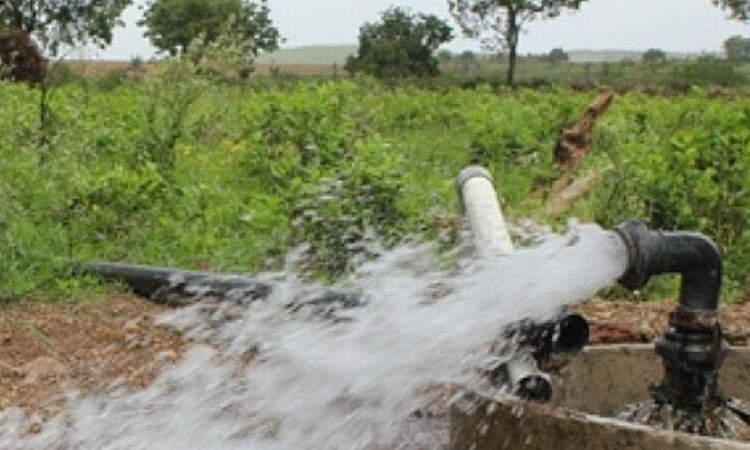
India is asking one depleting resource to feed its people, fuel its cars and power its technological future: groundwater.
In Bhattu Kalan, a block of Haryana's Fatehbad district, a distillery cleared to draw water for a quarter of a million litres of grain ethanol a day is coming up despite the government itself calling it over-exploited. Fatehbad pumps groundwater at 117% of the rate it replenishes, and yet the plant has received environmental clearance anyway. This case study is symptomatic of a larger tendency of the Indian State asking a depleting source to feed its people, fuel its cars and power its digital future, all at once and with exceptional resolve.
This collision would be alarming in a water-abundant world. It is far more consequential as global water reserves approach what a UN Institute in a report has called “bankruptcy.” Its 2026 report warns that “long-term water use has exceeded renewable inflows and safe depletion limits,” leaving some water supplies beyond recovery. As the world's largest groundwater extractor, India sits at the centre of this reckoning.


The impending impasse raises a legal question as much as an environmental one: how far can the State allocate a depleting public resource when its own laws and Constitution demand its protection?
Three Pillars, One Resource
The Indian food supply chain makes or breaks on groundwater. A Jal Shakti National Compilation claims that It waters roughly three in five of the country's irrigated fields and even supplies drinking water to an overwhelming majority of rural households. And yet one in four of India's assessed groundwater units is rated "over-exploited", "critical", or "semi-critical", with the most alarming depletions in the farm belts of Punjab, Haryana, Maharashtra, Tamil Nadu, and Karnataka.
On this already thin ice, India is stacking two more demands.
The first is Ethanol. NITI Aayog estimates the water footprint of sugarcane-based ethanol at roughly 3000 litre per litre of ethanol. Politicians and motorists squabble over ethanol's impact on the cars they drive, while the much more concerning impact is on the groundwater of our precariously agrarian country.
The second is the government's simultaneous encouragement of data centres, through tax breaks as a part of the Viksit Bharat 2047 AI strategy. Data centres in India consumed roughly 150 billion liters of water in 2025, a figure projected to rise to about 358 billion liters annually by 2030. Yet while a 2026 Ministry of Electronics and Information Technology (MeitY) press release projects the exact electricity demands of AI and large-scale data centres and outlines the infrastructure required to meet them, it provides no comparable projection of water demand or framework for integrating groundwater availability into AI infrastructure planning.
The problem is not that India is pursuing any one of these ambitions. It is that they are being pursued independently despite a shared dependence on groundwater. Without coordination, these ambitions could exhaust the very resources they depend on. That is not merely a misstep in planning. It raises a question of governance and legality: who gets to draw from a resource the State is legally obliged to protect?
India's Groundwater Efforts
India's current regulatory attempts are not without merit. In 2020, the Ministry of Jal Shakti launched the Atal Bhujal Yojna (AJY) to improve resource management in 229 groundwater blocks across seven “water-stressed” states. The programme aimed to map and budget water using existing local governance structures, reporting measurable gains in groundwater levels in 180 of 229 blocks two years into the programme.
But the scheme closed in October 2025. AJY could map groundwater stress and encourage communities to conserve water, but it could not compel extraction to remain within sustainable limits. The State has increasingly precise tools to identify where groundwater extraction is unsustainable. But what remains weaker is the framework for deciding how agriculture, industry, drinking water and new infrastructure should share a depleting resource. India has substantial law governing water pollution, but far less governing the depletion and allocation of groundwater itself.
When the Law Meets the Aquifer
That gap matters because environmental law is not premised on waiting for irreversible damage. In Vellore Citizens Welfare Forum v. Union of India, the Supreme Court held that environmental authorities must “anticipate, prevent and attack” environmental degradation, while making the polluter bear the cost of repairing the damage it causes. The Water Act provides the statutory machinery to protect water from pollution and over extraction of groundwater alike, but India's recent shift from criminal punishment towards monetary penalties has weakened that architecture: the Jan Vishwas (Amendment of Provisions) Act, 2023 decriminalised several offences under the Environment Protection and Air Acts, while the Water (Prevention and Control of Pollution) Amendment Act, 2024 replaced imprisonment for several Water Act violations with financial penalties. Meanwhile, based on the advice and intervention of experts, the NGT has consistently held that groundwater extraction must account for availability and avoid further depletion.
The consequences of getting this allocation wrong will not remain on a spreadsheet. They will appear first in harvests and livelihoods, and eventually in the physical landscape itself. In Delhi, groundwater over-extraction has already been linked to land subsidence of as much as 17 cm in a year.
A Crisis Governed by a Nineteenth-Century Law
There is a reason for the government's seeming inaction in the face of such damning evidence: groundwater is still largely treated as an appurtenance to land under the Indian Easements Act, 1882. The basic premise is simple: “whoever owns the land” has rights over the water beneath it. There is no comprehensive volumetric cap and no licence required of the farmer who sinks a borewell. The Model Bill for the Conservation, Protection and Regulation of Groundwater was drafted expressly to replace this colonial framework, but has been enacted by only a handful of states. The Central Ground Water Authority can restrain industrial extraction in notified blocks, but its regulatory reach does not extend to the irrigation that accounts for most groundwater withdrawals. So when a distillery is cleared over an over-exploited aquifer, the law offers little to prevent it.
The Way Forward
The fix does not require new machinery. It requires the political will to balance development with the competing demands being placed on groundwater.
We have the Ministry of Jal Shakti's own data identifying where groundwater depletion is most severe. We also have government data showing where ethanol plants and data centres are being developed. Overlay the two, and a map of India's most vulnerable collision zones emerges.
Fatehbad is one such example. This is not a facility merely located in the general vicinity of a stressed zone, but a named water-intensive distillery, part of India's ethanol infrastructure, located on a named over-exploited block, with both facts confirmed by government records. And it is an example, not a fringe case.
Such collision zones could be designated “Groundwater Bankruptcy Districts” and folded into NITI Aayog's Aspirational Districts framework, which already pools schemes, fixes district-level responsibility and tracks progress. Designation would trigger a water budget based on the sustainable yield of the district's aquifers, built from local surveys and overseen by panchayats and the district administration. The Collector would reserve essential supply for drinking and existing livelihoods, monitor extraction and, crucially, make new industrial or ethanol demand conditional on demonstrated water capacity. Atal Jal has already shown that the community-budgeting half of this can work in 180 blocks. The task now is to give that logic teeth, and a legal spine.
India has the maps, the monitors and the institutions. What it lacks is the wiring between them. Without it, the country risks building its next growth engine on the very resource it is quietly draining—and discovering, one over-exploited block at a time, that it cannot make ethanol, run a data centre or grow a crop on ground that has already given up its water.
Views are personal.


