



Examining Bar Council's Role: Profession, Pedagogy And Dual Mandate
Yogi Chaudhary & Kapil Kumar Verma
5 Sept 2026 8:00 AM IST
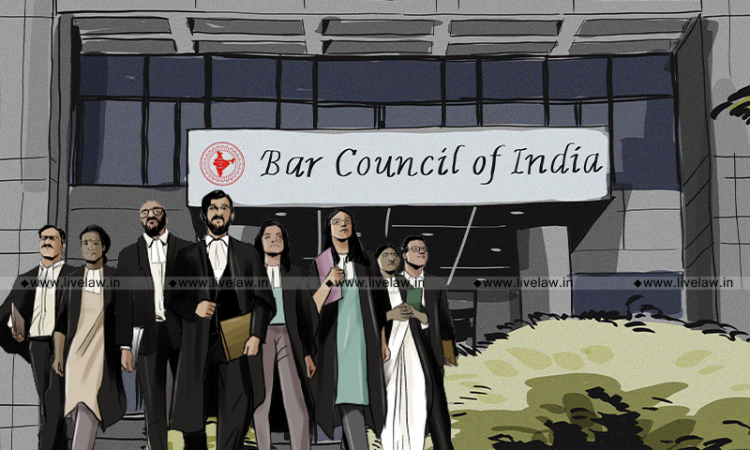
In the wake of the recent controversy created by the Bar Council of India, which imposed a blanket ban on the 2026 batch of NALSAR University, withdrew it within an hour, and later apologised to the students, there are calls for a larger enquiry. Do we need a Bar Council? The Bar Council of India, constituted under the Advocates Act of 1961, discharges dual functions: on one hand, regulation and supervision over the legal profession and, on the other, regulatory control over legal education. But there are persistent issues stemming from mismanagement, conflicts of interest, underperformance, and negligence.
As an Education Regulator
Section 7 of the Advocates Act, 1961, lists the functions of the BCI. It is responsible for laying down standards for legal education in consultation with universities in India and for imparting such education. The reality is quite alarming. As for the former, there are serious concerns about the quality of legal education. Recently, a law student was awarded zero marks in a semester examination conducted by Allahabad University. On challenging the marking, the Allahabad High Court in XXX v. State of U.P. dismissed the petition and transferred the answer sheet to the Bar Council of India and the Law Commission of India to examine whether legal education standards are at par with global standards. It is also worth noting that the order was passed by the court on 17th July and to date has not been actioned by the Bar Council. In contrast, the NALSAR controversy arose at the end of July, and within two weeks, the Bar Council issued a notice restricting students from registration. Academics, the foundation for students, receive limited attention.


In a University, teaching, which is the core competency of professors and academics, has limited control over their subject matter and structure. While teaching is being standardised by the Council, the question remains who understands the philosophy of education better, teachers or the Council. Even in their limited attempt to regulate education, there are examples of non-standardisation of syllabi among law universities in the country.
For example, criminal law (BNS or IPC) is taught for two semesters at National Law Universities, whereas it is taught for only one semester in law courses offered by the National Forensic Science University and its affiliated colleges. In National Law Universities, teaching is reading-based (with students provided with reading material), and classes revolve around discussing the paper and reflecting on it; however, in most government and private universities, classroom discussion is confined to the Bare Act and does not emphasise discussion or reflection. This illustrates a lack of understanding of the philosophy, methodology, and psychology of education within the council. The committee on education was supposed to be a space to provide a platform ot educationalists, academics and civil society, but no information on the same was available on the Council website. The Council, unlike its counterparts in other common law jurisdictions, tries to do too much with limited capacity.
The role of councils in common law (England and Wales) has usually been limited to regulating professional conduct and conditions of admission to the bar, and to recognising solicitors and barristers. Education is usually left to universities, where the bar's suggestions are recommendatory, and there is a continuous dialogue among stakeholders. Thus, the professional standard is the key mandate that the Bar Council must engage with.
The Bar Council not only prescribes the professional standards and conduct of advocates but is also entrusted with the duty of spreading legal education in consultation with universities. The consultation with law universities is intended to give universities space to experiment and the autonomy to develop a variety of curricula and specialisations. But this dual authority has failed to address the issue of legal education in developing brilliant legal minds and often pitted one against the other. This places universities in a tough position to comply with the Bar Council's mandate regarding grading, attendance, and courses (19 compulsory and many clinical courses). In fact, universities end up neither innovating on their curricula to produce thinkers nor producing professionals the Bar so desires, as is evident from the poor AIBE pass records.
Even its own attempt to spread legal education has failed in terms of access, as the maiden attempt to set up a law university is charging astronomical fees, which makes it exclusionary for the marginalized. A law degree at the IIULER, Goa, costs around a minimum of 35 lakh to 50 lakh, depending upon the CLAT rank, which is way more than any National Law University.
As a Profession Regulator
The Bar Council conducts the All India Bar Examination annually. Despite it being an open-book examination where the candidates are allowed to carry bare acts, the passing percentage of the students in recent years is 66% this year, 69% in 2025, 48% in 2024, and 49% in 2023, which shows that the BCI is not able to ensure a basic standard of legal education in law universities. The Supreme Court in In Re: Strengthening of the Institution of Bar Associations (2024) has already raised concerns about the low standards of AIBE. Charging hefty fees of Rs. 3500 is yet another issue that the Supreme Court in Kuldeep Mishra v. Bar Council of India (2024) suggested be reduced, at least for poor law graduates.
Section 7 also provides that BCI may establish funds for providing financial assistance to the indigent, the disabled, or other advocates; providing legal aid and advice; and establishing law libraries. But that remains only on paper. The issue of providing financial support to young advocates is long-standing. Recently, the issue was raised before the Bombay High Court. The petitioners relied on a circular passed by the BCI recommending payment of a minimum monthly stipend of Rs. 20000 in urban areas and Rs. 15000 in rural areas to junior advocates. where notices have been issued. The court observed, "Grievance is expressed before us that, across the board, this recommendation and the order passed by the Bar Council of India remain a paper tiger, without having any teeth for their implementation, thereby leading to large-scale unrest amongst junior lawyers who have joined the Bar with the hope and aspiration of practising at the Bar and rendering justice. ” Earlier, the Supreme Court had itself endorsed a proposal for creating a fund for young lawyers. The Delhi High Court also passed an order for providing financial assistance to lawyers. However, none of the orders has been implemented by the BCI.
The enrolment of advocates is undertaken by the state bar councils. The enrolment fees charged by the state bar councils ranged exorbitantly from 10000 to 50000. In 2024, the Supreme Court took cognisance of the exorbitant enrolment fees across states in Gaurav Kumar v. Union of India (2024), and the fees were reduced to Rs 750. However, the State Bar Councils later started charging additional fees on different grounds, such as welfare fees. The Bar Council did not take any action to bring uniformity in the fees. Instead, in the Draft Advocates (Amendment) Bill, 2026, it recommends increasing fees to Rs. 22500, which is again a burden on marginalised and poor advocates.
Way Forward
The role of the Bar Council, both as an academic and a professional regulator, has failed to do justice to either. The quality of this noble profession has suffered. Thus, it is important to question why we really need a special regulator. The University Grants Commission has handled other courses much more efficiently. The academic regulation of legal education can be undertaken by the UGC in consultation with the law universities and colleges. A committee comprising law experts and other academic experts from the commission can decide the syllabus for all law universities, and the UGC can ensure compliance with the syllabus and standards of legal education.
If we need the BCI at all, it must be confined to regulating the legal profession, with the rider that it looks into serious issues such as high enrolment fees and financial assistance for young advocates. The BCI is no expert on academics, as evidenced by the declining standards of legal education. We must be reminded that the idea of NLUs, which are performing better today, did not originate with the Bar Council but with academicians better equipped to perform the task.
Author Yogi Chaudhary is a Ph.D. Scholar at RMLNLU & Kapil Kumar Verma is a Ph.D Scholar at JNU, Centre for Law & Governance. Views are personal.


