



Gender Neutrality In Personal Laws: A Critical Analysis
Rajneesh Kumar
15 July 2026 3:00 PM IST
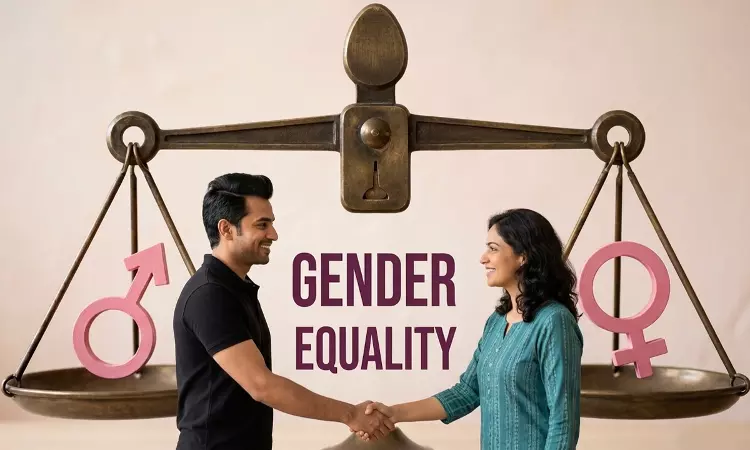
The idea of having personal laws that are gender neutral is often linked to the idea of equality as stated in the constitution. However, the idea of gender neutrality in personal laws is much more complex and contested. In India, the demand for gender neutrality in personal laws emerges from the conflict between the constitution and the personal laws of the communities. While it seems simple and straightforward to argue for gender neutrality in personal laws, such as ensuring the law does not assume that only women require protection from the law, the reality is more complex. Personal laws are laws that govern individuals and their personal relationships with others. These laws include aspects of religion, patriarchy, inheritance, and government in one law. Therefore, the idea of gender neutrality in personal laws is not a simple idea, but one that requires a more in-depth examination of whether the law is truly promoting gender equality or if it is simply rewriting the personal laws in a gender-neutral manner.
The strongest constitutional argument for gender neutrality in personal laws comes from Articles 14, 15, and 21 of the Indian Constitution. The principles of equality before the law, non-discrimination, and the right to dignity provide a strong foundation for reforming personal laws to be gender-neutral. However, the concept of constitutional equality is not the same as enforcing sameness between genders. The Supreme Court of India has repeatedly ruled that equality means ensuring substantive equality rather than formal equality between genders. This viewpoint is crucial in the context of personal laws that function in a deeply unequal society. A law that appears to be gender-neutral on paper may still lead to unequal outcomes for different genders in reality. For instance, a gender-neutral rule for maintenance may appear to be fair to both genders, but since women perform the majority of unpaid care work and tend to stay out of the labour market, they face poverty after separation from their husbands. Thus, the law that claims to be gender-neutral ends up reproducing the patriarchal society of India through the back door.


One of the biggest problems with the discourse around gender neutrality is that it borrows too much from the ideas of liberal individualism without taking into account the structural inequalities that exist in society. The idea that if men and women are treated equally by the law, then justice is done to both genders ignores the social reality of India in which women face many disadvantages over men. Advocating for a gender neutral law in areas like maintenance, custody, and matrimonial property may seem progressive, but without the redistribution of economic resources to women, it simply ignores the social disadvantages that women face in comparison to men. A law that is neutral to the gender that ignores the unpaid domestic labour that is often performed by women is not progressive, but is rather blind to the social reality of the lives of women in Indian society. The law should not simply ask if the law is the same for both genders, but whether the law creates a just society for all individuals, regardless of gender.
At the same time, it would be intellectually dishonest to ignore that some personal law provisions are themselves intensely discriminatory against men and gender-diverse persons. Personal laws together with secular family law provisions establish permanent family structures which operate through a binary system that separates men from women. Society tends to believe men should earn money while women should depend on others and non-binary people remain unnoticed. The binary system which used to dominate society no longer fits the way people interact in modern times. The law creates two levels of exclusion because it denies any form of gender identity recognition. The world demands gender neutrality because women fight for their rights and people need to develop better understanding of others. The legal system needs to stop thinking about family and marriage and kinship based on two genders because people now identify themselves beyond this basic framework.
The state operates neutrality as a dangerous system which creates major threats to its national security. The legal system together with government officials use gender neutrality through selective application which functions as a rhetorical tool instead of their actual dedication to fairness. Organizations use neutrality to postpone their first reform because they want to avoid political fights and they want to create the impression that their lack of action leads to fair decision-making. The Uniform Civil Code has been under discussion in India for many years but the government continues to alternate between making empty statements and choosing to remain silent about this issue. The organization chooses to hide behind cultural and harmonious language while it fails to conduct meaningful reforms which stem from its core principles. The system creates obstacles for reform because it chooses to delay change which results in political consequences. The state shows no sign of neutrality because it continues to support personal laws which maintain discriminatory practices. The law operates against pluralism because it permits religious freedom to override constitutional duties which constitutional authorities should perform.
The problem develops additional levels of complexity when we analyse protection-based legal rules which currently exist. Women still experience ongoing discrimination because of their past and present social disadvantages which exist in multiple legal systems. The process of taking away gender-based legal protection fails to protect women because it does not change the whole structure of legal welfare systems. The maintenance and divorce systems which adopt gender-neutral language become unfair through their failure to understand how women face different financial situations and must handle caregiving responsibilities and experience social discrimination because of their work. People face a false choice between two options during the gender-neutrality discussion because they believe these options represent the full range of possibilities. That is a wrong framing. The more relevant question is whether the law should be gender-neutral in language, gender-responsive in structure, and gender-just in outcome. The first without the second and third is cosmetic.
Another point that is often overlooked is that personal law reform in India is often trapped within the politics of identity rather than the ethics of rights. Personal law reform is often framed as an attack on religion, community, and culture. Such framing is politically convenient as it allows the focus to be shifted away from the inequalities that exist within personal law towards the defense of identity of the groups whose personal laws are being targeted for reform. The right to practice any religion cannot extend to the right to discriminate. The Indian Constitution provides for the freedom of religion but does not protect the principles of a patriarchal society. However, the state often avoids making such a statement. As a result, personal law is allowed to become a zone of constitutional exceptionalism where the principle of equality is diluted in favour of the principles of the community. This is not an example of pluralism within India; rather, it is an example of legal fragmentation within the country that places a disproportionate burden upon those individuals who are already marginalized within the community, specifically women and individuals of a lower status within the family.
The most critical viewpoint of the current reform discourse is its failure to link family law with economic justice. Personal law determines more than marriage and succession; it controls access to housing, land, care, and wealth. In a country where property is concentrated and few women own assets, family law is a key area of economic redistribution. The rhetoric that personal law is gender-neutral ignores the problem of property inequity between men and women. Though a woman may be considered equal to a man in personal law, she can become disinherited in the country because the property is controlled by the patriarchal family networks. A genuine critique of personal law must go beyond the rhetoric of equality between men and women in personal law and advocate for material equality between them. Without redistribution of property, the idea of neutrality in personal law is a formalist illusion.
Human societies have begun to understand that male and female categories do not fully represent the entire spectrum of human identity. The current personal law discussions about individual rights have made personal law discussions about individual rights become more complex because they now include discussions about LGBTQ+ rights and transgender rights and legal recognition of various identity expressions. The practice of establishing gender-neutral personal laws needs to surpass basic equality between men and women. The system would maintain two separate categories which would exclude anyone who fails to match these established classifications. Family law needs to decide if it should support multiple family structures which include chosen families and same-sex relationships and Trans identities without making all families follow the traditional path of heterosexual marriage and natural parenthood. The legal structure which India has today strongly blocks this possibility from happening. Courts recognize dignity and privacy rights but family law statutes continue to block their implementation. The discovery shows that achieving neutrality becomes impossible because the basic legal framework depends on limited heteronormative concepts.
Another critical issue in regard to the laws is enforcement. Many of the laws are weakly enforced by the government and courts. Many people are unable to access the courts due to the costs and delays associated with court litigation. Additionally, many individuals are pressured to settle their legal issues through alternative means other than the courts. Though many of the laws are written to be gender-neutral, they do not take into account that many of the groups mentioned in these laws are unable to access the courts, such as poor women, rural individuals, and those from marginalized communities. Many of these legal disputes are resolved outside of the courts. Furthermore, the burden of entering into litigation is also gendered and based upon one's class in society. A poor woman who must enter into litigation to secure maintenance or custody of her children is in no way the same situation as a financially secure male who is litigating for the same issues.
The way forward is not to reject the idea of gender neutrality altogether but to redefine it. The personal laws of India should move towards a model of gender justice rather than neutrality or equality. This means eliminating all forms of discrimination against women and non-binary individuals. It also means recognizing the gender identities of those who are non-binary. The law should be tested to see how it impacts women and non-binary individuals. The law should ask the following questions: who benefits from the law, who is disadvantaged by the law, and who is left behind by the law? The reform of the personal laws should be based on the concepts of gender equality, economic fairness, and constitutional dignity for all individuals in India. In some cases, gender-neutral laws are the best option; in other cases, laws that recognize the gender and sex-based vulnerabilities of women are still justified until the structural inequalities of Indian society are eliminated. The point of reform is not to preserve the patriarchy in India; the point is not to erase the vulnerabilities of women. The point is to create a law that works for the world as it is presently, and to work towards creating a world as it should be.
Gender neutrality in personal law is a necessary project for the country's constitution, but it is not a virtue that will automatically carry itself out. If the country pursues personal law reform in a careless manner, gender neutrality can become a slogan used by technocrats to conceal the inequalities that persist in the country. However, if the country pursues personal law reform in a critical manner, gender neutrality can be a transformative tool to overcome the issues of patriarchy and legal exclusion of individuals of genders other than male and female. The goal of personal law reform in India should not be to create neutrality in the laws, but rather to achieve justice. Neutrality should only be a goal if it serves the goal of justice in the personal laws of India.
Note- Since it is a critical write-up, the in-text references/citations has been excluded to maintain analytical flow and argumentative consistency.
Author is a PhD scholar at School of Law, Pondicherry University, Puducherry. Views are personal.


