



Gendered Grammar Of Cultural Anxiety
Shubham Kumar
12 Sept 2026 1:00 PM IST
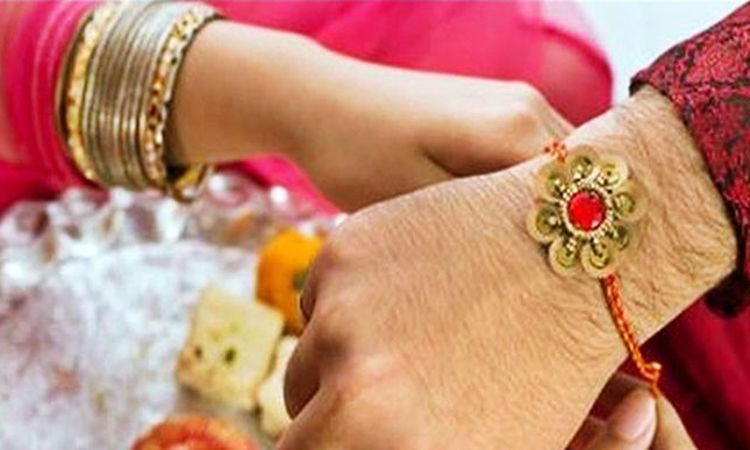
There is something revealing about a society that can look at a brother and sister celebrating Raksha Bandhan and decide that the sister's outfit is the most urgent thing in the frame. GIVA's festive advertisement showed a in an ivory bralette-style blouse, tying a rakhi to her on-screen sibling and then to her dog. Actor Kangana Ranaut called it “intentionally creepy” and asked why someone would tie a rakhi to her brother wearing “bikini/undergarments”. She later widened her objection: where were the parents, halwa-puri, tilak, akshat, incense and diya? A festival, she argued, is an “aesthetic expression of a culture and civilisation”.
Sanon responded with greater economy: “When will we stop telling women what to wear?” Culture and traditions, she added, are “in her heart, not in her neckline”. GIVA subsequently withdrew the advertisement because it had “inadvertently hurt the sentiments of some segments of society”. A fairly ordinary festive campaign had accomplished something remarkable. It turned a blouse into a civilisational question.


Culture, worn correctly
Kangana Ranaut is perfectly entitled to prefer a Raksha Bandhan with the diya, tilak, family and halwa-puri. Rituals carry memory, and advertising routinely flattens them into something photogenic enough to sell jewellery. She may find GIVA's version shallow, unrecognisable or simply bad advertising. But there is a considerable distance between this is how I celebrate my festival and this is how a woman ought to look while celebrating hers. The first preserves a tradition. The second appoints oneself its dress inspector.
Women are familiar with this inspection. Moral policing rarely introduces itself as control. It arrives more politely, through words such as appropriateness, modesty, dignity, family values and culture. There are clothes deemed suitable before elders, clothes unsuitable after dark, clothes appropriate for worship and clothes a woman from a “good family” is expected to know better than to wear. The remarkable achievement of these rules is that they rarely need to be written down. Women learn them through looks, comments and consequences. Society may update almost everything else with great enthusiasm, but when cultural anxiety strikes, it displays an impressive ability to locate the emergency somewhere around a woman's neckline.
This is why Sanon's response deserves more attention than the usual celebrity comeback. Saying that culture resides in her heart rather than her neckline rejects the assumption that clothing can serve as evidence of cultural fidelity. A brother does not become less of a brother because his sister wears a bralette. A sibling relationship does not suddenly acquire sexual meaning because her midriff is visible. Indeed, describing the interaction as “creepy” because of her clothes risks doing something peculiar: importing a sexual gaze into a relationship where none existed, and then blaming the woman's clothing for its arrival. Moral policing has long perfected this sleight of hand. Sexualise the woman first; discipline her for being sexualised afterwards.Indian constitutional law has had to confront precisely this habit of converting assumptions about women into rules about how they should live. In Anuj Garg v. Hotel Association of India, the Supreme Court rejected a restriction on women's employment that was justified in the language of protection but rested on assumptions about their vulnerability. The Court's concern was with paternalism becoming a reason to limit women's choices.
The connection is even more striking in Aparna Bhat v. State of Madhya Pradesh. The case arose after a court granted bail to a man accused of sexual harassment on the condition that the complainant tie a rakhi on him. In setting that condition aside, the Supreme Court cautioned courts against stereotypes that women are inherently in need of male protection, should be submissive according to notions of culture, or can somehow be held responsible for conduct directed at them because of the clothes they wear. The setting here is entirely different, but the underlying habit is familiar: attaching meanings about character, propriety and cultural fidelity to a woman's clothing that she did not choose for herself.A thread strong enough to change
The more interesting challenge Sanon posed to convention was not her blouse. She explained that she and her sister tie rakhis to each other because “we know we can protect each other just as much as a brother would”. Her dogs receive rakhis because they are family too. One may find the latter endearing or excessive. Neither response requires a cultural emergency. The sister-to-sister rakhi is more significant: it takes a familiar symbolism, in which protection traditionally travels from brother to sister, and makes protection reciprocal. The woman is no longer simply its recipient. She can make the promise herself. There is a feminist distinction worth preserving here. Care does not require guardianship, and protection need not confer authority over the person being protected.
This is how traditions remain alive. Generations inherit rituals and negotiate with them. The rakhi itself has carried meanings beyond a single familial script. Tagore famously used it during the anti-partition mobilisation in Bengal as a symbol of solidarity across communities. The context was entirely different, but the history makes the point: an old thread has long been capable of carrying new meanings.
Ranaut can locate Raksha Bandhan in the diya, tilak and halwa-puri she remembers; Sanon can locate it in reciprocal protection and an enlarged understanding of family. Millions of households will practise versions resembling neither. Trouble begins with that small but authoritarian word, the: the proper clothes, the correct ritual, the authentic family, the Indian way. Add enough definite articles and a civilisation begins to resemble an instruction manual.
Pluralism asks for something more difficult than agreement. It asks us to live with other people attaching meanings to culture that we may dislike, reject or even find absurd. Ranaut need not approve of Sanon's Raksha Bandhan for Sanon to have one. The freedom to cherish a tradition cannot quietly become the authority to curate everybody else's version of it. That distinction matters particularly when criticism leaves the realm of disagreement and begins producing erasure.
When offence earns a veto
That makes GIVA's response the weakest part of the episode. The company said its campaign had hurt the sentiments of “some segments of society” and withdrew it “out of respect”. The phrase defeats its own logic. Some segments means precisely that there was no settled cultural verdict. Some disliked the advertisement, others defended it, while many presumably performed that increasingly radical democratic act of seeing something they disliked and carrying on with their day. Only one group received a remedy. The advertisement disappeared for everyone because some wanted it gone. Offence graduated from an opinion to a veto.
This is moral policing adapted neatly to the social-media age. Outrage supplies amplification, corporations calculate reputational risk and withdrawal arrives dressed as sensitivity. GIVA was legally free to remove its campaign and commercially free to decide that jewellery sells better without a culture war attached. But capitulation does not become respect merely because a press statement calls it so. When sufficiently loud offence repeatedly secures erasure, we create an obvious incentive to be louder and more offended next time.
The irony is especially sharp on Raksha Bandhan. A festival built around protection produced a controversy in which a woman's clothes were policed to protect the sanctity of a sibling relationship, while an ancient civilisation was presented as requiring protection from her blouse. Sanon offered a better inversion when she said sisters can protect one another. Perhaps our understanding of culture could use the same confidence. There is room for Ranaut's diya, tilak and halwa-puri, and for Sanon's bralette, sister and dog. A tradition that has survived centuries of argument, migration and reinvention is unlikely to meet its match in an ivory blouse.
The rakhi is a thread of affection and solidarity. When we use that thread to prescribe how a woman must dress, behave or belong, we have not protected tradition. We have merely found a more respectable vocabulary for controlling women.
Author is a Lawyer based in Delhi. Views are personal.


