



Gig And Platform Workers Under Code On Social Security, 2020: Coverage, Portability, And Enforcement Challenges
Ankita Singh
3 Aug 2026 8:00 PM IST
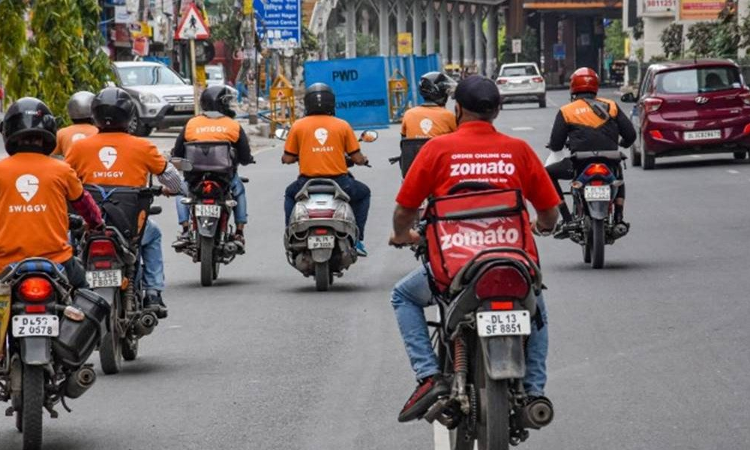
Representational Image (Courtesy : PTI)
The nature of work has undergone paradigm shift. Earlier people chose traditional 9 to 5 jobs. In the 21st century there has been shift from 9 to 5 jobs to flexible working hours. The people are moving towards short-term, task-based, contractual work. People are giving priority to this kind of work called gig work. Gig work is a modern work arrangement where people themselves choose their working hours, work for multiple clients and are specialised in particular skill. Moreover, gig work is considered outside employer-employee relationship. Gig work has origin in the western countries and gradually it spread to whole world. Now we can easily notice gig and platform worker in the streets of India. Gig work is characterised by certain features like flexibility, skill-based work, algorithmic control, multiple sources of income and lack of social security etc. Platform work is a subset of gig work. Platform work is a work arrangement that uses digital applications and serves as an intermediary that connects sellers and buyers. Examples of platform-based aggregators include Zepto, Amazon, Uber, Rapido, Blinkit, Swiggy, Zomato, Urban Company etc.
The Central Government implemented Code on Social Security, 2020 on 21stNovember, 2025. This Code replaces nine existing labour laws and consolidates them. This Code is a milestone step in the history of Labour Laws Legislations. The Code for the first time gives statutory recognition to gig and platform workers. The Code defines the term, gig worker and platform workers, aggregator etc. Moreover, the Code not only recognises the gig and platform workers but entitles them to certain social security benefits like insurance, health benefits, maternity benefits, creche etc. The Code also prescribes the registration process for the gig and platform workers. Moreover, the Code enables the State and the Central Government to formulate and implement social security schemes for the welfare of gig and platform workers. The Code also expressly specifies the contribution that is required to be made by the aggregators.


Gig economy is rising exponentially. According to report of NITI Aayog, the gig and platform workers in India are expected to reach 2.35 crores in the year 2029-2030. There are certain growth drivers of gig and platform work, namely, internet accessibility, spread of smartphones, rapid urbanisation, growth of startups, favourable Government initiatives and rise of Multi-National Companies. The gig force is the present and the future labour force. People are inclining towards the gig and platform jobs because of certain reasons like low level of education, skill based work, low entry barriers and flexible working hours etc. Further, many Multi-National Corporation are engaging gig and platform workers due to reduced costs. One of the most important characteristics of gig work is this arrangement is outside employer-employee relationship. The gig and platform workers are not categorised as employees. Even the Code on Social Security does not grant them status of employees. As the gig and platform are denied employee status they are kept out of purview of certain basic social security benefits. Employees enjoy basic social security benefits like Employees Provident Fund (EPF), Employees State Insurance (ESI), gratuity etc. which are not available to gig and platform workers. Therefore, gig and platform workers are more vulnerable to uncertainties and vagaries of life.
There are some limitations of the Code on the issue of coverage. One most important limitation is discretionary nature of scheme formulation. There is use of expression “may” for formulation of schemes. There is no compulsion for the Government to formulate social security schemes for the welfare of gig and platform workers. Moreover, there is absence of minimum floor of guaranteed benefits. This means there is no provision for gig and platform workers that makes them entitled to certain minimum benefits. Moreover, the registration process is problematic. The mandatory Aadhar linkage keeps many gig and platform workers out of the purview of registration process and consequently, social security schemes. The Code puts obligation on the aggregator to contribute towards social security fund. Again, the Code gives percentage range not the exact percentage. The Code discusses the role of Central and State Government. However, the Code does not specify the Central and State Government's contribution or funding formula for the implementation of social security schemes. This might create confusion, conflicts, uncertainty and delay in formulation and implementation of such schemes. Further, despite statutory recognition to gig and platform workers, the Code falls short of granting them status of employees. The employees under the Code have provided with more benefits related to social security schemes like Provident Fund, Gratuity etc. Denial of employee status to gig and platform workers keeps them out of the ambit of such benefits. Moreover, the Code does not confer benefits of ESI, EPF and gratuity to gig and platform workers. Accordingly, the gig and platform workers are at great disadvantage. Further, there is no provision related to grievance redressal mechanisms in case of dispute between the gig and platform workers and the aggregator. This is another drawback of the Code. As they don't have employee status their legal remedy is limited. Hence, we can conclude that though there is statutory recognition of gig and platform workers but there is scope of improvement in coverage of gig and platform workers under social security schemes.
Portability of benefits is an essential feature of social security. Portability allows accrual of benefits even while switching jobs. Portability of benefits is available to employees through Employee Provident Fund Organisation (EPFO)'s Universal Account Number (UAN). The Ministry of Labour and Employment launched e-Shram portal for registration of unorganised and gig and platform worker. This e-Shram portal facilitates creation of national database for unorganised, gig and platform worker. The e-Shram portal creates unique identity of unorganised, gig and platform workers. However, the e-Shram portal allows portability of registration rather portability of benefits. Further, the Code on Social Security do not have express provision on portability of benefits in case of gig and platform workers. Moreover, there is no similar model in case of gig and platform workers like that of EPFO's UAN. It can be concluded that there is no portability of benefits for gig and platform workers.
The Code has mandated Aadhar linked registration which can left several gig and platform workers out of registration process due to non-availability of Aadhar. Moreover, there are certain practical barriers to registration like digital literacy and digital divide, lack of documentation, low awareness level, exclusion of migrant workers, multi-platform engagement etc. Another key issue in the registration process is self-registration by the gig and platform workers. As education level of gig and platform workers is low, they experience difficulty in self-registration. A solution to this issue is aggregator driven registration process. Another issue on which the Code is silent is the inter-platform or inter-state mobility challenges faced by gig and platform workers. There is no express provision regarding the same. Hence, there is high chance that the gig and platform workers lose social security benefits while shifting across platforms or states i.e. there is no portability of benefits in case of inter-state or inter-platform mobility.
There are some recommendations that could improve portability of benefits in case of gig and platform workers. Firstly, the portable individual benefit account should be created for each gig and platform workers that remains constant throughout their professional life. Secondly, there should be shared contribution liability across multiple platforms. Thirdly, there should be digital integration i.e. e-Shram as a potential universal gig worker registry.
Under the Code, there is no provision for establishment of grievance redressal mechanism for dispute faced by gig and platform workers. The Code prescribes the post of inspector-cum-facilitator for conducting inspections, advising employees and employers regarding compliances mentioned under the Code, examining any person, causing production of documents, search and seize register, records, etc. Hence, there is absence of specialised grievance redressal system for gig and platform workers. Nor the Code prescribes any tribunals or appellate authorities for addressing grievances of gig and platform workers.
If the aggregators do not comply with the specific compliance then they would attract general penalty as mentioned in Chapter XII of the Code. Therefore, the Code does not prescribe penalties exclusively for aggregators i.e. the Code does not have separate chapter on penalties imposed on aggregators in case of non-compliance. Moreover, the Code does not mention specific penalties for aggregators where they do not register gig and platform workers, non-reporting of data on gig and platform workers, improper or false reporting of financial accounts, none or delayed contribution towards social security fund for the welfare of gig and platform workers etc. The penalty provision for aggregators in case of non-compliance remain inadequate and ineffective. The Code leaves gaps in imposing penalties against aggregators. This is another limitation of the Code. The Code only prescribes general penalties applicable to all employers and not aggregators specifically. This mechanism do not cause any deterrence to defaulting aggregators.
The Code provides that social security schemes would be funded by the State Government, Central Government and the aggregators. However, there is no clear funding and contribution mechanism under the Code. The Code establishes Social Security Fund dedicated to betterment of gig and platform workers. The Code does not give precise share of each contributor to the fund i.e. Central/State Government and the aggregator. Accordingly, this leads to a situation to confusion and conflict among these parties. It is limitation of the Code that it specifies range instead of exact percentage of the contribution made by the aggregators.
Lastly, Code on Social Security needs improvisation to remove existing gaps in coverage, portability and enforcement in order to increase the reach of social security benefits to the gig and platform workers.
Author is a PhD Scholar at Indian Law Institute. Views are personal.


