Green Competition: Why India's Competition Act Must Account For Environment
Divyaansh Kharbanda
3 Jun 2026 10:16 AM IST
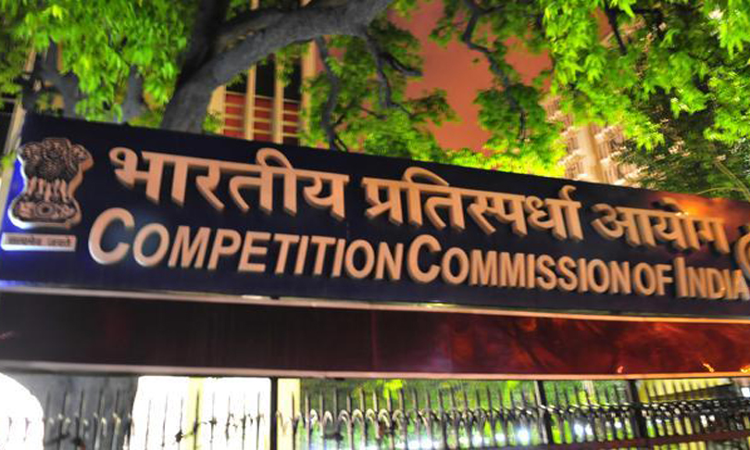
India has transformed how it thinks about corporate wrongdoing. The Jan Vishwas (Amendment of Provisions) Act,2023 decriminalized over 183 provisions across 42 Central Acts, converting criminal penalties into civil ones with enhanced monetary fines. The aim is straightforward, ease of doing buisness, not jail terms should be the default response to corporate non-compliance. The Competition (Amendment) Act, 2023 reflects the same instinct with heavier penalties, faster process but no prison bars for most violations.
This is a sensible evolution. Overcriminalization has historically produced under-enforcement. Prosecutors hesitate when the consequence is a conviction rather than a fine. But as India redesigns its regulatory architecture around financial deterrence, one question has been conspicuously absent from the conversation, which is what does any of this do for the environment?
India's International Obligations and the Domestic Gap


India is not a passive bystander in the global climate conversation. The G20 New Delhi Leader's Declaration reaffirmed India's commitment to low-carbon, climate-resilient and environmentally sustainable development pathways. India's Nationally Determined Contributions under the Paris Agreement set ambitious decarbonization targets. These are solemn international commitments, not aspirational text.
Yet when one turns to the Competition Act 2002, the statute that governs how Indian markets are structured, how dominant firms behave, and how mergers are assessed, the consideration for environment is absent. The act speaks of economic development, consumer welfare, and the freedom of trade. It says nothing about carbon footprints, sustainability or the ecological consequences of market behavior. In an economy where market structure increasingly shapes environmental outcomes, that silence is not neutral. It is a policy choice and an increasingly costly one.
What the Companies Act Already Knows
The irony is that Indian corporate law has already confronted this question. Section 166(2) of the Companies Act, 2013 is explicit that a director must act in good faith not only in the interests of the company, its employees and shareholders but also “in the best interests of the community and for the protection of the environment”. The Supreme Court in M.K. Ranjitsinh v. Union of India (the Great Indian Bustard Case), affirmed this holding that Section 166(2) ordains a director to act for the protection of the environment as a duty on par with duties owned to shareholders themselves.
This is a remarkable provision. India's Companies Act, in this respect, goes further than most Commonwealth jurisdictions, including the United Kingdom, which merely requires directors to “have regard to” the environment rather than imposing a positive duty. Indian Company Law has already accepted the corporations are socio-economic institutions whose obligations extend to the ecological commons.
But here is the disconnect. A director of a dominant firm owes a duty to protect the environment under company law. That same firm's market behavior, how it prices, acquires competitors or structure exclusive arrangements is governed by competition law and competition law, as it stands, has no environmental dimension whatsoever. The two frameworks govern the same corporate actor without speaking to each other.
What the EU has Done and Why It Matters
This is not an unresolved problem globally. The European Union's approach offers a working model that India can learn from.
The EU treaties are explicit. Article 11 TFEU requires the environmental protection must be integrated into the definition and implementation of all Union policies, including competition policy. Article 191(2) TFEU mandates the precautionary principle that is in case of doubt, environmental protections should take precedence over economic interests. Competition Law in Europe is, at minimum, required to be read consistently with these obligations.
This has produced concrete outcomes. In the ACEA case and the corresponding JAMA and KAMA cases, associations of automobile manufactures committed, on behalf of their members, to collectively reduce CO2 emissions from cars. Because manufactures remained free to independently develop and introduce CO2-efficent technologies, the European Commission found that the arrangement did not restrict competition under Article 101(1) TFEU. Environmental co-operation, structured correctly, was found to be outside the cartel prohibition altogether.
The CECED case went a step further. An industry agreement that restricted the production and import of energy-inefficient washing machines was, on its face, restrictive by object. Yet it was upheld under Article 101(3) TFEU because new, efficient machines would reduce energy and water consumption that delivers benefits to society beyond the immediate group of consumers purchasing the product. The EU was willing to weigh broad environmental benefits against competitive restrictions.
The Dutch Chicken of Tomorrow (Kip van Morgen) case, though decided against the producers at the time, illustrated that sustainability arguments are now taken seriously enough to require careful assessment. Chicken producers covering approximately 95% of the relevant market sought to collectively raise chickens under more organic conditions. The Dutch Authority for Consumers and Markets declined the exemption on the narrow ground that consumer welfare effects were not convincingly demonstrated but the authority engaged substantively with the environmental case rather than dismissing it as irrelevant to competition analysis. Notably, the ex-post assessment of the market later found that competition in sustainable chicken products had flourished without the alliance vindicating a careful rather than dismissive approach.
The Competition Framework: A Vacuum, Not a Foundation
Some might argue that the Competition Act already has the tools. Section 19(3), which lists the factors the CCI must consider when assessing agreements and Section 20(4), which governs merger review, are broad enough that environmental considerations could, in theory, be read into them. It is an argument that can be made on paper but has never reflected in practice.
The CCI has not issued a single guideline on how environmental benefits are to be weighed against competitive restrictions. It has not published a decision in which environmental harm featured as a competition concern. It has offered no safe harbor for sustainability agreements between competitors, no framework for assessing green co-operation, and no signal whatsoever to industry that environmental considerations have any place in competition analysis. Whatever theoretical headroom Sections 19(3) and 20(4) might offer has never been activated. The result is not a framework with gaps but a framework that, on the environment, has produced complete silence.
That silence is itself a problem. The current framework actively deters companies from collaborating on environmental initiatives because the competitive risk of doing so is clear while any environmentally safe harbor is undefined. Competitors in the Netherlands can co-operate to store CO2 in depleted North Sea gas fields with a specific clearance from the ACM. Their Indian counterparts have no equivalent assurance. The Uncertainity produces inaction and inaction on decarbonization is itself an environmental harm. A provision that is never used, never interpreted and never built upon is not a provision that does any work. It is a blank page dressed as law.
Where Competition Commission Can Go
The Competition Amendment Act, 2023 was an opportunity missed. It sharped penalties, reformed mergers and accelerated process but left the Competition Act mute on the one question that the planet is asking of every regulator. What is needed is not a radical surgery, an Article 11 TFEU-style integration clause, guidelines on sustainability agreements, and an environmental efficiencies framework for merger review would suffice.
The irony of the gap is that Indian law already has the moral architecture in place. The Companies Act tells every director in the country that protecting the environment is a duty as real as protecting shareholders. Yet the moment that director steps into market behavior that is setting prices, acquiring competitors and structuring supply chains the competition law has nothing to say about the ecological consequences. A director bound by Section 166 (2) in the boardroom walks into an environmental vacuum the moment the boardroom makes a market decision. The EU demonstrated that competition law can carry environmental weight without buckling. India's own company law demonstrated the country knows how to impose environmental obligation on corporate actors. The only thing missing now is the will to connect the two.
Views are personal.