



India's Child Marriage Framework: While Permitting Union Criminalizing Its Consummation
Dr. Kavita Surbhi
4 July 2026 3:00 PM IST
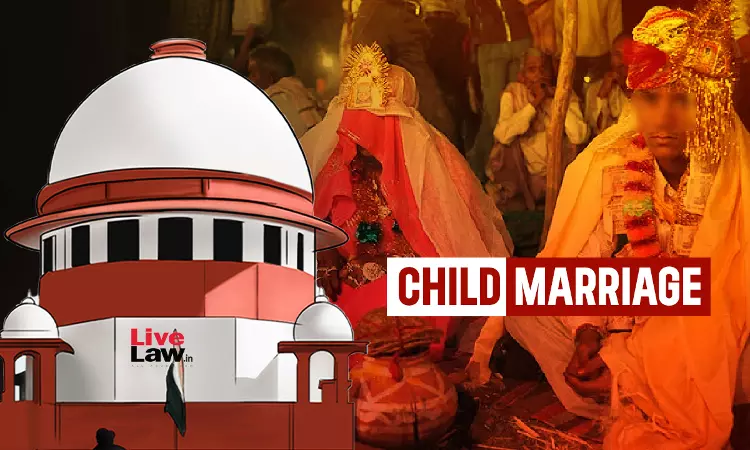
The statutory framework governing child marriage in India suffers from a profound structural contradiction. On one hand, the civil law extends legal recognition to child marriages by keeping them valid until annulled. On the other hand, the criminal justice system characterizes the consummation of that very union as a severe offense. This legal asymmetry creates a precarious environment for millions of minors who are legally married in the eyes of the state, yet stripped of effective legal protection.
According to the National Family Health Survey (NFHS-5, 2019–21), 23.3% of women aged 20–24 were married before attaining the age of eighteen, with the prevalence exceeding 40% in states like West Bengal, Bihar, and Tripura. Despite stringent punitive provisions, the persistence of these numbers points directly toward a deeper structural flaw within our legislative and enforcement architecture. No coherent legal philosophy can simultaneously defend the statutory validity of a marriage while treating its factual realization as a statutory crime.


The Statutory Friction: PCMA vs. POCSO
The core of this systemic failure lies in Section 3 of the Prohibition of Child Marriage Act, 2006 (PCMA). The legislature, in its wisdom, chose not to declare child marriages void ab initio (void from the inception). Instead, such marriages are classified as merely "voidable," granting the minor a limited two-year window after turning eighteen to petition for an annulment. Until that judicial remedy is sought and granted, the marriage remains valid under civil law.
This civil validity stands in direct friction with the criminal law framework established under the Protection of Children from Sexual Offences Act, 2012 (POCSO). In the landmark ruling of Independent Thought v. Union of India (2017), the Supreme Court held that sexual intercourse with a girl child below eighteen years of age constitutes penetrative sexual assault, attracting a minimum sentence of ten years.
This creates an unsustainable legal friction. The state recognizes a marital status but criminalizes the act essential to that status. This statutory dissonance is not a mere technicality; it leaves young girls trapped in a legal vacuum where enforcement agencies face conflicting mandates.
The Judicial Restraint in SEVA (2024)
Last year, the Supreme Court in SEVA v. Union of India (2024) issued extensive directions to strengthen the enforcement machinery. The Bench rightly characterized child marriage as "an oxymoron incompatible with consent and legal capacity," ordering mandatory training for Child Marriage Prohibition Officers (CMPOs) and structured compliance mechanisms across states.
However, the apex court stopped short of resolving the foundational legal contradiction. While recognizing that victim-dependent enforcement has systematically failed, the Court maintained institutional restraint, acknowledging that declaring an outright nullity across personal laws falls squarely within the legislative domain of Parliament.
Data from the Social and Rural Research Institute indicates that less than 1% of girls married during their minority are even aware of their right to seek an annulment under Section 3 of the PCMA. Expecting a vulnerable, socio-economically marginalized minor to initiate judicial proceedings within a strict two-year window is an impractical legal remedy.
The Necessity of 'Void Ab Initio'
Amending the PCMA to declare all minor marriages void ab initio would instantly dissolve this civil-criminal friction. If a marriage has no legal existence from its inception, no marital status can be claimed to bypass or complicate POCSO protections. The law would act automatically, removing the burden of litigation from the victim.
This shift aligns with global legislative trends. In 2022, England and Wales enacted the Marriage and Civil Partnership (Minimum Age) Act, completely criminalizing and invalidating minor marriages. Similarly, Germany amended its Civil Code in 2017 to declare minor marriages void. International instruments like CEDAW, under Article 16(2), explicitly direct that the betrothal and marriage of a child "shall have no legal effect." India's current "voidable" regime remains in direct violation of this international standard.
The Political Inertia vs. Constitutional Morality
The Law Commission of India recommended making child marriages void ab initio as early as 2008. The subsequent seventeen years of legislative inaction are driven by political sensitivities rather than legal complexities. Any universal minimum-age nullity rule immediately intersects with personal laws, particularly Muslim personal law, drawing the issue into the broader, contested debate surrounding the Uniform Civil Code.
However, as the Supreme Court's jurisprudence on constitutional morality has established, community customs or religious sanctions cannot override fundamental rights. The constitutional demand for a void ab initio rule rests firmly upon Articles 14, 15, and 21 of the Constitution—guaranteeing equality, non-discrimination, and the right to life and personal liberty. Political inconvenience cannot justify the suspension of these fundamental rights.
National Crime Records Bureau (NCRB) data recorded only 1,050 cases under the PCMA in 2022. Set against the millions of child marriages reported in demographic surveys, this statistic does not merely indicate under-reporting; it confirms the institutional breakdown of the current enforcement model. Criminal deterrence deployed alongside civil validation is inherently counterproductive.
Legislative reform alone cannot eradicate deep-seated patriarchal norms, poverty, or the lack of educational infrastructure—factors that drive child marriage. Among women with no formal schooling, the prevalence of child marriage stands at 48%. Institutional investment in school retention and economic empowerment remains vital.
However, socio-economic interventions cannot succeed if the legal system continues to legitimize the very institution it seeks to destroy. Parliament must amend the PCMA to declare child marriages void from inception. A legal system that permits a union while criminalizing its consummation is not protecting children; it is merely protecting its own statutory contradiction.
Author is an independent human rights researcher, legal systems specialist and a recipient of Raj Puraskar from the Ministry of Law & Justice, Government of India. Views are personal.


