



Who Appoints Appointers? India's New Tribunal Commission Has Old Independence Problem
Vishal Vaibhav Singh
2 Sept 2026 11:00 AM IST
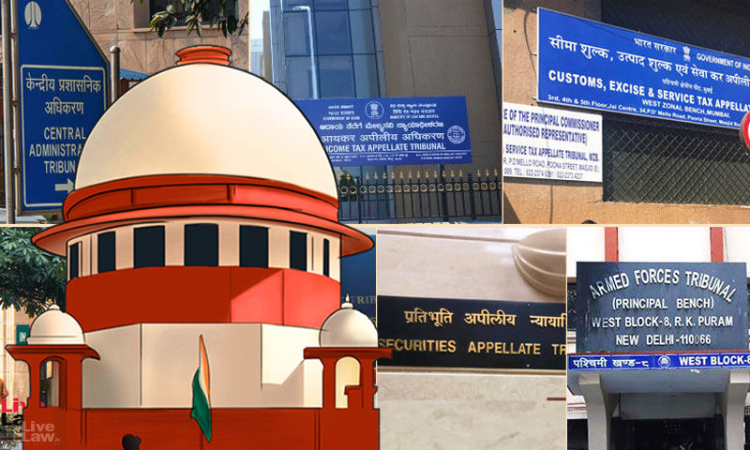
Parliament has taken tribunal appointments away from the ministries that used to control them. It has not yet explained why the body it built to guard that independence should itself remain an appointee of the executive. The Tribunals Reforms Act, 2026 answers a serious constitutional problem with a solution that is real but incomplete, and the incompleteness sits exactly where the reform's architecture is least secure.
The problem the Act answers is old and well documented. For a decade and a half, the Supreme Court has been troubled by how little say the judiciary has in choosing who sits on India's tribunals bodies that decide tax disputes, securities enforcement, company law and environmental clearances, often with the government itself as the principal litigant. In Madras Bar Assn. (6) v. Union of India, (2026) 2 SCC 1, the Court struck down the Tribunals Reforms Act, 2021 on exactly this ground and directed Parliament to build an independent National Tribunals Commission (NTC). The 2026 Act does that a five-member Commission, majority judicial by design, running Search-cum-Selection Committees that are a genuine improvement on what came before.


But read past the Commission's own composition, and a familiar problem reappears one level up. Under Section 5, the Commission's Chairperson and its two Judicial Members are appointed by the Central Government after merely “consulting” the Chief Justice of India not with the CJI's concurrence. The Commission's two Technical Members are appointed with no judicial involvement at all. Parliament fixed who appoints tribunal members. It never asked who appoints the people who appoint tribunal members. Section 5 raises that question squarely, though no court has yet decided it.
ONE STOREY HIGHER
The Court's tribunal-independence jurisprudence has always targeted a single link in the chain who sits on the committee that selects tribunal members. In Union of India v. R. Gandhi, (2010) 11 SCC 1, the Court held that suspending a tribunal Chairperson or Member requires the concurrence of the Chief Justice of India, and reconstituted the Selection Committee to be headed by the CJI or a nominee, with a casting vote. That word concurrence, not consultation was the Court's own way of saying that ordinary consultation is not enough where a government that regularly litigates before a tribunal is also choosing who judges it.
Rojer Mathew v. South Indian Bank, (2020) 6 SCC 1, found the 2017 Tribunal Rules wanting on the same ground: judicial presence on selection committees amounted to little more than token representation, with the judiciary's role “virtually absent.” L. Chandra Kumar v. Union of India, (1997) 3 SCC 261, supplies the underlying reason this matters constitutionally. The Court held there that tribunals could not be treated as substitutes for the High Courts' Article 226/227 jurisdiction their decisions remain subject to a Division Bench's scrutiny. Tribunals exist to relieve the High Courts of specialised, high-volume adjudication precisely because that supervisory check was preserved rather than switched off. A check of that kind is only meaningful if the tribunal being checked is independent enough that review isn't rubber-stamping a captured first-instance forum.
Each of these decisions asked the same question about a different piece of machinery: how judicial is the body choosing tribunal members? None of them had occasion to ask a prior question, because no free-standing commission existed to ask it about. The 2026 Act creates one. In doing so, it doesn't answer the question Rojer Mathew and Madras Bar Assn. were asking it relocates it, one storey higher, to the Commission's own composition.
WHAT SECTION 5 ACTUALLY DOES
Set against the 2017 Rules, the Search-cum-Selection Committees the Act builds are real progress for a tribunal Chairperson's post, the committee is headed by the Commission's own Chairperson, necessarily a former Supreme Court judge or High Court Chief Justice, with a casting vote, meaningfully more judicial ground than Rojer Mathew found.
But every one of those committees also seats a Technical Member of the Commission, who votes alongside the judicial members on every single selection the Commission makes for both Chairperson and Member posts, across all sixteen tribunals in the First Schedule. Technical Members hold two of the Commission's five seats forty per cent and their own appointment involves no judicial consultation whatsoever, not even the diluted version Section 5 extends to the Chairperson and Judicial Members. If judicial involvement in appointments is important enough that the statute insists on it, however weakly, for three of the Commission's five seats, it is worth asking why the other two are entirely outside that safeguard while still voting on everything the Commission decides.
BORROWED INDEPENDENCE
Even the judicial half of the Commission owes its authority to an appointment process that runs entirely through Section 5. The retired Chief Justice who sits on each Chairperson-selection committee is nominated by the Commission's own Chairperson a nomination power internal to the Commission and therefore only as independent as the Chairperson's own appointment. The government secretary on each committee is nominated directly by the Central Government. Strip it back, and the judicial weight the Search-cum-Selection Committees carry is borrowed in full from the Commission that appoints them, and the Commission's own legitimacy is not collateralised by anything beyond a duty to consult. A two-tier structure of this kind is only as independent as its weakest tier. The 2026 Act's weakest tier is the one Parliament placed furthest from judicial reach.
HOW MUCH WEIGHT CAN CONSULTATION BEAR?
It matters here to be precise about what “consultation” ordinarily requires and what it does not. In Union of India v. Sankalchand Himatlal Sheth, (1977) 4 SCC 193, the Court read “consultation” under Article 222 to demand a full and effective exchange of views but not agreement. On that ordinary reading, Section 5 may well be constitutionally unremarkable an administrative body assembling legal and technical expertise need not carry the weight of Articles 124 and 217, and the Union would have a genuine institutional case that it doesn't.
But Indian doctrine has tested how far “consultation” can be stretched before it stops protecting independence at all the appointment of judges themselves. S.P. Gupta v. Union of India, 1981 Supp SCC 87, read consultation in the executive's favour, letting the government depart from the CJI's view for what it called cogent reasons. The Second and Third Judges Cases (1993) 4 SCC 441 and (1998) 7 SCC 739 reversed that, giving the judiciary's collegial view binding weight. Supreme Court Advocates-on-Record Assn. v. Union of India, (2016) 5 SCC 1 (NJAC), held that judicial primacy in appointments to the higher judiciary is part of the basic structure, precisely because consultation without primacy left the executive with the last word.
That holding was textually anchored to Articles 124 and 217, and no court has held that its logic extends to a statutory body like the NTC this is not a claim that NJAC controls Section 5. It is offered more modestly, as intellectual history: the one time Indian courts tested whether mere consultation protects independence, they found that it doesn't. R. Gandhi shows the Court has already been willing to import that same insistence on concurrence outside the higher judiciary, inside the tribunals context itself. Read together, the two lines of authority don't settle Section 5's validity but they make the question considerably harder to wave away as a matter of drafting taste.
A NARROW FIX
The Act itself already knows the difference between light and serious safeguards. Under Section 6, a Commission Member facing removal for an acquired financial interest or abuse of position gets a hearing before an inquiry committee headed by a sitting Supreme Court Judge. No equivalent judicial safeguard attends how that Member got there in the first place. If tenure is worth protecting this carefully, the absence of any comparable protection at the point of entry deserves at least the same scrutiny not because entry and exit must be treated identically, but because everything the exit protection preserves was only ever as independent as the appointment that created it.
None of this requires reopening the Act's architecture. Replacing “consult” with “concurrence” for the Chairperson and Judicial Members in Section 5 language the statute already uses elsewhere, in Section 6, for nominating the inquiry judge would close most of the gap. Routing the Technical Members' appointment through the Commission itself, once properly constituted, would close the rest. Parliament has finally taken tribunal appointments out of every sponsoring ministry's hands. It has not yet been asked why the body built to keep them there still answers, one floor up, to the executive alone.
Views are personal.


