



Kaziranga Mining Issue: Contours Of CEC Advisory Role
Gyanvi Khanna
4 Oct 2026 10:00 AM IST
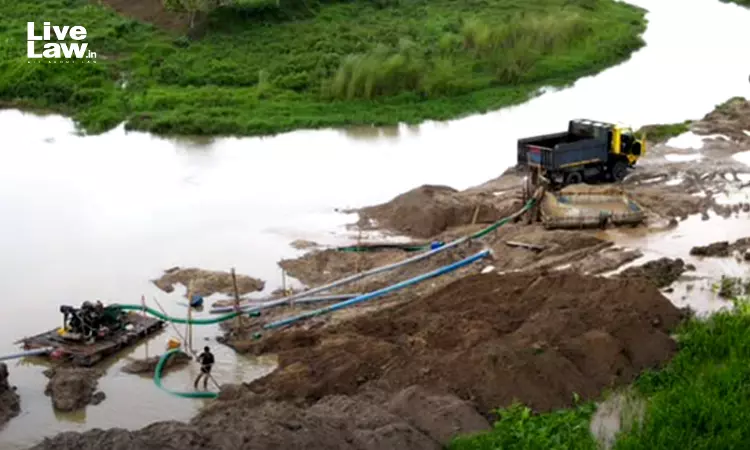
The Central Empowered Committee (CEC), a Supreme Court constituted panel for monitoring environmental compliance, has again raised concerns over mining activities near Kaziranga National Park. It pulled up the Assam government for not having a wildlife management plan in place.
The committee called out the government's inaction on the mining issue around the Parkup Pahar range, a wildlife sanctuary, and questioned the grant of mining leases around areas forming part of the Karbi Anglong Elephant Reserve. It also went on to say that the issue was not considered with the seriousness it deserved.
For the uninitiated, the CEC was result of the Supreme Court's 2002 order in the landmark case of In Re: T.N. Godavaran Thirumulpad, Writ Petition(s)(Civil) No(s). 202/1995. It was formed to monitor implementation of the Apex Court's orders on forest management and wildlife conservation and place the cases of non-compliance before it.
The concern here is that this is not the first occasion on which the CEC has raised an alarm about mining issue near the national park. This follows a series of CEC reports, including the one it published on its website on May 30, 2025, wherein it addressed the contents of an anonymous application raising concerns that mining activities in the region had intensified.


In its report, the CEC reiterated that the Karbi Anglong Autonomous Council does not have any authority to grant mining permits in eco-sensitive zones. It also directed the Council to submit a watershed drainage analysis report for the purpose of identifying the watershed areas "draining into" the National Park. Consequently, the Council was instructed not to grant any new mining permits until such areas are clearly verified. However, the report was never submitted.
Does the CEC wield any power to take, at the very least, an interim measure to stop further environmental harm while its reports and warnings await a Supreme Court order or a government action?
Why Was the CEC Formed, And What Followed?
During the In Re: T.N. Godavaran Thirumulpad proceedings, the Supreme Court in April 2019, considered a CEC's report with respect to illegal mining in the catchment area (area from which water flows) of streams/rivers originating in the Karbi Anglong Hills and flowing towards Kaziranga National Park. After perusing the said report, the Supreme Court restrained mining and related activities in this area. The Court also went on to order that no new construction would be permitted on private property that forms part of nine identified animal corridors. These corridors connect the Karbi Anglong Hills with Kaziranga National Park and allow free movement of animals during annual floods.
"The Director General of Police, Assam and the concerned Superintendent of Police shall also ensure that no illegal mining takes place in the aforesaid area and no transportation of illegally mined material take place from Karbi Anglong Hills.," the Court ordered.
Ever since this order, the CEC has taken several steps including seeking compliance details from the State and making several pertinent recommendations. For instance, in October 2021, the CEC asked the Assam government to immediately stop all constructions made in violation of the Apex Court's order. Moreover, the letter also called for the prevention of any further construction along the nine animal corridors.
Pursuant to this, in March 2022, the CEC met the Assam Chief Secretary to discuss the implementation of the Supreme Court's 2019 order. It also sought several important details such as a list of activities carried out in these nine corridors, photographs of constructions prior to and post delineation, officers responsible for granting such permission for constructions, licenses copies and notices issued for the removal of any illegal constructions.
Although the officials had reportedly agreed to provide these details, they were not provided for several years, requiring the CEC to again nudge the government for its compliance. This clearly illustrates the gap between identifying environmental violations and the lack of enforcement power to act against such violations.
How Has the CEC Been Helpful in the Past?
The reports furnished by the CEC have contributed significantly to Apex Court orders requiring corrective measures. One such case was of Samaj Parivartana Samudaya & Ors vs State Of Karnataka & Ors where the Court dealt with rampant mining in the Bellary district of Karnataka. The CEC was asked to submit a report on illegal mining. In its report, among other things, the CEC primarily classified all leases into different categories including those that were found in flagrant violation of the Forest Conservation Act and were involved in illegal mining. Taking cognizance of this report, the Court ordered suspension of certain mining operations while also ordering hefty compensation, running into crores, to be recovered from such leaseholders.
The CEC has also played an important role in In Re: Issues relating to definition of Aravalli hills and ranges, where it recommended measures for sustainable mining and steps to prevent illegal mining. These cases demonstrate that CEC recommendations, once enforced by the Supreme Court, can play a pivotal role in putting corrective measures in place. However, what happens when environmental harm continues while CEC recommendations await judicial approval or executive action? Given the workload our judiciary is dealing with, such delays are not unexpected. In matters involving forests and wildlife, such delays can lead to irreversible damage.
Why Does the CEC Lack Enforcement Powers?
In September 2023, the Ministry of Environment, Forest and Climate Change notified the CEC as a permanent statutory body under Section 3 of the Environment (Protection) Act, 1986. Section 3 empowers the Central Government to take certain measures for protecting and improving the environment, including the constitution of an authority for performing specified functions.
It is important to highlight here that Section 3 also allows this committee to issue directions in accordance with Section 5 of the Act. Imperatively, such power includes directing closure, prohibiting or regulating any industry, operation or process. Prior to the 2023 notification, the CEC had worked for two decades as an ad-hoc advisory body. However, the CEC was never expressly conferred such powers. The first notification, issued after the 2002 judgment, granted the CEC the power to call for evidence, summon any person and receive evidence on oath, and seek required assistance for its work. In 2023, when the CEC was re-constituted under Section 3(3) of the Act, the committee was required to make its suggestions and recommendations to the State or Central Government. However, there was no express delegation of powers under Section 5 of the Act, thus, preventing the CEC from acting as an independent enforcement authority.
The Clock Is Ticking
After more than two decades of its formation, it is now well established that the CEC is competent to investigate and recommend measures for protecting the environment. However, the panel remains advisory, and its recommendations are not self-executing. Unless the Supreme Court or for that matter the government acts on them, the CEC cannot ensure compliance. In Samaj Parivartana, the CEC findings resulted in the Court suspending mining activities and ordering compensation for the victims. The issue is that the CEC is dependent on other institutions to ensure compliance with its reports.
Kaziranga is a UNESCO World Heritage Site and is home to the endangered one-horned rhino species. In its latest letter, the CEC reiterated that the intent of the Supreme Court's order was to protect wildlife and warned the government that continued violations would be brought to the Court's notice.
The Assam government is now reportedly suggesting a reduction in the eco-sensitive zone from 10 km to 1 km. This must be viewed against the backdrop of the Supreme Court's decision, in its June 2022 order, wherein it prescribed a default limit of 10 km for eco-sensitive zones. This was for states where no limit was notified by the government and was applicable to Assam.
Assam has recently been a victim of catastrophic floods, leaving lakhs of people homeless and displaced. Lessons must be learnt from such disasters to realise how important a role the environment plays. Kaziranga absorbs excess monsoon overflow from the Brahmaputra River which in turn helps to regulate downstream water surges, making the park pivotal for hydrological health. Therefore, any weakening of environmental protections must be treated with caution.
The core issue is that, despite having an institution to identify environmental violations, there is no mechanism that allows it to take swift action against them. As such, every enforcement action depends on a Court order. One possible solution is for the Central Government to consider delegating powers under Section 5 of the Act to the CEC. In the absence of an enforcement mechanism, even repeated CEC warnings may prove to be futile, causing environmental harm rather than preventing it.
Author is a former reporter at LiveLaw, now works as legal editorial assistant with a publishing company. Views are personal.


