



Your God, Not Your Oath: Kerala High Court's Reality Check on Creative Oath-Taking
Dr. Sachin Menon
11 July 2026 8:00 PM IST
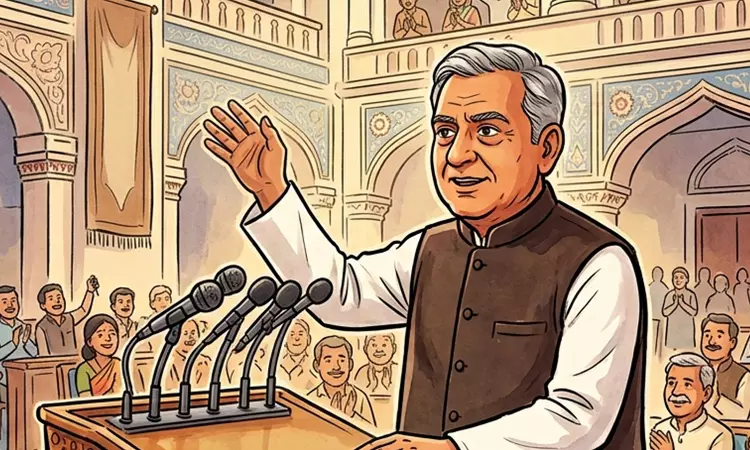
It is a hackneyed phrase that the 'Constitution is the supreme law of the land'. Despite this phrase's universal acceptance and popular appeal, certain elected representatives occasionally tend to forget the significance of the statement. This forgetfulness was apparent when twenty councilors of the Bharatiya Janata Party elected to the Thiruvananthapuram Corporation swore their oath in the most unconventional way possible. Instead of pledging their allegiance to the Constitution of India in the name of God or by a solemn affirmation, the representatives entered the political office by invoking the name of their regional deities, family deities, political martyrs and the pioneering social reformer and saint, Sree Narayana Guru. While the ceremony witnessed the birth of creative oath taking, the High Court of Kerala in its judgment disapproved of this and reminded that in a constitutional democracy, only the rule of law is supreme and everyone, including the ruling party members are bound to take oath only in accordance with law, which provides only two choices- God or Solemn Affirmation.
Oath of Office or Affirmation
In India, every elected representative starting from the councilors to the Prime Minister and the President enters into the public office by taking an oath of office or an affirmation. This oath or affirmation follows a set format. For example, councilors elected to a corporation has to swear an Oath or affirmation as per the format prescribed under the third schedule of the Kerala Municipality Act, 1994


“Form of Oath or Affirmation
I,........................having been elected Councillor/Mayor/Deputy Mayor/Chairman/Vice Chairman of …....Municipal Corporation/ …..........Municipal Council/.......Town Panchayat do swear in the name of God/solemnly affirm that I will bear true faith and allegiance and maintain sovereignty and integrity of India to the Constitution of India as by law established and I will duly and faithfully and to the best of my ability, knowledge and judgment perform the duties of my office without fear or favour or affection or ill will.”
A plain reading of this oath makes it clear that the representatives have the privilege of choosing either God (for believers) or make a solemn affirmation (for secular, agnostic and non-believers).
More than a Ceremonial Formality
An Oath of office provides a legal title to the representative to occupy a public office. The significance of Oath of Office was firmly explained by the Kerala High Court in K.C. Chandy v. R. Balakrishna Pillai 1985. While deciding the issue of breach of oath by a minister, the Court noted that “Oath of office is not an empty formality with no constitutional significance”. Quoting Dr. Ambedkar, the judges pondered that the violation of the oath will in fact be violation of the Constitution. Finally, it accepted two violations regarding oath, first being the breach of an oath and second, absence of oath. Though the judges accepted the essentiality of Oath of office, and even identified breach and absence as the two violations, an entirely different kind of oath violation took place in the current case.
The Controversy behind Creative Oath-Taking
Instead of pledging allegiance in the name of God, some representatives for reasons known only to themselves, will invoke the names of various gods. For example, if a representative is a devout Shaivite, and wants to take oath in the name of Shiva, they will loudly proclaim their deity's name. This is what I would call as creative oath-taking. As Indians, we were privy to a different version, when some Members of Parliament sloganeered, heckled and displayed exceptional religious oratory during their oath taking ceremony in 2019. While the representatives can no doubt display creativity in their post oath taking political adventurism, the general rule is that oath of office must be in accordance with the law.
But in their defence, we can make a case for creative oath taking. Why can't the representatives be given a minimum freedom to rally their supporters for a mere five minutes by expanding God to cover regional deities, family deities, and political martyrs? After all, one can argue: it's essentially harmless, an expression of their personal belief and they have neither violated the oath nor abused the process. For the supporters of such oath taking, the reliance to popular morality might prevail over constitutional morality. But for the detractors, if not nipped in the bud, creativity in oath taking might eventually undermine the rule of law as every councillor will start acting according to their whims and fancies.
The Conundrum of Creative Oath Taking: Reconciling two Conflicting Decisions
For the High Court of Kerala, it was the detractors view that made the strongest impression. Having run through the statutory provisions of the Kerala Municipality Act, 1994, the court came to the conclusion that only God or a solemn affirmation is available as a choice. But how and on what basis? Firstly, the judge adhered to a precedent laid down by the division bench of the same court in 2003 in the case of Haridasan Palayil v. The Speaker, Kerala Legislative Assembly. In the Haridasan Palayil decision, the division bench while deciding the validity of the oath of a member of Legislative Assembly for pledging allegiance in the name of Sree Narayan Guru strictly clamped down on creative oath taking, by adhering to a binding legal principle that “if a particular thing is required to be done in a particular way, it must be done in that way and no other” and held that
“In the present case, the Constitution lays down the form. It gives a limited option. One can either subscribe to the oath, or make an affirmation. In case, the person chooses to take the oath he has to swear in the name of God. None else. The Constitution does not permit any deviation or variation. For if any deviation were permitted, we may not know where to stop”.
The single bench in the current case dutifully adhered to this precedent. But another roadblock emerged. Another division bench of the same court in 2006 had a different opinion in the case of an oath of office taken by some MLA's invoking the name of Allah. In the case of Madhu Parumala v. Speaker, Kerala Legislative Assembly, the bench took an opposite stand and held the oath taking in the name of Allah as legal. As per the judges reasoning in the Madhu Parumala case, the Haridasan Palayil reasoning was flawed because they considered oath taking as a purely personal act that bound the legislator and not the electorate. Taking that approach, in the Madhu Parumala case, the Court ruled that the word 'God' can be expanded by every religious believer to include his personal Gods like Jesus, Allah or Krishna. For the judges, the significance is not in the form of oath taking, but in the allegiance to the Constitution.
How the Court Resolved this Conundrum
The Kerala High Court was now confronted with two conflicting division bench decisions. As a general rule, it has to follow the latter decision. But if the Court followed the Madhu Parumala decision (latter), then oath taking in the name of deities and martyrs will have to be ruled valid in law.
But in this case, the single judge considered the Madhu Parumala judgment to be per incurium, because it failed to consider a salutary legal principle laid down by the Supreme Court of India, that is – “if a statute provides for a thing to be done in a particular manner, then it has to be done in that manner and in no other manner”. According to the judge, it was the Haridasan Palayil ruling that has correctly followed this binding principle and held that as per the Kerala Municipality Act, 1994 and its Rules, the oath of office is strictly restricted to God and solemn affirmation.
The Judgment and Its Impact
It is too early to say whether this judgment has spelled the end of creative oath taking. At least in the State of Kerala, the law is clear, elected representatives are now fully bound by the letter and spirit of the law. That means, they cannot deviate from the form as prescribed by the respective statute. But as a critique, one could argue that the court had stopped the expansion of 'God' by encroaching into the deeply held personal beliefs of individuals. But as a counter the judge reminds us to foresee a situation where a relaxed approach as taken in the Madhu Parumala case will enable an elected representative to pledge allegiance in the name of a forest brigand, whom he considers as his God. The impact of this judgment was swift; the councillors retook their oaths and dutifully pledged allegiance as per the words in the Statute. But the real danger of creative oath-taking isn't just the names invoked; it's that it fundamentally alters a uniform legal contract between the elected representative and the Constitution, turning a unifying civic ritual into a divisive political rally.
Author is an Assistant Professor at Christ University, Bengaluru. Views are personal.


