



How Law Students Can Secure Judicial Internships At Supreme Court
Aniket Manoj Dongre
19 Feb 2026 8:19 PM IST
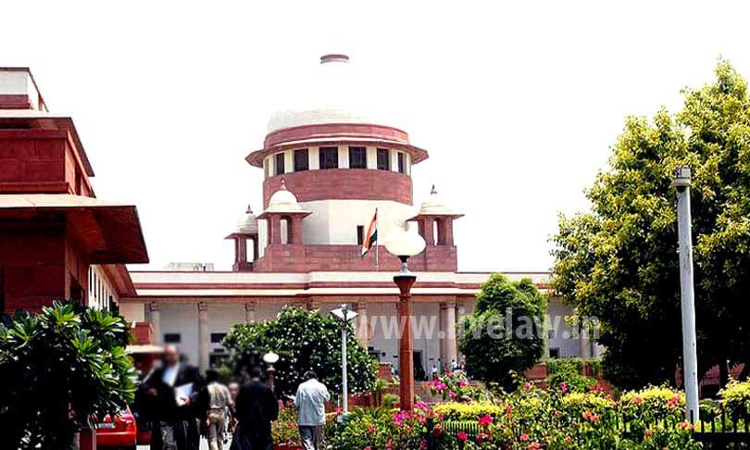
A judicial internship in the chambers of a Judge of the Supreme Court of India remains one of the most sought-after yet least demystified opportunities for law students. While the internship offers unparalleled exposure to constitutional adjudication and judicial decision-making, the application process often appears opaque—particularly for students from non-NLU institutions or first-generation legal backgrounds.
Why a Judicial Internship Matters
A Judicial internship allows you to understand the working of the Supreme Court from the Judge's perspective. You witness live courtroom dynamics, research judgments, and assist with matters that shape Indian law.
Beyond the intellectual exposure, such an internship significantly enhances one's research skills and career prospects — whether you wish to pursue litigation, academia, or a future judicial clerkship. More importantly, it provides insight into how constitutional principles are translated into enforceable legal reasoning—something no textbook can adequately replicate.


What Does a Judicial Intern Do?
A judicial intern primarily works under the Law Clerks-cum-Research Associates attached to a Judge's chamber. The typical responsibilities include:
- Preparing concise briefs and summaries of daily matters listed before the Court.
- Drafting short synopses of pleadings, including counter-affidavits and rejoinders, and assisting in preparation of Records of Proceedings (ROP).
- Conducting detailed research for speeches, articles, or case precedents referred to by the Judge.
- Occasionally participating in briefing sessions with the Judge, depending on the chamber's protocol.
The work is demanding but offers an unparalleled understanding of how justice is reasoned, not merely argued.
How to Apply for a Judicial Internship
Most chambers accept applications either by email or through online forms circulated by law clerks or the Judge's office, often via LinkedIn. Applications are considered on a rolling basis, so it is advisable to apply at least two months in advance.
Step-by-step process:
- Applicants are advised to submit a formal and well-structured application email containing the following details: your full name, current programme and year of study, name of the university or law school, preferred month(s) for the internship, contact details (email ID and mobile number), and a brief statement of purpose explaining why you wish to intern with that particular Judge/Chamber.
- Attach a professional CV (preferably one & half page) highlighting your academic achievements, research work, internships, moots, and publications.
- Use a formal subject line — e.g., “Application for Judicial Internship – January 2026.”
- Follow up politely after 10–14 days, unless the chamber explicitly discourages follow-ups.
- Maintain professionalism, precision, and politeness at every step.
Selection Process
After your CV and cover letter are shortlisted, you may be contacted for the next step. The selection process varies across chambers and may include::
- A telephonic or virtual interview, focusing on your academic interests and motivation.
- Or a request to submit a brief of a sample case to assess your analytical and drafting ability.
If selected, you'll receive a confirmation email specifying your internship duration, reporting date, and any formalities such as confidentiality undertakings.
Updated Chamber Contact Details (as of December 2025): The following details are based on publicly circulated information and prior internship cycles. Applicants are advised to verify the current mode of application independently, as chambers may revise procedures without notice.
Sr. No. | Hon'ble Judges | Email Address / Link |
CJI Suryakant | ||
HMJ Vikram Nath | ||
HMJ B. V. Nagarathna | ||
HMJ M. M. Sundresh | ||
HMJ Dipankar Datta | ||
HMJ Sanjay Karol | ||
HMJ Ahsanuddin Amanullah | ||
HMJ Manoj Mishra | ||
HMJ Arvind Kumar | ||
HMJ P. K. Mishra | ||
HMJ K. V. Vishwanathan | ||
HMJ Ujjal Bhuyan | ||
HMJ Satish Chandra Sharma | ||
HMJ Sandeep Mehta | ||
HMJ N. Kotiswar Singh | ||
HMJ R. Mahadevan | ||
HMJ A. S. Chandurkar |
For Students from Non-NLU or Marginalised Backgrounds
Institutional pedigree is not the sole determinant of selection. Chambers have consistently engaged interns from state universities and regional law colleges based on merit, discipline, and clarity of work.
If English or confidence seems like a challenge, focus on clarity over complexity. Keep your writing honest, precise, and well-structured. Seek help from mentors or seniors to review your drafts. Remember — opportunities in the judiciary reward merit and discipline far more than polished grammar.
The author is an LLM Student and working as a Research Intern at the Supreme Court of India. Views are personal


