



Legal Education In India: An Expensive Dream And Growing Divide In Access To Justice
CHAUDHURY SHAKIB AHAMED
15 Sept 2026 11:00 AM IST
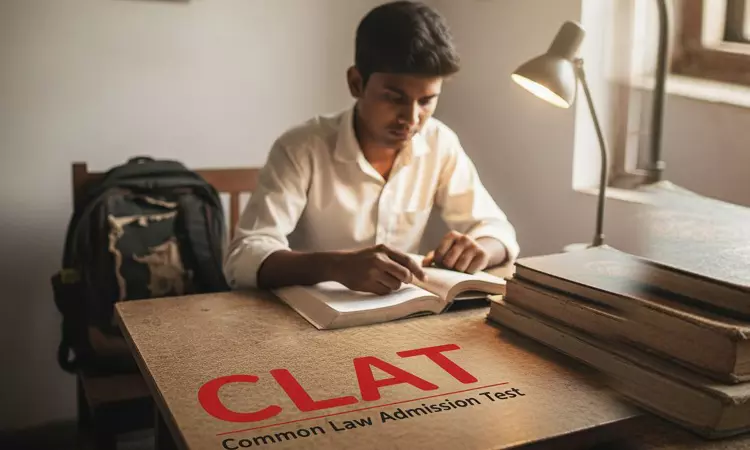
Law is one of the noble professions in India and in the entire world. Despite being a noble profession, legal education consists of various discrepancies and irregularities which need to be addressed. The Medium of Instruction, the expensive fee structure is ultimately widening the gap in legal education between tier 1 and tier 3 colleges, which is a great matter of concern as it is making legal education inaccessible for students belonging from under privileged families.
Discriminatory Approach Of The Consortium
The Consortium of National Law Universities is considered the topmost authority for holding the premium and difficult law entrance examinations. The Consortium of Nlus conducts examinations like Common Law Admission Test ( CLAT) for the admission to National Law Universities, which are considered the premium legal institutions. The Consortium charges an application fee of Rs 4000 for General Category students and Rs 3500 from students belonging to SC/ST/ PWD category. The admission fee charged by the Consortium of National Law Universities is too high for a lower middle class family to bear, which is a clear form of discrimination against students belonging from such families. The admission fees are non - refundable by the Consortium. During the counselling process the candidates need to pay a confirmation fee, that is non - refundable. It seems that the rules of the Consortium protect the interests of the elite group of students. Thus the poor are deprived from getting good and skillful legal education which turns out to be contrary to the principles of the Constitution. Several other allegations such as the language of the CLAT exam have been a major issue of dispute in recent years. Thus it shows that discrimination begins before one enters law schools, and it begins from the Consortium itself which is a great matter of concern.


Excessive Fees Charged By Institutions.
The fee structure of all the NLUS makes it difficult for an underprivileged student to afford legal education and other expenses. The semester fees of top 5 NLUs is approximately Rs 1lakh or more, which means that the students need to pay an approximate amount of Rs 2 lakhs or more annually. Therefore the total expenses for a student studying in top 5 NLUs is approximately Rs 10 lakhs or more. In tier 1 Private Universities the amount gets doubled. On an average the overall fees for a 5 yrs LLB course in most of the Tier 1 private colleges and universities goes from Rs 30 lakhs to 40 lakhs. In the Top 5 NLUS, it was revealed that almost 50% of the students belonged from families whose monthly income was more than Rs 1 lakh. Most of the students studying in NLUs accessed expensive Clat coaching at various commercial centres, which indicates that students belonging from underprivileged families were deprived from premium coachings and have little space in such coaching centres and hence their representation was too low in such coaching centres. As the semester fees of private institutions are beyond the imagination of a student belonging from a family whose annual income is less than lakhs, so the students from such families don't have the option to afford their education from a private institution and hence they are left only with the option of NLUS. In such circumstances if the NLUS doesn't provide student friendly fees and environment, then it becomes difficult for such students to cope up with the environment and curriculum, even after getting admission. Institutions offering coaching for Common Law Admission Test, All India Law Entrance Test and other law entrances, are mostly being filled by students belonging from the elite class, such representation is a matter of concern and a form of discrimination towards under privileged students. The scholarships offered by various national law colleges are not adequate for the students belonging from marginalised groups to afford their expenses. Students from such groups often take loans from the bank for clearing their semester fees, despite taking scholarships from the universities. Thus it weakens the fundamentals of the constitution, which promotes equality and justice to all.
Justice Chandrachud's Regional Languages Recommendation.
The medium of instruction for legal education has proven a barrier to most of the students coming from Non- English medium backgrounds. The medium of instruction for legal education is a discriminatory approach towards Non- English Medium students. Justice Chandrachud, former chief Justice of India emphasized the need for legal education in Hindi and other regional languages. While addressing the students of Dr. Ram Manohar Lohia National Law University in Lucknow, he emphasized that access to justice must be made more accessible to the public and it can only happen if the medium of instruction for legal education gets modified. It's a matter of concern and a form of discrimination as most of the population belongs from Non- English Medium backgrounds. He hoped that RMNLU would provide legal education in Hindi and other regional languages in future. The access to get justice is a fundamental right and such language barriers cannot give equal access to justice to the students.Such barriers in legal education cannot fulfill the dreams of imposing equal and social justice in the society.
BCI Rules And Ground Reality.
The BCI says that English shall be the medium of instruction for both 5 yrs integrated LLB and 3 yrs LLB course. However in the second part it clarifies that universities can give permission to students if they want to write their semester examinations in Hindi or any other regional languages, by imposing the condition that English should be taken as a compulsory subject. However the ground reality seems to be different as most of the institutions rarely follow the guidelines of the BCI. Even Tier 2 and Tier 3 college students give their semester examinations in English, despite a large number of students belonging from Non- English Medium backgrounds. Colleges and Universities generally prefer English as the sole medium of instructions. Thus it becomes significantly difficult for a student belonging from Non- English Medium School to cope up with the curriculum, which is totally in English. In Top 5 NLUS it was revealed that almost 70% of students belonged from elite families, where both the parents spoke fluent English. The language has become a barrier in the legal education for a student, which is an important matter that needs to be considered for accessing justice and equality in law colleges.
Legal Education: A New Business Model.
The policy adopted by the Nlus has gradually made and turned the idea into a business model, similar to the private universities and the coaching institutions. The fees charged by all the NLUS is beyond the reach level of a student belonging from an underprivileged family. Where such premium institutions should have acted as the legal guardians for the students that would have given importance to equality, diversity and freedom as the first priority in legal education, rather they adopted a model through expensive tuition fees, hostel fees, etc. Thus it eventually turned them into a business model. Despite being premium institutions the NLUS were unable to become student friendly institutions. The rich and elite class students are getting more opportunities in NLUS and enjoying all the beneficiaries provided by them. Through NLUS the corporate culture has been promoted and has made it more realistic by giving on campus placements in multinational law firms. Besides NLUS, there are esteemed private universities which are not suitable for a student belonging from a lower middle class family due to high fees structure. The coaching institutions are generally doing business in the name of giving education. Advertisements and hoardings of 100% guaranteed selection into Top NLUS have become a norm for these coaching institutions. Thus such policies eventually turned legal education into a business model that is not affordable to everyone.
The Growing Divide Between Tier 1 and Tier 3 Colleges.
The underprivileged students with no other option left have to take admission in tier 3 law colleges, especially the state funded colleges and universities. Most of these colleges do not focus on co- curricular activities,rather they still follow the traditional approach of legal education which is rote learning and giving semester examinations. Competitions such as Moot Courts, Legal essay writings, Alternative Dispute Resolution mechanisms rarely happen in these colleges. The students remain deprived of legal knowledge outside their syllabus and are unable to develop communication and other skills that are required in the field of law. Hence a wide gap in legal education is established between students studying in tier 1 and tier 3 colleges, and thus necessary reforms are to be taken by the administrative and judicial systems to reduce the widening gap in legal education. Extra curricular activities like Moot Court Competitions, Seminars, Workshops, Legal Aid Camps, Essay writing competitions etc are conducted only in English. In such competitions the participation of students from tier 3 colleges is significantly lesser than students from tier 1 and tier 2 colleges as the medium of instruction is English. The tier 3 colleges have not yet fully adopted the modern approach of legal education. These colleges rarely conduct any extra curricular activities, rather they just follow the old and traditional approach of rote learning. Hence students from these colleges are a way far behind from students belonging to tier 1 and tier 2 colleges in terms of skill, knowledge, communication, innovations etc. The National Law Universities maintain legal aid clinics, even some tier 1 Private Universities maintain legal aid clinics. On the other hand there is hardly any tier 3 college maintaining a legal aid clinic. Legal aid camps are rarely conducted in tier 3 colleges, whereas it is a common norm in tier 1 colleges. Hence such difference in education among various institutions is an obstruction towards the growth of legal education and also in the production of good and talented advocates.
Hence it is necessary by the administrative and judicial bodies to scrutinize such issues and take necessary steps at the earliest, so that students belonging from any family category receive quality and good legal education which will eventually produce more and more good as well as skillful legal professionals to the judiciary and the society.
References.
1.Consortium of National Law Universities, CLAT 2026, UG Instructions, Consortium of National Law Universities,
https://clat2026.consortiumofnlus.ac.in/clat-2026/ug-instructions.html
2. Institute for Democracy and Justice in Legal Education, Top 5 National Law Universities : An analysis (2018),
3. All India Radio News, CJI D.Y.Chandrachud Emphasizes The Need To Teach Law in Regional Languages, News On AIR,
https://newsonair.gov.in/cji-d-y-chandrachud-emphasizes-the-need-to-teach-law-in-regional-languages/
4. Bar Council Of India, Rules of Legal Education, 2008, Part IV,
Views are personal.


