



From Mediation To Mandate: Why Tirupparankundram Verdict May Finally Still The Hill
Justice K. Kannan
7 Jan 2026 10:56 AM IST
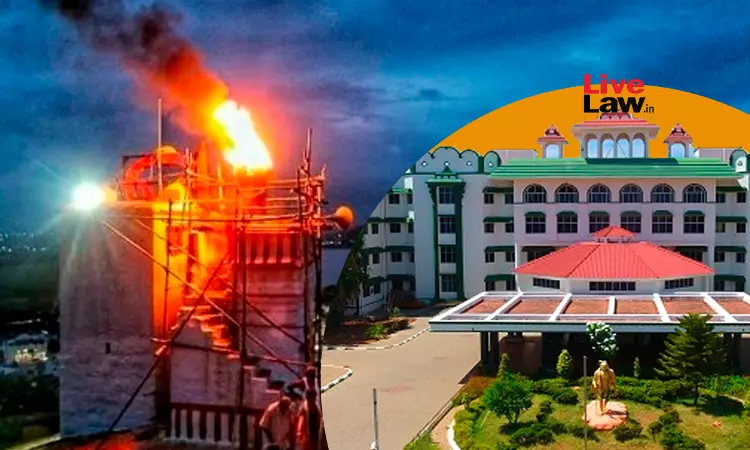
When I wrote earlier on the Tirupparankundram controversy (7th Dec 2025, ToI), my concluding plea was deliberately modest: that mediation, not mandamus, offered the best chance of restoring calm on a hill layered with faith, memory and law. That article was written at a moment when the dispute over lighting the Karthigai Deepam at the Deepathoon appeared destined to join India's long list of religious flashpoints—kept alive less by belief than by administrative hesitation.
The Division Bench of the Madurai Bench of the Madras High Court has now chosen a different route. In its judgment dated January 6, 2026, the Court decisively rejects mediation and opts for judicial adjudication. Far from signalling judicial impatience, the move reflects constitutional realism: when the State itself ceases to be a neutral facilitator, adjudication becomes the only credible option.
This shift—from dialogue to determination—deserves careful attention.


A Dispute with a Century-Long Memory
Tirupparankundram is not a contemporary quarrel animated by present-day identity politics. It is a dispute that has travelled through civil courts, writ courts, appellate Benches and even the Privy Council.
The judgment adverts to 4 judicial milestones: The foundational case remains the decree in O.S. No. 4 of 1920, affirmed by the Privy Council in 1931. That judgment conclusively demarcated ownership on the hill: the Dargah and its immediate adjuncts were declared to belong to the Muslim community, while the rest of the hill vested in the Subramania Swamy Devasthanam. The demarcation was precise, territorial and final.
Every subsequent round of litigation—the 1996 decision permitting Deepam lighting near the Uchipillaiyar temple, the dismissal of writ petitions in 2014 seeking alternate locations, and the split verdict of 2025 on right to animal sacrifice in the Darga premises on certain days—operated within this settled framework. What changed over time was not the law, but the State's willingness to acknowledge and act upon it.
Why Mediation Was Found Wanting
In my earlier article, I had argued that mediation could still salvage trust. The Bench records why mediation had already lost legitimacy.
Repeated peace committee meetings convened by the State had not merely failed; they had deepened mistrust. The Court notes that the HR & CE Department and the State administration had approached the issue with closed minds, effectively precluding restoration of the Deepam at the Deepathoon even before deliberations began. Neutrality—the oxygen of mediation—was conspicuously absent.
The situation worsened when the Waqf Board advanced, for the first time in appeal, a claim that the Deepathoon itself belonged to the Dargah. The Court characterises this as a “mischievous submission”, noting that it stood in direct contradiction to the 1920 decree and its affirmation by the Privy Council. When statutory authorities attempt to reopen settled title under the guise of mediation, judicial clarity becomes unavoidable.
Why the Deepathoon Is Not a Survey Stone
A central plank of the appellants' resistance was the assertion that the Deepathoon was merely a survey stone—an administrative artefact devoid of religious meaning. The Division Bench rejects this claim by relying squarely on British-era survey methodology.
In paragraphs 131 to 137, the Court examines colonial survey practices and identifies their defining features: survey stones were low-lying, embedded at ground level, aligned to boundary lines, numbered, and meticulously recorded in field maps and settlement registers. Visibility or elevation played no role in their purpose.
The Deepathoon conforms to none of these characteristics. It is elevated, prominent and isolated; it bears no numbering and finds no mention in any survey map despite multiple survey exercises conducted over decades on the hill. Its location serves no conceivable cadastral purpose. The Court also notes that even triangulation pillars followed a distinct colonial design—one that the Deepathoon does not resemble.
The conclusion is evidentiary rather than inferential. Colonial records, often relied upon by the State, here decisively undermine its own argument. The Deepathoon cannot be retrospectively reclassified as a survey stone merely to strip it of its religious character.
Agama: No Prohibition, No Bar
The Court's engagement with Agamic doctrine is careful and restrained. In paragraphs 122 to 130, the Bench does not look for affirmative sanction to light the Deepam at the Deepathoon. Instead, it frames the correct juridical inquiry: whether anything in the Agamas prohibits lighting the lamp from the place now identified by the worshippers.
Finding no such prohibition, the Court rejects the State's attempt to deploy Agama as a veto. Speculative theology, the judgment makes clear, cannot be invoked by the executive to negate a form of worship that is otherwise consistent with law and history.
Worshippers' Rights as a Constitutional Constraint
Running through the judgment is an implicit reaffirmation of worshippers' rights. Under the Tamil Nadu HR & CE Act, persons having interest in a temple are not strangers to its affairs. Their right to worship, subject to law, operates as a constitutional and statutory constraint on executive discretion.
The State's posture throughout the litigation treated worship as a privilege to be regulated rather than a right to be respected. The Court corrects this imbalance. Administrative convenience, heritage regulation, or inter-departmental disagreement cannot be pressed into service to extinguish legitimate expectations of worshippers when those expectations are rooted in settled title and lawful practice.
The Executive Officer Question Not Touched
One structural issue remains untouched—and may surface in future disputes.
The Executive Officer of the temple has been a principal actor resisting the worshippers' claim. Yet the very legitimacy of the Executive Officer as a permanent administrative presence is not beyond challenge. The provision in the TN HR & CE Act creating the office of EO as a permanent post under s 45 of the Act has itself been questioned on the touchstone of Constitutional vires in WP 544 of 2009 invoking the original jurisdiction of the Supreme Court. That challenge forms part of the larger constitutional discourse shaped by Subramanian Swamy v. State of Tamil Nadu, the Chidambaram Podhu Dikshitar case, where denominational rights were affirmed and sustained resistance to administrative overreach succeeded. The Tirupparankundram judgment does not engage with this vulnerability. Should the EO's institutional position itself come under renewed scrutiny, future conflicts of this nature may acquire a different legal complexion.
Unresolved Issues and a Fresh Opportunity for Dialogue
It is equally important to note what the judgment does not decide.
While incidents relating to animal sacrifice at the Dargah are adverted to as part of the background of disputes between the parties, the present judgment does not adjudicate that controversy. It merely records that a separate three-member Bench, by a majority, has already relegated the parties to seek resolution before the competent civil court.
That very acknowledgment presents a renewed opportunity for the State—this time not as a litigant, but as a facilitator—to meaningfully initiate community mediation. Incidentally, a salient feature discussed in the judgment and the role of ASI, the Thiruparankundram Hill has been declared a protected area under the Ancient Monuments and Archaeological Sites and Remains Act, 1958.. This designation imposes restrictions on activities within the hill, including animal sacrifices, cooking, and other practices that could damage the protected monuments or violate the Act's provisions. There is therefore another State actor who will enter the fray.
Those opposing animal sacrifice must be willing to enter dialogue with their Muslim brethren: to understand what practices are sought to be preserved, what objections genuinely arise, and whether accommodation is possible within the bounds of law. Such dialogue need not proceed in ignorance of Hindu tradition itself. Animal sacrifice has historically formed part of religious observance in several Hindu contexts—at temples such as Samayapuram Mariamman near Tiruchirapalli, Angalamman shrines across Tamil Nadu, Kamakhya in Assam, and during village deity festivals across parts of southern and eastern India.
Recognising this lived religious plurality does not compel agreement, but it does invite honesty. If law is the outer boundary, dialogue must fill the space within.
Illumination Beyond the Flame
By choosing adjudication over exhausted mediation, the Court has brought long-awaited legal clarity to one strand of the Tirupparankundram dispute. The lighting of the Deepam, if and when it occurs, can only be in the Tamil month of Karthigai. There is no scope for such observance in Margazhi. The earliest possible occasion would therefore arise only in the later part of Karthigai 2026. There is again another distinct prospect that could defeat or delay,- of all the appellants keeping the powder dry and training their guns for a fight before the Supreme Court.
Whether that moment becomes merely another ritual event or a marker of restored equilibrium depends less on the Court and more on the State and the communities it governs. The law has spoken with restraint. It is now for governance—and dialogue—to respond with wisdom.
Views Are Personal.
Author is a Former Judge of High Court of Punjab And Haryana.


