



Should MSP Become A Legal Right? Constitutional Debate Around C2 Formula
Sarvesh JP & Deepanjana Saha
25 July 2026 10:00 AM IST
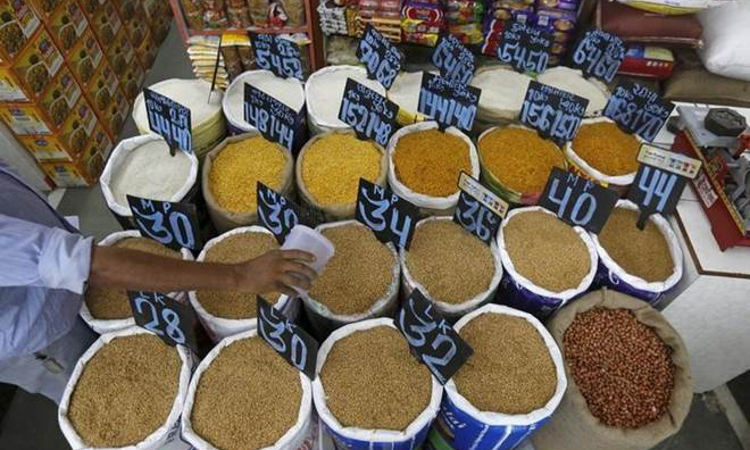
The Supreme Court's recent notice on a petition challenging the Union Government's Minimum Support Price (MSP) framework has reopened a question that lies at the intersection of agrarian economics and constitutional welfare obligations: should MSP, calculated on the comprehensive C2 cost formula, be an enforceable legal right? The petition, drawing on the Swaminathan Commission's recommendation of MSP at C2+50%, reflects genuine and long-standing farmer distress. But converting this aspiration into a justiciable entitlement involves difficult technical, fiscal, and institutional trade-offs that both proponents and critics must honestly reckon with.
The C2 vs. A2+FL Divide: More Than Semantics
The government's current MSP is anchored in the A2+FL model, which accounts for paid-out costs (seeds, fertilisers, hired labour, irrigation) plus imputed family labour. The C2 formula extends this by adding imputed rent on owned land and interest on fixed capital. According to CACP data, C2 costs have consistently run 35–45% higher than A2+FL across major crops, roughly ₹4,000–7,000 per quintal for paddy versus ₹2,800–5,000 under A2+FL in recent crop years.


This gap is not trivial for small and marginal farmers, who constitute over 86% of landholdings (Agricultural Census 2021) but rarely own more than 1–2 hectares. For them, foregone rent on land is not an accounting abstraction: it is the opportunity cost of capital tied up in fragile, weather-dependent production. A2+FL-based MSP structurally undercompensates them. Yet C2-based MSP, if universally mandated, would require a procurement and price-enforcement architecture that does not currently exist for most of the 23 notified crops beyond wheat and paddy.
Who Actually Benefits From MSP?
A candid assessment reveals that MSP benefits are deeply unequal. FCI and state procurement agencies overwhelmingly concentrate in Punjab, Haryana, Andhra Pradesh, and Chhattisgarh. NITI Aayog's 2021 working paper estimated that barely 6% of farmers in states like Bihar, West Bengal, and Jharkhand, where smallholder agriculture dominates actually sell at or above MSP. In Uttar Pradesh and Odisha, the figure rarely crosses 10%. The C2+50% formula, however just in intent, would disproportionately benefit farmers in states that already have functional procurement infrastructure, deepening regional disparity rather than correcting it.
This structural gap points to the real problem: making MSP a legal right without simultaneously building procurement capacity, rural market infrastructure, and cold storage networks risks creating a right on paper that remains unenforceable in practice for precisely those farmers who need it most.
The Fiscal Arithmetic
Critics of a statutory MSP are correct on the fiscal scale. Government estimates and independent analysis including a 2022 ICRIER study suggest that extending mandatory procurement to all 23 notified crops at C2+50% could cost between ₹8–12 lakh crore annually, depending on crop-year conditions. This would dwarf the current annual food subsidy bill of approximately ₹2 lakh crore (Union Budget 2024–25) and strain the fiscal framework severely. Procurement alone is only part of the burden: storage, transportation, and price stabilisation across diverse regional markets would require enormous capital investment.
Proponents rightly counter that farmer suicides averaging over 10,000 annually per NCRB data and rising agrarian debt represent a social and economic cost that is not factored into the fiscal argument against MSP. The cost of persistent distress, in terms of rural consumption collapse, mental health burden, and intergenerational poverty, is real even if harder to quantify. The fiscal debate should weigh both sides of the ledger.
Market Distortions and Ecological Risks
A uniform, legally binding MSP for all 23 crops would fundamentally alter price signals in agricultural markets. High guaranteed prices for wheat and paddy have already incentivised their overproduction in water-stressed regions. Punjab withdraws an estimated 28.2 billion cubic metres of groundwater annually for paddy alone a figure cited in multiple MoA&FW groundwater assessments contributing to critical aquifer depletion. Extending similar guaranteed pricing to other crops without crop-diversification conditionalities risks replicating this pattern.
CACP, in its annual Price Policy reports from 2020 to 2025, has consistently flagged the need for inter-crop parity, demand-supply conditions, and environmental sustainability in MSP recommendations. A rigid statutory formula that overrides these considerations would effectively strip CACP of its analytical role, replacing evidence-based pricing with a fixed legislative mandate that may not respond to market realities.
The WTO Constraint: A Real, Not Hypothetical, Problem
India's MSP-linked procurement is classified under the Amber Box in the WTO Agreement on Agriculture, subject to a 10% de minimis ceiling on aggregate support relative to the value of production. India has relied on the 2013 Bali Peace Clause as a temporary shield, but this protection is provisional and has been a recurring source of trade friction. A legally mandated national procurement guarantee for all 23 crops at C2+50% would almost certainly breach the de minimis threshold, inviting WTO dispute proceedings and complicating India's trade diplomacy. This is not a reason to abandon farmer welfare, but it is a constraint that any statutory framework must design around most plausibly through price deficiency payment mechanisms (which avoid physical procurement) rather than open-ended purchase obligations.
Can a Statutory Framework Work?
The legislative route is more constitutionally defensible than judicial mandating. Parliament has successfully converted DPSP aspirations into justiciable frameworks through the MGNREGA and the National Food Security Act. A similar MSP law could focus on three targeted mechanisms: price deficiency payments (compensating farmers for the gap between market price and MSP without physical procurement), state-level procurement mandates calibrated to existing infrastructure, and grievance redressal mechanisms with district-level MSP monitoring.
State-level experiments offer instructive precedents. Madhya Pradesh's Bhavantar Bhugtan Yojana a price deficiency payment scheme, showed both the potential and administrative complexity of such approaches. Pilot data from 2017–19 suggested it reduced farmer income shortfalls but faced manipulation through artificial price suppression by traders. Any national framework must anticipate and address such gaming incentives through transparent market price benchmarking.
The Centre-State Dimension
Agriculture is a State subject under List II of the Seventh Schedule. A uniform national MSP mandate would sit uneasily with this federal structure. States have widely varying agrarian structures, fiscal capacities, and market infrastructure. A Maharashtra sugarcane farmer, a Tamil Nadu smallholder growing ragi, and a Punjab wheat farmer face fundamentally different production realities. Statutory MSP legislation must allow for state-level differentiation in implementation mechanisms, with Centre-State cost-sharing arrangements for procurement infrastructure, rather than imposing a uniform procurement obligation on all states regardless of capacity.
A Pragmatic Path Forward
The debate should not be framed as a binary choice between an unenforceable constitutional claim and the status quo. A credible policy path requires several simultaneous interventions. First, CACP's methodology should be made fully transparent: its cost-weighting rationale, regional disaggregation, and divergence from C2 should be published and subject to independent audit. Second, procurement infrastructure must be scaled in underserved states before any legal mandate kicks in a right without the infrastructure to exercise it is illusory. Third, price deficiency payment schemes, properly designed to prevent market manipulation, offer a WTO-compatible middle path that protects farmer income without the full procurement burden.
Making MSP a statutory right is not wrong in principle. But the form it takes matters enormously. A poorly designed mandate one that ignores procurement gaps, fiscal constraints, ecological risks, and WTO obligations could create legal rights for farmers on paper while failing them in the field.India's agrarian crisis is real, and the systematic undervaluation of farmer labour and land under A2+FL-based MSP is a genuine policy failure. But the solution requires building the institutional capacity to make any legal guarantee meaningful not just inscribing a number in statute. The constitutional conversation should move from whether MSP should be a legal right to what kind of legal framework can actually deliver remunerative prices to the 86% of farmers who currently benefit least from the MSP system. That is a question for Parliament and state legislatures, informed by evidence, not one that courts are well-placed to resolve through formula-mandating.
Author Sarvesh JP is Research Associate at BOBP-IGO, Chennai & Deepanjana Saha is a Ph.D. fellow at ATREE, Bengaluru. Views are personal.


