



Did OSH Code 2020 Create An Impossible Registration Deadline?
Devesh
16 July 2026 3:00 PM IST
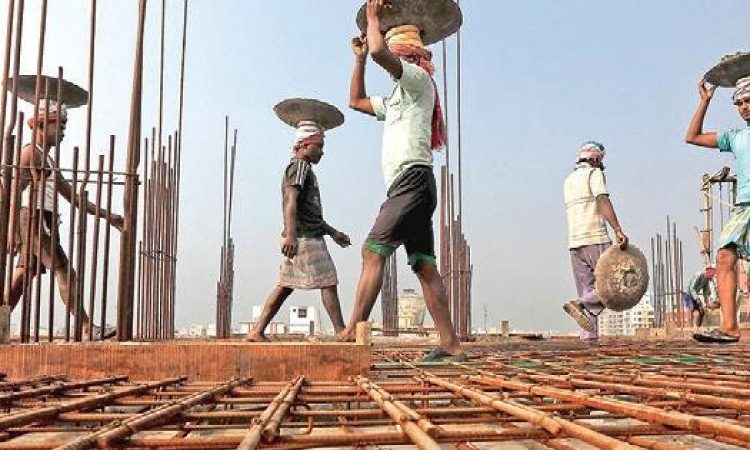
Image Courtesy : The New Indian Express
The Occupational Safety, Health and Working Conditions Code, 2020 ("OSH Code") came into force on 21 November 2025[1]. The Ministry published the Occupational Safety, Health and Working Conditions (Central) Rules, 2026 ("Central Rules") on 9 May 2026[2]. The OSH Code requires every establishment to which it applies to obtain registration. This may fairly be described as the first and most fundamental compliance step under the Code, since no other obligation under it can ordinarily be discharged until an establishment is registered.
While Section 3(1) prescribes the time within which such registration must be obtained, the prescribed form and the registration portal necessary to comply with that obligation became clear only several months later, once the Central Rules came into force. The portals meant to give effect to this mechanism were also not ready during this period. This analysis proceeds on the Central Rules, which apply where the Central Government is the appropriate Government under Section 2(1)(d). Establishments falling under a State Government's jurisdiction would need to be examined against that State's own notified Rules. The absence of both the prescribed form and the portal during this period raises a significant legal question: Could an establishment be expected to comply with a statutory registration deadline before the mechanism for compliance itself existed?


To answer this question, it is necessary to examine the registration framework contained in Chapter II of the OSH Code. Chapter II of the OSH Code provides for two different situations regarding registration, each carrying a different timeline. One is an establishment that already existed and was already registered under some other Central labour law when the Code commenced. The other is an establishment that comes into existence for the first time after the Code commenced. Each of these situations is examined below.
Establishments Already In Existence: Section 3(8)
Section 3(8) of the OSH Code deals with an establishment that has already been registered under any Central labour law or any other law which may be notified by the Central Government and which applies to the establishment which is in existence at the time of the commencement of this Code. Such an establishment is deemed to be registered under the OSH Code itself, and the employer only has to furnish the registration details to the concerned Registering Officer "within such time and in such form as may be prescribed."
Rule 3(6) of the Central Rules fixes that time and talks about the form in which it is to be provided to the Registering Officer. It says such an employer must update the particulars in FORM-I "within six months from the date on which rules come into force." So the six-month window under Rule 3(6) runs from 9 May 2026 to 9 November 2026.
Establishments Coming Into Existence After Commencement: Section 3(1)
Section 3(1) of the OSH Code says that every employer of any establishment which comes into existence after the commencement of this Code, and to which the Code applies, shall, within sixty days from the date of such applicability of this Code, apply for registration. The question is what the words "such applicability" point to. There are two possible readings, and they lead to very different results.
Reading A: A Single Date for Every Establishment
One reading treats "such applicability" as another way of saying the Code's own commencement, that is, 21 November 2025, the same date for every establishment regardless of when it actually came into existence. On this reading, the sixty days for every establishment under Section 3(1) closed on or about 20 January 2026, and any establishment coming into existence after that date would already be out of time on the very date of its coming into existence.
Reading B: A Date Specific to Each Establishment
The other reading, which is the more reasonable one, treats "such applicability" as referring back to clause (b) of Section 3(1), "to which this Code shall apply," that is, the applicability of the Code to that particular establishment. Clause (a) already fixes the class of establishment by reference to the Code's commencement.
The operative deadline in the same sentence then uses a different word, applicability, rather than repeating commencement, and ties it to clause (b) with the word such. Section 1(2) of the OSH Code itself instructs that commencement is to be read as the date a provision comes into force, a single fixed date. It says nothing about the word applicability, which is used only in the operative clause and naturally reads as the point at which the Code starts to apply to that specific establishment, ordinarily the date it comes into existence and meets the definition of an establishment.
Why Reading B Is the Correct One
Reading A produces a result that is untenable. If the sixty days for every establishment ran from 21 November 2025 alone, Section 3(1) would become impossible to comply with for every establishment coming into existence after 20 January 2026, in perpetuity, since its window would already have closed before it came into existence. A provision cannot sensibly be read to make itself permanently incapable of being complied with by the very class of persons it is meant to regulate. Reading B avoids this and is the one this note follows: the sixty days run from the date the Code becomes applicable to that particular establishment, which is ordinarily its own date of coming into existence.
Registration Without a Mechanism
Section 3(2) of the OSH Code only says that the application must be made "in such manner, in such form... as may be prescribed by the appropriate Government." That manner and form, meaning FORM-I on the Shram Suvidha Portal, was prescribed only by Rule 3(1) of the Central Rules, which took effect on 9 May 2026. So, an establishment coming into existence after commencement of the Code could be under a duty to register within sixty days, while the form and portal needed to do so did not exist at that point in time.
The Compliance Gap
Placed side by side, the two provisions treat two similar establishments very differently. An establishment that already had a registration under previous laws gets a full six months, counted from the day the Rules actually came into force. An establishment with no earlier registration at all, simply because it comes into existence after 21 November 2025, gets only sixty days, counted from its own date of coming into existence, with no link at all to the Rules coming into force. Since the Rules did not come into force until 9 May 2026, any establishment whose own sixty day period, counted from its date of coming into existence, ran out before that date had no way to comply in time.
Example 1: An Establishment Already Registered Under an Older Law
An establishment already existed on 21 November 2025 and was registered under the Central Labour Law. It falls under Section 3(8) and gets until 9 November 2026 to update its registration, a full six months from the date the Rules actually came into force.
Example 2: An Establishment Coming Into Existence Just After Commencement
An establishment came into existence on 22 November 2025, one day after the Code commenced. It falls under Section 3(1), and its sixty day period ended on or about 20 January 2026, well over three months before FORM-I or the Portal existed at all.
Example 3: An Establishment Coming Into Existence Some Months Later
An establishment came into existence later still, on 1 March 2026. Its own sixty day period, counted from its own date of existence, ran out on or about 30 April 2026, still about a week before the Rules and the Portal came into force on 9 May 2026. Only an establishment whose own sixty day period, by reason of a later date of coming into existence, extended past 9 May 2026 would have had any real opportunity to use FORM-I within its statutory window.
Practical Consequences During Inspection
1) The Risk
If an Inspector-cum-Facilitator finds such an establishment registered only from May 2026 onward, the provision that will actually be raised is Section 3(7) of the OSH Code, which says that no employer shall employ any person in an establishment that has not been registered. This can attract the general penalty under Section 94 of the OSH Code, which is a fine of two lakh to three lakh rupees, plus two thousand rupees for every day the default continues.
Three mitigating factors are available against this risk, and each stands on its own, regardless of the others.
2) Mitigating Factor 1: The Late Fee Itself Has Not Been Notified
Rule 3(3) of the Central Rules states that a late fee becomes payable "after expiry of sixty days from the date of notification of these rules," but the amount of that late fee is itself left to be "specified through general or special order by the Central Government issued from time to time."
No such order specifying the late fee has been issued so far. This means that even an employer who now wishes to file a late application faces a further difficulty, since there is presently no prescribed fee that can be paid to regularise a late registration.
3) Mitigating Factor 2: The Registering Officer's First Response Is Corrective
Rule 3(5) of the Central Rules says that where an employer has not complied with Rule 3(1), the Registering Officer may simply direct the employer to comply within a further time fixed by that order. This is a corrective step, not an automatic penalty.
4) Mitigating Factor 3: The Mandatory Thirty Day Compliance Window
Section 110(1) of the OSH Code says that for a first offence that does not involve an accident, the Inspector-cum-Facilitator must give the employer thirty days to comply before starting any prosecution, and if the employer complies within that time, no prosecution can be initiated. A registration delay caused by the Rules coming late is exactly this kind of first, non-accident case.
Underlying all three mitigating factors is the simple principle that the law does not ask a person to do something that was not possible to do, since the form and the portal required by Section 3(2) did not exist before 9 May 2026.[3]
The difficulty identified in this article does not arise from the language of Section 3(1) alone, but from the gap between the commencement of the registration obligation and the later prescription of the procedural mechanism required to comply with it. While establishments covered by Section 3(8) were given a compliance window linked to the coming into force of the Rules, many establishments falling under Section 3(1) had their statutory registration period expire before FORM-I and the Shram Suvidha Portal became available. In these circumstances, the resulting delay was not attributable to the employer, but to the absence of the mechanism prescribed for compliance. The registration framework under the OSH Code, therefore, created a compliance gap that warrants careful legal and administrative consideration.
Occupational Safety, Health and Working Conditions Code, 2020, Notification No. S.O. 5321(E), Gazette of India, Extraordinary, Part II, Section 3(ii) (Nov. 21, 2025), https://www.labour.gov.in/offerings/schemes-and-services/details/labour-codes-gzNzQzMtQWa ↑
Ministry of Labour & Employment, Notification No. G.S.R. 345(E), Occupational Safety, Health and Working Conditions (Central) Rules, 2026, Gazette of India, pt. II, § 3(i) (May 9, 2026), [Gazette ID No. CG-DL-E-09052026-272379]. ↑
Lex non cogit ad impossibilia, a settled maxim of statutory interpretation applied to excuse non-compliance with a statutory obligation where performance was rendered impossible by circumstances outside the obligor's control. ↑
Author is an Advocate practicing at Patna High Court. Views are personal.


