



Paradox Of Indian Will
Rahul M Bhangde
12 Jun 2026 3:00 PM IST
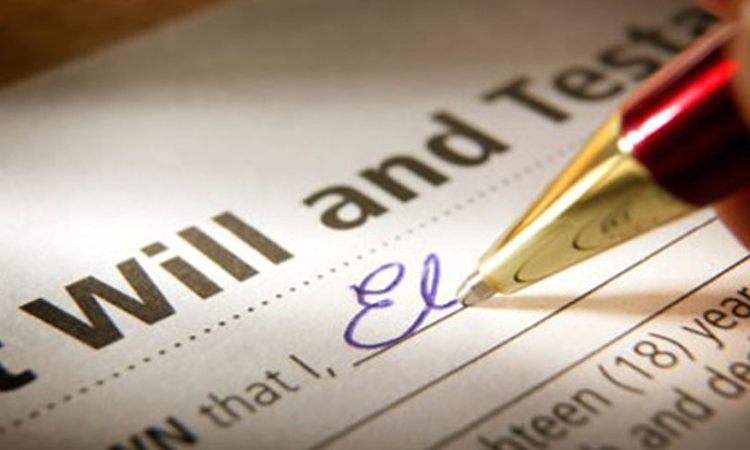
“Easy to Make, Hard to Prove”- An Inversion that the Law must Correct
An extraordinary legal peculiarity that has so far remained obscured from attention is the paradox of Indian Will. The law lays down a thin requirement for making a will provided under Section 63 of the Indian Succession Act, 1925, that the Will must be signed by testator and must be attested by two witnesses. That's all. Law doesn't mandate registration of Will. Therefore, a Will can be scribbled on a plain piece of paper and signed by the testator and attested by any two individuals who just happened to be present at that time. There is no other legal requirement for preparing a Will. Contrast thereto, the moment the testator dies and disputes surrounding his estate crop up, the same will, which was very easily made, becomes the hardest document to prove. Alas, the testator is no longer there to prove it!
This easy to make regime also makes it easier to fabricate Wills. It is then left to the courts to appreciate evidence and weed out fabricated Wills. This task is extremely onerous and can take up to 20-30 years to move through to the top of the judicial hierarchy. This also leads to prolonged delay in succession. Moreover, such fabricated Wills deprive real successors of their legitimate right.


The method of proving a Will is provided under Section 68 of the Evidence Act which stipulates that the Will cannot be used as evidence until one attesting witness has been called for the purpose of proving its execution provided the attesting witness is alive. Layered on top of this requirement of evidence of attesting witness is judicially evolved doctrine of Suspicious Circumstances. Therefore, since the testator is dead, proof of Will becomes genuinely difficult and is dependent on the testimony of the attesting witness. Attesting witness may turn hostile and make mistakes during cross-examination. Courts may make error in appreciating their testimony. The one person who knows the truth, the testator, is gone. The fate of propounder i.e. the beneficiary, is precariously dependent on the testimony of the attesting witness and its rightful appreciation by the courts. Therefore, a genuine beneficiary of genuine Will has an uphill task of proving a Will which his predecessor had made for his benefit. This gives scope to the left-out successors to create hurdles by questioning a genuine Will. This again leads to unreasonable delay in the beneficiary getting benefit of the estate of his predecessors. So, the law as it stands today for Wills is “Easy to Make, Hard to Prove”.
The law is therefore lax where it should be stringent i.e. at the time of preparation of Will and it is stringent where laxity has become inevitable i.e. at the time of proof. This is precisely the wrong way around.
Law should insist on formality and rigour at the stage when the testator is alive and is able to comply with the requirements of law and not after he is no longer alive. While the testator lives, every safeguard is possible and must be insisted. He can appear before the Sub-Registrar and register the Will. The Registrar's office can photograph and video-record the execution and authenticate it by biometric systems. The Will can be subjected, if the law so provides, to a court-supervised validation process during the testator's lifetime.
At present, the law provides a procedure for validation through probate only after the testator's demise. Why should a comparable procedure not be available while the testator is alive so that the court can satisfy itself in his presence and thereby substantially prevent avoidable disputes later? This way we can prevent, to a large extent, fabrication of Wills and long drawn litigations.
Doctrine of Suspicious Circumstances
To weed out fabricated Wills, the Courts have devised the doctrine of Suspicious Circumstances as the current statutory scheme is fragile and leaves room for fabrication of Will. The intent and reason for this doctrine are flawless and well thought out. But it has made proof of a genuine Will astonishingly onerous. The doctrine had first evolved in the case of H.Venkatachala Iyengar v. B.N. Thimmajamma (1958) wherein the Hon'ble Supreme Court held that if the execution of Will is surrounded by suspicious circumstances the propounder must remove the suspicion to the satisfaction of court's conscience. The circumstances that are treated as suspicious by various decisions are: unusual signature, unsound mental and physical condition, unnatural and unfair disposition etc. This doctrine has been reaffirmed in many cases namely Bhagwan Kaur, Janki Narayan Bhoir, Yumnam Ongbi Tampha Ibema Deve, Shivkumar v. Sharanabasappa and Meena Pradhan v. Kamla Pradhan.
This test has been summarized as a prudent mind test. The court is, therefore, required to undertake a herculean task of deciphering the intention of the dead, the exercise which can be avoided by a proper statutory framework to be complied by the testator during his lifetime.
There can be no quarrel about the underlying aim of the courts-to give effect to the wills without losing sight of the fact that the current statutory regime is weak leaving a lot of room for people to fabricate Wills. The courts have therefore, rightly been careful. But this has led to many undesirable consequences. If the court in this adjudicatory process makes some mistakes, it leads to devastating consequences for the successors. The after-death scrutiny by the courts and lengthy trials can be easily avoided if the statutory scheme provides for required safeguard which the testator can fulfil/comply before his death.
Anomaly with other Registered Instruments
Registration of Will is optional. Even if the Will is registered, the requirement of satisfying the mandate of Section 68 of the Evidence Act is not waived. The propounder i.e. beneficiary is still required to prove the Will by examining attesting witness and ensuring that the attesting witness withstands the cross-examination.
No such requirement is there when it comes to proving a registered Sale Deed, Gift Deed, Mortgage Deed and Lease Deed executed and registered by the same person on the same day before the same Sub Registrar. These documents are readily accepted as genuine. These documents carry the statutory presumption and a very high threshold of burden of proof lies on the person questioning these documents. Based on these documents' titles transfer, revenue records are updated, banks lend money and courts uphold these documents.
However, a registered Will executed in the same manner on the same day before the same Registrar does not enjoy any such presumption. The Hon'ble Supreme Court in the case of Derek A.C. Lobo v. Ulric M.A. Lobo (2023) has held that mere registration does not give sanctity or guarantee the validity of a Will and that the propounder must still examine one attesting witness and satisfy the requirement of Section 68 of the Indian Evidence Act.
However, recently Hon'ble Justice Vikram Nath, Supreme Court with Hon'ble Justice Sandeep Mehta in the erudite judgment in Metpalli Lasum Bai v. Metpalli Muthaiah (2025) have restored some weight to registered Wills. The Hon'ble Supreme Court has held that registered Wills carry presumption of due execution and genuineness and that the burden of proof lies heavily on the party challenging it. This is a very welcome course correction. However, the requirement of evidence of attesting witness and his testimony withstanding cross-examination continues, in view of Section 68 of the Indian Evidence Act. No such requirement is there for other documents as stated above.
The legislature needs to fix this anomaly at the earliest.
Regime Change - A Case for Statutory Reform to “Hard to Make, Easy to Prove”
The way forward is not to ask the courts to lower the bar for proving Wills but to resolve the inversion in the statutory scheme. The right way forward is to raise bar for making the Will by imposing stringent legal requirements. Once this higher bar is met by the testator, the statute must give the resulting document evidentiary status so that the courts are not required to undertake lengthy trials to decipher the intention of the dead. The new regime would therefore be “Hard to Make, Easy to Prove”.
The potential legislative amendment may include the following:
1. Create a new statutory category of “Certified Will”. This category would require stringent formalities like, mandatory registration before the Sub Registrar, testator's photograph, biometric, video recording of execution. Further mandatory requirement of presence of government approved medical practitioner to certify mental capacity of testator, attestation by a Judicial Officer that the aforesaid procedure has been followed in his presence and that the same has been done without any undue influence, coercion or fraud. Once all these formalities are completed the Will must be stamped as a 'Certified Will' by the designated Judicial Officer.
2. Such 'Certified Will” must be given a strong statutory presumption, and such presumption can only be rebutted in case of clear evidence of impersonation or fraud on the Registering Authority and that too in the rarest of the rare case.
3. The burden of proof must be on the person challenging such 'Certified Will' and not its propounder. The requirement of evidence of attesting witness should be removed as it puts unnecessary burden on the propounder.
4. Instead of each person preparing the Will in his own format, a statutory format must be introduced. The testator can fill the said form and get it certified in the aforesaid manner. This will remove ambiguities and errors.
5. This new regime will not only prevent fabrication of Wills but also prevent courts from being clogged with disputes which can be avoided. This will also ensure faster, easier and smooth succession.
6. The testamentary law suffers from this single corrective infirmity i.e. it has made the wrong end of the process difficult. The requirement must be flipped to the end where it belongs i.e. a will should be hard to make and easy to prove. The stringent framework will easily achieve the objective which the doctrine Suspicious Circumstances has been forced to do today.
7. A Will is the last voice of person who is no more alive to speak. The legal system owes the voice of the dead more respect than it currently receives. The testator will do his part when he is alive, and the strong presumption will ensure that his wishes are not defeated after his death.
Author is an Advocate. Views are personal.


