When State Defeats Its Own Case: Police Lapses, Procedural Safeguards, And Crisis Of Criminal Justice
Vedant Dhakad
23 Aug 2026 10:00 AM IST
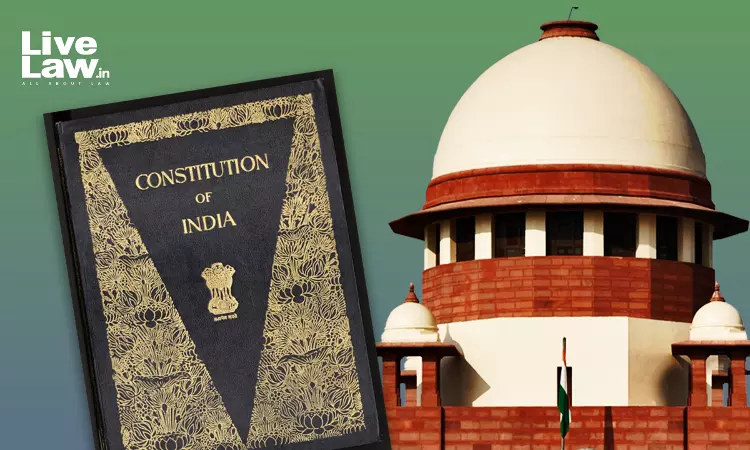
When the State's own procedural failures begin to threaten an otherwise sustainable prosecution, the question is no longer whether constitutional safeguards are too protective of the accused. It is whether the institutions enforcing criminal law are capable of complying with the law themselves. The Raja Raghuvanshi murder case brought the constitutional question of communicating the grounds of arrest into sharp focus. The Supreme Court subsequently clarified that an inadequacy in communicating such grounds does not automatically vitiate an arrest unless prejudice is demonstrated. The controversy nevertheless exposes a larger concern: why do investigating agencies continue to commit avoidable procedural lapses despite settled constitutional requirements and repeated judicial directions?
The controversy is not isolated; rather, it is indicative of a bigger trend witnessed across India's judicial system where courts now face cases where the biggest problem for prosecution is not the strategy of defence but the failure of the investigating agency to comply with its own laws. Non-compliance in terms of arrests and searches, wrong collection of evidence, broken chain of custody, delay in forensic reports and weak prosecution preparation have made it possible for avoidable shortcomings in the functioning of institutions to waste judicial time while in some cases, even securing bail and excluding evidence. In other words, issues are no longer limited to the rights of an accused but also justice itself.


There is perhaps no judgment that illustrates this dilemma better than the judgment of the Madhya Pradesh High Court in Dharmendra Lodhi v. State of Madhya Pradesh (2026 LiveLaw (MP) 264)[1] where, while dismissing a habeas corpus petition against arrest made under the NDPS Act, a Division Bench comprising Justice G.S. Ahluwalia and Justice Anuradha Shukla gave a scathing critique of the investigative work done by the police.
The Court remarked that when violations of the provisions of Section 47 of the Bharatiya Nagarik Suraksha Sanhita[2], 2023 (BNSS) which stipulates the communication of the reasons for arrest occur on more than one occasion, and judgments passed by the Supreme Court in Pankaj Bansal[3], Vihaan Kumar[4], and Mihir Rajesh Shah[5] go unheeded, it bodes ill for the entire system. The issue raised was whether such occurrences were a case of mere negligence or if they resulted in opening up of some avoidable loopholes which ultimately accrue benefits to the accused.
The reaction of the Court was no less notable. It ordered the Director General of Police, Madhya Pradesh to issue a warning to all investigating officers across the State and stated that if the statutory provisions are violated despite clear statutory mandate, action should be taken against the erring officers. This was a shift of force in the discussion from the individual errors to the collective accountability of the different institutions, due to the fact that repeated violations of settled provisions are no longer a matter of mere mistakes but of systemic failure.
When Procedural Safeguards Become Institutional Failure
This judicial concern strikes at the heart of a growing paradox within India's criminal justice system. Constitutional safeguards are often criticised as "technicalities" that enable accused persons to escape the consequences of criminal conduct. However, the Constitution never intended procedural safeguards to operate as loopholes. Articles 21 and 22 (1)[6]exist because the State's power to arrest, investigate and prosecute is among the most coercive powers exercised in a constitutional democracy. The legitimacy of that power depends upon its lawful exercise. When courts insist on compliance with statutory and constitutional requirements, they are not elevating form over substance; they are enforcing the rule of law itself.
The real question, therefore, is not whether courts are becoming overly protective of accused persons. The more pressing concern is why, despite decades of authoritative judicial pronouncements and statutory reforms, investigating agencies continue to commit elementary procedural mistakes that jeopardise otherwise sustainable prosecutions. If the law governing arrest, investigation and prosecution is now well settled, why do the same lapses continue to recur? More importantly, when victims are denied timely justice because cases are weakened by avoidable investigative failures, who bears responsibility for that institutional failure?
The answers extend beyond individual bail orders or acquittals. There are serious matters associated with this topic, particularly in relation to police professionalism, the efficiency of the prosecution, and the confidence of the public in the administration of criminal justice. This article maintains that the increased attention of the courts towards procedural compliance is not necessarily indicative of a conflict between the rights guaranteed by the Constitution and the law enforcement efforts. It also demonstrates that there is a fundamental institutional problem: justice is being obstructed not due to the protection rendered by the Constitution but because of the inability of the State to comply with them.
Constitutional Rights Are Not the Problem: Institutional Non-Compliance Is
The legal framework governing arrest and investigation is, by now, well established.The Supreme Court has constantly maintained that the standards of due process are the integral element of ensuring liberty under Articles 21 and 22 (1)of the Constitution. In the case of D.K. Basu v. State of West Bengal[7], the Supreme Court laid down procedural safeguards governing arrest and detention to protect individuals against custodial violence and abuse. The case of Arnesh Kumar v. State of Bihar[8] re-emphasized that the act of arrest itself should not be treated as an automatic exercise performed by the police and be done for valid reasons. More recently, in the judgment of Pankaj Bansal v. Union of India, it was established that the reasons for arresting a person have to be stated in writing, which has been reiterated in the judgment of Mihir Rajesh Shah. With the commencement of Bharatiya Nagarik Suraksha Sanhita, 2023, this requirement has become a part of legislation under section 47.
The message sent by the judiciary has thus remained the same: constitutional safeguards serve the purpose of monitoring the power of the State. However, despite the position given by the law on this matter, the courts are still faced with issues for which even the above judgments were supposed to find a solution.
When Investigation Weakens the Prosecution
The problem has grown much larger than cases of arrest. Indian courts have expressed their concern regarding a number of investigations hampered by unreliable recoveries, broken chain of custody, delayed expert opinions, failure to take testimonies of witnesses, contradictory testimonies, illegitimate seizure memos, and careless approach of prosecution.
The statement made here is an important one. The Courts do not intervene merely because of an abstract preference for procedure. The criminal justice system places the burden of proving guilt on the prosecution, and that burden can only be discharged through evidence collected and presented in accordance with law. If the investigative agencies are careless and do not pay attention to the safeguards or collect the evidence properly, then it becomes really hard for the prosecution to prove its point even before the defence starts presenting its case.
As a result, it often happens that people think that the court's decision is an incorrect one, but they do not notice that the real failure has taken place much earlier during the investigation and evidence collection. Each failure of procedure during the case shifts attention of the court from the crime itself to the stages of the investigation. Thus, the justice system becomes more about the principles than about the essence of the issue in question.
Beyond the “Technicality” Narrative: The Question of Accountability
This is exactly why the discourse must go past the simplistic narrative of “granting bail on technicality.” The pertinent issue is accountability. If constitutional guarantees have regularly been clarified by Parliament, the Supreme Court and departmental guidelines, there is little reason for their systematic violation. .
Hence, strengthening the justice system, therefore, does not require dilution of procedural safeguards, it requires investigating agencies to have the training, oversight and accountability necessary to comply with them consistently. Supervisory mechanisms must ensure that basic requirements relating to arrest, seizure, evidence collection and investigation are not treated as formalities to be completed after the fact. Where violations are repeated despite clear legal mandates, individual accountability must accompany institutional reform. Such accountability is not merely about protecting the rights of accused persons; it is equally about ensuring that victims do not bear the consequences of investigative failures for which they are not responsible.
Ultimately, constitutional safeguards do not weaken criminal justice. It is the State's failure to comply with its own legal framework that risks weakening otherwise sustainable prosecutions, consuming judicial resources and, most importantly, delaying justice for victims. The legitimacy of criminal law enforcement depends not merely on the State's power to investigate and prosecute, but on its ability to exercise that power lawfully.
Dharmendra Lodhi v. State of Madhya Pradesh, 2026 LiveLaw (MP) 264. ↑
Bharatiya Nagarik Suraksha Sanhita, No. 46 of 2023, § 47, India Code (2023). ↑
Pankaj Bansal v. Union of India, 2023 INSC 866. ↑
Vihaan Kumar v. State of Haryana, 2025 INSC 162. ↑
Mihir Rajesh Shah v. State of Maharashtra, 2025 INSC 1288. ↑
INDIA CONST. arts. 21–22 (1). ↑
D.K. Basu v. State of West Bengal, (1997) 1 SCC 416. ↑
Arnesh Kumar v. State of Bihar, 2014 INSC 463. ↑
Author is an LL.M student at Gujarat National Law University, Gandhinagar. Views are personal.