



Another Aberration, Another Overplay
V. Sudhish Pai, Senior Advocate
28 Feb 2026 3:23 PM IST
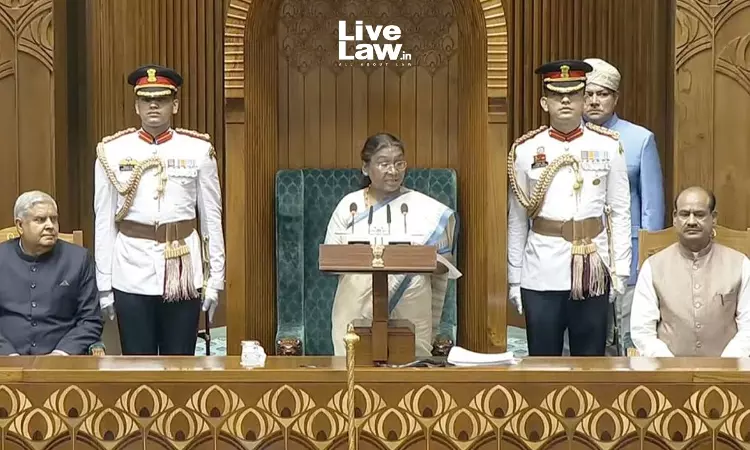
January 2026 witnessed the Head of the State-Governors not delivering the Opening Address to the legislature and defiling the Constitution. Not to lag, in February we have another constitutional aberration, this time the head of the government- the Prime Minister not replying to the debate on the motion of thanks to the President for her address. There have been rare occasions earlier when the Prime Minister did not reply to the debate. But the reasons were genuine.
Art 87 of the Constitution mandates that at the commencement of the first session after each General Election to the House of the People and the commencement of the first session of each year, the President shall address both Houses of Parliament assembled and inform them of the cause of summoning. The Address is prepared by the Cabinet. It contains the policy statement of the government and programme for the coming year. The government then moves a motion of thanks to the President. A senior member of the Cabinet initiates the debate. The Prime Minister as the head of the government replies to the debate which is then put to vote. The motion is invariably carried as the government has a majority in the House. If, however, the motion is defeated the government will have to resign. This is the constitutional convention and tradition evolved and in place over the centuries in every Westminster style democracy. This is ranked as one of the most important debates. A motion of thanks to the President has never been defeated in India. Even minority governments have been able to have the motion carried. In Britain Stanley Baldwin's minority government failed to get its motion of thanks to the Crown passed in 1924 and had to resign. These matters are governed not by constitutional provisions but by Rules of Procedure and Conduct of Business in the House.


It happened this year that the motion of thanks to the President was passed without the Prime Minister replying to the debate. While this is not unprecedented the reasons for this are unconvincing and jejune. Quite surprisingly, the Speaker informed the Lok Sabha that he had credible information that some Opposition members could have caused an unforeseen incident near the PM's seat. A few significant issues arise.
When Parliament is in session, the place of the Prime Minister and Leader of the House is essentially and primarily in the House. He is generally expected to be there all the time and sit through all the debates. Not being present is a rare exception. A foreign trip when Parliament is in session is normally not undertaken. The Prime Minister, therefore, had to be in the House, not walk in only to reply to the debate.
The Speaker is the master of the House and the custodian of its interests, rights and privileges. It is for him to maintain the dignity and safeguard the security of the House. He is not the guardian of the government or the Prime Minister. It is unthinkable that members of the House can harm the Prime Minister. The Speaker can always call the security in such an unfortunate eventuality.
But for the Speaker to advise the Prime Minister not to come to the House to reply to the motion of thanks and for the Prime Minister to abide by that advice resulting in the motion of thanks being passed without the PM replying to the debate, if not unconstitutional, is a grave impropriety and has set a bad precedent. Not everything that may not be unconstitutional is wholesome or appropriate. Constitutional conventions and proprieties are as important as the constitutional text.
While every member of the House has the duty of ensuring its seamless functioning, it is primarily for the Treasury benches to facilitate and ensure the smooth running of the House and the transaction of its business. Truth or otherwise, perception does matter. The situation has been perceived and an impression created that government was evading discussion on certain issues.
We poignantly recall Dr Ambedkar's warning: It is perfectly possible to pervert the Constitution, without changing its form by merely changing the form of the administration and to make it inconsistent and opposed to the spirit of the Constitution.
Such aberrations or non- conformity with conventions and practices may seem innocuous. But a faint crack develops in the foundation of our system. Such innocuous aberrations are not rare. They seem to be on the increase. Nightfall does not come at once, nor does breakdown of systems-in both cases there is a twilight when everything remains seemingly unchanged. It is at such times that we have to be aware of change in the air- however slight- lest we are unwittingly overtaken by the imperceptible change. We must be on our guard against unobtrusive and seemingly inconsequential changes. To abide by the Constitution in letter and spirit is a solemn exultation of the Constitution.
The Constitution makers in their wisdom and considering the entire gamut of circumstances decided that Jana Gana Mana would be the national anthem and Vande Mataram would be the national song, both entitled to the same respect and to be honoured equally. It was not the entire Vande Mataram, but the first two stanzas only that was so recognized by consensus in 1937: the resolution was moved by Dr. Rajendra Prasad and seconded by Sardar Vallabhbhai Patel. It represented the collective wisdom of India. People from across the spectrum, including Bengalis, supported that. The Constituent Assembly adopted that. The other stanzas were added by Bankim Babu later and in a different context. Today to think otherwise and adopt the entire Vande Mataram is unnecessary and is more of posturing. It looks like overplaying patriotism and for ends that seem more political than patriotic.
While there can be no doubt that Vande Mataram is a beautiful composition steeped in love for the motherland, it is both inappropriate and unwise to impose it. How many of us, including those who want everyone to sing, know the whole song? And how long will it take to memorize it? It is also to be noted that unenumerated events where it is expected to be sung being undefined could result in unnecessary wrangles and squabbles between pro-singers and non-singers. We, as a nation, have more important and urgent things to do and issues to address. It is wholly unnecessary to wear your patriotism on your sleeve.
Art 19(1)(a) which guarantees the freedom of speech and expression also guarantees the right not to speak or express. That is infringed by the present order. It is difficult to say whether this would be a reasonable restriction on that right. Even if it is, it can be imposed only by law, not by executive orders or guidelines. Viewed from that angle this is unsupportable. The Supreme Court in Bijoe Emmanuel's case, (AIR 1987 SC 748) forty years ago, laid down that it is not disrespectful to the National Anthem if a person who stands up respectfully when the National Anthem is sung does not join the signing. Now there is a compulsion to sing. The Court exhorted: Our tradition teaches tolerance; our philosophy preaches tolerance; our Constitution practices tolerance; let us not dilute it.
Unfortunately, tolerance which is the hallmark of our civilization seems to be pushed to the back seat these days. Human personality can bloom fully and humanism can take deep roots and have its efflorescence only in a climate where all display an attitude of tolerance and a spirit of moderation which Learned Hand defined as "the temper which does not press a partisan advantage to its bitter end; it can understand and appreciate the other side and feels an unity between all citizens."
Swami Vivekananda said that the essence of Hinduism, in one word, is tolerance. Accommodation is an attitude which has been described as the: "...most notable characteristic in every field of Indian activity ....is the constant attempt to reconcile conflicting views or actions, to discover a workable compromise, to avoid seeing the human situation in terms of all black or all white.....As India's philosopher President Dr. Radhakrishnan put it: Why look at things in terms of this or that? Why not try to have both this and that?" And in his remarkable book Eastern Religions and Western Thought he defined the Indian concept of toleration as the tribute that the finite mind pays to the inexhaustibility of the infinite. We cannot afford to have moral policing. Not uniformity, but unity in diversity is the basic idea of a resplendent India.
Author is a Senior Advocate, Supreme Court of India. Views are personal


