



Regulation By Injunction: How Indian Courts Are Shaping India's AI Policy
Kavya Verma & Samarth Luthra
6 Aug 2026 3:00 PM IST
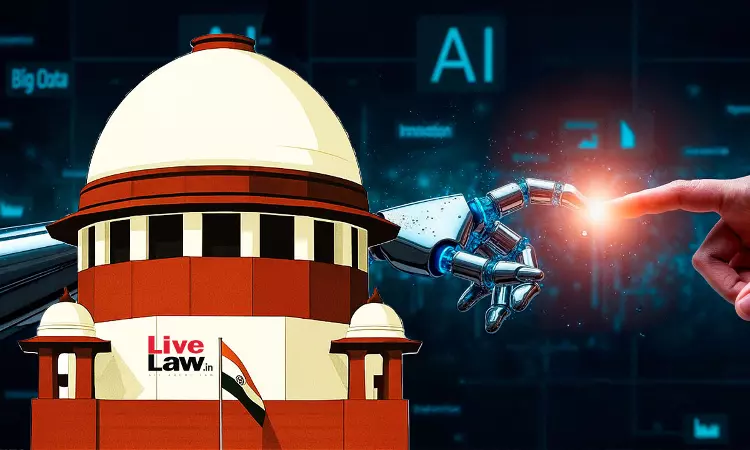
Artificial intelligence has reached Indian courts before Indian law has fully decided how it should be governed. A person's voice can now be cloned, a face placed in a fabricated video, and familiar gestures reproduced without that person participating in the creation. The injury can be immediate and irreversible, while the legal framework remains dispersed across privacy, dignity, passing off, defamation, copyright, consumer protection and intermediary liability.
India's position is therefore better described as a regulatory mismatch than a regulatory vacuum. The government's India AI Governance Guidelines (November 2025) assume many AI-related harms can be addressed through existing legislation, while accepting the need to identify gaps and introduce targeted rules.[1] The Guidelines also lean on voluntary standards, industry codes and self-certification, which may influence conduct but do not presently carry the force of binding law.


Courts are consequently being asked to resolve technologically novel disputes through established legal rights and, in doing so, are also determining what constitutes a person's digital identity, when synthetic use requires consent, and what platforms must do once unlawful content is identified. Indian AI policy is beginning to emerge through adjudication, one injunction at a time.
Old rights, new forms of injury
The law has long adapted established principles to emerging technologies that change how harm is caused and responsibility assigned. Lyria Bennett Moses, Professor and Head of the School of Law, Society and Criminology at UNSW Sydney, argues that emerging technologies outpace legislative reform, create uncertainty about how existing rules should apply, expose situations where rules are overly broad or unduly narrow, and challenge the categories and assumptions upon which responsibility has traditionally rested.[2]
That framework helps explain the present difficulty. Personality rights can recognise the wrongful appropriation of a person's voice or likeness, but those rights developed before impersonation could involve a model developer, a voice-cloning service, a prompting user and a distributing platform all at once. The underlying wrong may remain familiar, while the number of actors, the scale of circulation and the allocation of responsibility have changed considerably.
The Delhi High Court's decision in Anil Kapoor v. Simply Life India[3] captures this transition. The case involved far more than the unauthorised publication of a photograph. The material before the Court included false endorsements, morphed images, merchandise, voice clips, AI-generated representations and fabricated pornographic content. The Court treated Kapoor's name, image, likeness, voice, manner of speaking and gestures as protectable elements of his personality.
The decision's importance lies in the Court's recognition that synthetic impersonation causes different forms of injury at once. Some uses commercially exploit identity or falsely suggest endorsement; others inflict dignitary and reputational harm without any commercial transaction. A fabricated sexual image, for example, may not divert an endorsement opportunity, but it may still cause damage to privacy, dignity and reputation. The Court drew on both the commercial value of celebrity identity and the individual's right to control degrading or deceptive uses of that identity.
The relief was equally significant. The injunction consequently began to perform a wider regulatory function: it identified protected attributes, distinguished permissible speech from unlawful exploitation, and placed practical obligations upon the digital infrastructure carrying the content.
Protecting identity without silencing expression
An expansive right over identity carries an obvious danger. The name, face or voice of a public figure may legitimately appear in journalism, biography, parody, criticism, tribute and political commentary. A rule under which every unauthorised reference becomes unlawful would allow personality rights to operate as a private power of censorship.
The Delhi High Court confronted that concern in Jaikishan Kakubhai Saraf alias Jackie Shroff v. The Peppy Store.[4] The proceedings covered commercial merchandise, an AI chatbot and online material using Shroff's image and persona. While the Court restrained various forms of commercial exploitation, it was more cautious about meme-based and “Thug Life” content, recognising that parody required closer examination before being prohibited.
The case shows why consent, although central, cannot become the sole legal test. A court must examine whether the synthetic use is deceptive, commercial, sexualising, defamatory or otherwise harmful, while weighing whether it is journalism, criticism or genuine creative expression. The right to prevent AI-enabled impersonation must protect individuals from appropriation without becoming a right to control every public representation of oneself.
From the harmful output to the enabling tool
The Bombay High Court's decision in Arijit Singh v. Codible Ventures[5] moved the inquiry beyond the final song and towards the technology enabling the imitation. The dispute involved platforms offering tools that converted text or speech into an AI-generated version of Singh's voice. The Court held, at the interim stage, that offering such tools without permission could itself violate personality rights, since voice is central to a singer's identity and public persona.
This is a substantial development. Earlier cases focused on the completed misuse. Arijit Singh brings the enabling technology into view and raises the question of when an AI service ceases to be a neutral instrument and begins to facilitate unlawful appropriation. A platform built or marketed to reproduce a named person's voice presents a different case from a general audio tool later misused by an individual user.
The judgment also exposes the limits of older doctrine. Personality rights may identify the protected person and the unauthorised use, but they do not automatically distribute liability among the model developer, the interface provider, the user generating the content and the carrying platform. These are questions of design, knowledge, control and capacity that require a broader regulatory framework than a conventional dispute between a celebrity-versus-infringer dispute.
From adjudication to de facto policy
Taken together, these decisions are constructing the beginnings of a law of synthetic identity. Courts are defining identity as extending beyond a person's name and photograph to voice, likeness, gestures, mannerisms and other recognisable characteristics. They are making consent particularly important where synthetic content creates false endorsement, commercial appropriation, sexualisation or deception. They are also regulating through remedies: takedown directions, domain restraints, disclosure orders and injunctions covering technological methods of reproduction convert platforms and intermediaries into active points of enforcement.
The regulatory significance of this jurisprudence is illuminated by Julia Black's scholarship on “decentered regulation”.[6] A Professor of Law and Regulation at Oxford and formerly at the LSE, Black challenges the assumption that regulation is created solely through legislation or specialist regulatory agencies. Instead, she argues that regulatory norms and standards of conduct often emerge through the interactions of multiple actors, including courts, businesses, digital platforms, professional bodies, and other institutions, each capable of shaping behaviour and influencing compliance.
Indian personality-rights litigation reflects precisely such a process. The court defines the prohibited conduct and frames the injunction; the claimant identifies offending links and accounts; intermediaries disable access, disclose information and enforce the order across their systems. The resulting standard is a product of combined judicial and private action. The injunction creates an operating rule that platforms anticipate and that subsequent litigants and courts may reproduce.
Many of these decisions are interim or ex parte orders, and their formal precedential status must be treated carefully. Their practical influence is considerable. As the same language, legal tests and remedies recur across cases, provisional reasoning begins to harden into an informal regulatory standard. AI governance is thereby developing through the accumulated force of repeated judicial intervention, even in the absence of a comprehensive statute.
The limits of regulation by injunction
Courts have become indispensable first responders. A victim of a sexual deepfake, voice-cloning fraud or fabricated endorsement cannot reasonably wait for Parliament to design a complete AI statute. Judicial relief can act quickly, preserve dignity and prevent further circulation.
Litigation, however, begins after a claimant has suffered or apprehended harm. Effective regulation must begin earlier, with training data, model design, safety testing, deployment, record-keeping and incident reporting. It must allocate duties among the various actors in the AI chain according to their knowledge, control and capacity to reduce risk.
The existing jurisprudence is also heavily driven by celebrity claims, doctrinally useful because recognition, commercial value and false endorsement are easy to establish. The most vulnerable victim may nevertheless be an ordinary person whose face is placed in sexual content, with neither a commercially valuable persona nor the resources to seek urgent High Court intervention. A coherent framework must protect identity and dignity directly, without making fame the practical gateway to relief.
India therefore requires a limited horizontal statutory framework that defines synthetic impersonation, protects every identifiable individual, allocates responsibility among developers, tool providers, deployers and platforms, and provides rapid remedies for sexual deepfakes, fraud and voice cloning while preserving journalism, parody, and legitimate artistic expression, and building fair procedures for takedown, evidence preservation and review.
Indian courts are presently writing AI law from the injury backwards. A deepfake appears, a claimant seeks urgent relief, and the resulting injunction supplies the next legal principle. That response is necessary and increasingly sophisticated; its cumulative effect is already shaping a provisional policy for synthetic identity. Judicial innovation should now inform legislation, rather than remain its permanent substitute.
Ministry of Electronics and Information Technology, Government of India, India AI Governance Guidelines: Enabling Safe and Trusted AI Innovation (November 2025). ↑
Bennett Moses, Lyria, Recurring Dilemmas: The Law's Race to Keep Up with Technological Change (UNSW Law Research Paper No. 2007-21, 11 April 2007). ↑
Anil Kapoor v. Simply Life India, 2023 SCC OnLine Del 6914. ↑
Jaikishan Kakubhai Saraf v. Peppy Store, (2024) 2 HCC (Del) 253 ; 2024 SCC OnLine Del 3664. ↑
Arijit Singh v. Codible Ventures LLP, 2024 SCC OnLine Bom 2445. ↑
Black, J. (2002), Critical Reflections on Regulation, (CARR Discussion Paper No. 4) ESCR Centre for Analysis of Risk and Regulation, London School of Economics and Political Science, pp. 12. ↑
Authors are Advocates based in Delhi. Views are personal.


