



Reproductive Autonomy And State Negligence: A Legal Analysis Of Women Bodily Rights In India
Shalini Singh
1 Jun 2026 10:00 AM IST
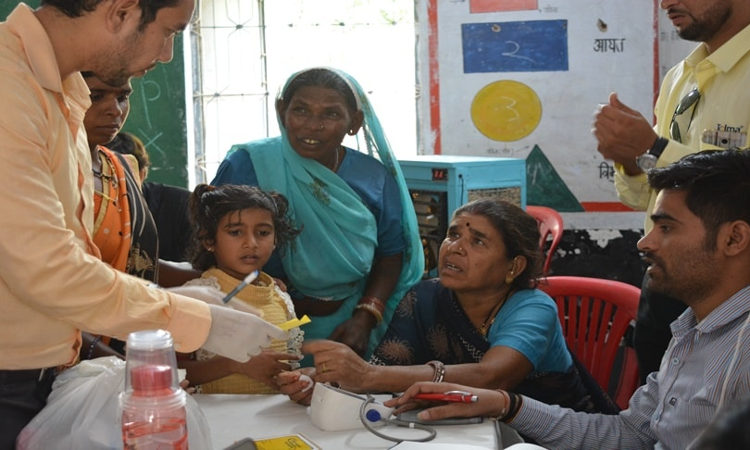
In the recent news by India today it was covered that around 173-180 tribal women were sterilized at Community Health Centre (CHC) in Bag, Dhar district of Madhya Pradesh. Again, forceful removal of women uterus in the name of diagnosing menstruation related problem just to make them work and not to give me leave. This raises serious question on the government and regulatory authority regarding the safety and autonomy of the women. India's family Planning scheme has long been considered as one of the biggest public health initiatives in the world. However, under this scheme of “population control” and welfare state there lies a disturbing history of forced sterilization, unsafe medical practise and negligence in systematic operation. This mis-happening in sterilization camps running in various Indian states such as Madhya Pradesh reveals contradiction which is one between reproductive autonomy established in the constitution and women body being treated as an object to the regime of demographic governance. Earlier in 2014, in laparoscopic sterilisation in Bilaspur, Chhattisgarh, 13 women were found dead and other were in critical condition. This is not just a regional issue it becomes a national concern when repeated reports of unsafe sterilization camps, mismanaged operations and family planning policies based on government targets causes deaths. These cases reveal not only administrative negligence but also structural violence that exists within policies of state regarding reproduction. In the landmark case of Devika Biswas v. Union of India[1], the Supreme Court held reproductive rights form an intrinsic part of constitutional dignity and bodily integrity under Article 21 of constitution[2]. The apex court also criticised unhygienic and informal sterilization targets used by states after finding out that sterilization camps were unsanitary and coercive. Even after the judgement and criticism situation did not improve much, this shows that reproductive autonomy needs more than mere formal recognition where women bodies cannot be used as instrument of population control under unsafe and dangerous conditions.
In 1952, India officially launched National family planning programme and became first country in the world to launch such official programme, in beginning whose main objective was to reduce birth rates for controlling population however this scheme evolved from being for birth control to a comprehensive reproductive health model to reduce maternal and infant mortality. During the emergency (1975-1977), forced sterilization of men linked with the excesses of the state and the authoritarian approach of governance. But, process of sterilization of female is dominant even after several year of passing which means that instead of maintain a balanced health approach with the male participation, the burden of controlling population was shifted upon the women majorly. In India, according to 2019-21 data 37.9% of women underwent this process and more shocking only 0.3 women reported that their partner went under the process of sterilization[3]. However, the most concerning part of this situation is that through the case of Madhya Pradesh and many other it is oftenly revealed that there is inadequate sanitation facility, infrastructure are not in good condition, camps are overcrowded, lack of informed consent and many other problems. In another recent case of state of Maharashtra it was revealed that over 13000 women in that region were forced to remove their uterus because of economic pressure and poor working conditions. This mainly happened because sugarcane contractors refused to employ women who take menstrual leave, pregnancy or illness break and they were the daily wage workers as a result their wages were cut down down and they had to face economic crisis. This acted as undue force upon them also it was found that many women who undergo this were below the age of 25 and some had severe long term issues. Both the cases undermine the very concept of reproductive autonomy which means an individual free and full right to make informed and voluntary decisions about reproduction, pregnancy, and any bodily decisions without any force, coercion or discrimination. This is deeply interwined with the constitutional provision of Article 21 which guarantees every person the right to life and personal liberty. In the very case of Suchita Srivastava v. Chandigarh Administration[4], the SC held that reproductive choices are part of personal liberty and it is a inseparable part of Article 21. The WHO also stated that everyone has core right to control their health and body which ultimately includes sexual as well as reproductive rights and it should be from any interference like nonconsensual medical treatment. Although there is universal recognition of reproductive autonomy the cases of coercive or negligent sterilization is a direct and grave violation of women fundamental rights


Apart from the violation of fundamental right the sterilization camp in MP and hysterectomies (removal of uterus) in Maharashtra that took place was done under very problematic conditions. Several news channels reported that camps were overcrowded, no proper sanitation, poor infrastructure and minimal post-operative care. Additionally, the women were operated in short period of time some for even under two minutes, this was done just to maximize the numerical output. This approach highlights the prioritization of efficiency and target achievement over medical ethics and safety of the patients. The women especially from weaker financial background are heavily reliant on government health care which make them disproportionality affected by forced sterilization as it was seen in Maharashtra they were left with no other option. Also, in this case informed consent played a vital role, as per report consent from women taken on informing about diagnosis of menstruation related problem. This was not a free consent as women were not informed about potential risks, alternatives and its consequences. Informed condition is vital requirement both in ethical as well as in legal sense, in various instances it was found that women were not informed in their local language, making them more vulnerable and also the counselling were unavailable which resulted consent without understanding permanent consequences of sterilization or hysterectomies. Therefore, from a legal standpoint this consent which is obtained through misinformation, under economic pressure and proper clarity cannot be held valid.
In the case of Devika Biswas, before the court the horrifying condition of sterilization procedure was illuminated across the several states in country after which it issued several important directions like strict implementation of family planning guidelines, improved monitoring and accountability together with better standards of informed consent counselling and directed to eliminate target-based sterilization practices. As per reports practices were usually done either in schools or camps were overcrowded which sometimes lacked basic facilities like running water, proper equipment and clean area. This is where state negligence reflects because it is not just about medical malpractices but also raises critical question about state's constitutional accountability. It is state's obligation to protect life, health and dignity of its individuals and failing to do so violates article 21. Also shifting burden of sterilization and removal of uterus of women just because of their gender and economic and financial vulnerabilities potentially violates article 14 as well as article 15. In India about 4-5 million women undergo sterilization every year out of which approximately 1000 women die every year due to poor conditions in which procedure carries out by public health system[5]. However, under the Convention on the Elimination of All Forms of Discrimination Against Women (CEDAW)[6], every state has a duty to ensure women's access to healthcare, reproductive choices and protection from coercive medical practices. This means that negligence by state in protecting women from these vulnerabilities is not just failure of domestic administration but also the violation of standards of international human right framework.
Even after acknowledgment of situation and criticism upon it by the apex court there is a huge gap which exists in its implementation which means for having a meaningful reform there is dire requirement of structural transformation not only judicial interventions. In a ideal framework state should take certain reforms which must include shift of family planning policies from gender-based target to reproductive justice where women must be treated as end not as a means. It should also strengthen the consent procedure where everything is explained in their regional language, authorities must organize awareness camps to encourage male participation, there should proper investigation against forceful operation of women and perpetrators must held liable for that.
In Conclusion, it can be said that sterilization camps in Madhya Pradesh, forceful removal of uterus in Maharashtra highlights the dangerous repercussions of administrative failure that puts number over human dignity. This reflect how women bodies specifically those of weaker background are being reduced to objects and are being subjected to coercive and negligent procedures. Additionally, the incident happened in Maharashtra highlights women just not only face gender bias which giving less wages comparing to men but they also face economic and financial discrimination, just because work to continue and to stop women i.e,. their low wage worker the removal of their uterus undermines women dignity and autonomy. Once Simone de Beauvoir stated in her book the Second Sex “One is not born but rather become a woman[7]” highlights how female subjectivity was being shaped and restricted by cultural conditioning and societal expectations and even after 77 years of this statement situation did not change. If we talk about state and administrative responsibility these cases show how state is negligent which leads us to call for structured reform. The judgement of Devika Biswas v. Union of India is significant judicial acknowledgement of reproductive autonomy that must be grounded in dignity and bodily integrity. However judicial recognition alone is insufficient until and unless women's choices and condition are not respected in light of constitutional right instead of being treated as state-controlled obligation.
Devika Biswas v. Union of India, W.P. (C) No. 95 of 2012, decided on 14 Sept. 2016 (Supreme Court of India). ↑
INDIA CONST. art. 21. ↑
Advaith Jayakumar (2024). “Female sterilisation in India: Prevalence, informed choice and regret” Centre for Economic Data and Analysis (CEDA), Ashoka University. Published on ceda.ashoka.edu.in. ↑
Suchita Srivastava v. Chandigarh Administration, (2009) 9 SCC 1; AIR 2010 SC 235. ↑
Kundan Pandey, Supreme Court Orders Ban on Mass Sterilisation, Down to Earth (Sept. 16, 2016). ↑
Convention on the Elimination of All Forms of Discrimination Against Women, Dec. 18, 1979, 1249 U.N.T.S. 13. ↑
Simone de Beauvoir, The Second Sex 283 (H.M. Parshley trans., Vintage Books 2d ed. 1989) (1949). ↑
Views are personal.


