



Denied Entry At NLUs? Reservation Policy In Shadow Of Economic Barriers
Aniket Manoj Dongre
23 April 2026 10:00 AM IST
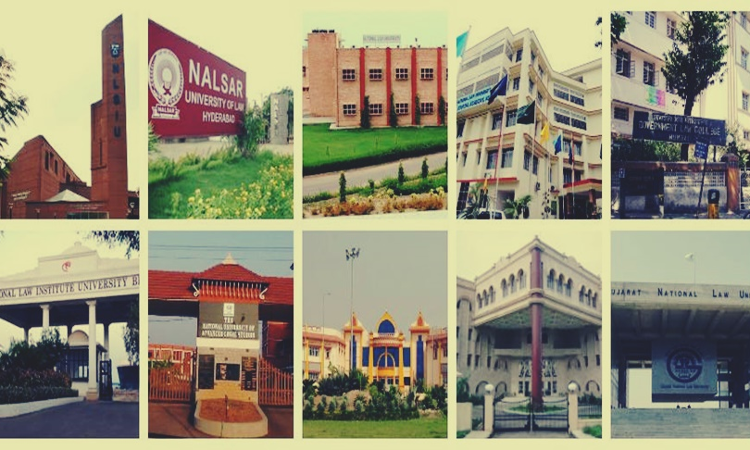
“Opportunity to acquire education cannot be confined to the richer section of the society.” - Mohini Jain v. State of Karnataka (1992).
As admissions to undergraduate and postgraduate programmes at National Law Universities (NLUs) proceed this season, a structural problem that has persisted for years demands renewed attention. NLUs occupy a pre-eminent position in India's legal education landscape, often ranked alongside the IITs, IIMs, and AIIMS. Yet for students from Scheduled Caste (SC) and Scheduled Tribe (ST) backgrounds, and more broadly from low-income households, these institutions remain structurally inaccessible, not for want of merit, but for want of money.
From CLAT Merit to Cash Barrier
The Common Law Admission Test (CLAT) is the gateway to NLUs. However, the financial burden begins well before a student sets foot on campus. The examination form itself costs ₹3,500, a sum that, while modest in absolute terms, functions as an early deterrent for candidates from rural and semi-urban SC/ST households.
For those who clear the examination, the Centralised Admission Process (CAP) imposes further upfront costs: a counselling registration fee of ₹30,000 (₹20,000 for reserved category candidates), followed by a ₹20,000 seat confirmation deposit, and thereafter the full balance of tuition, hostel, mess, library, and examination fees at the time of document verification.


Fee Structure: Maharashtra NLUs
MNLU, Nagpur | MNLU, Mumbai | MNLU, Aurangabad | |
B.A. LL.B. (1st year fees) | Excluding hostel (₹73,000) & mess (₹40,000); Total: ₹3,65,650. | Excluding mess charges (~₹40,000 per annum); Total ₹3,15,499. | |
LL.M. | ₹2,12,500/- Excluding hostel (₹73,000) & mess (₹40,000); Total: ₹3,25,000/- | Excluding mess charges (~₹40,000 per annum); Total ₹2,17,000/- |
Fee structure at Maharashtra's three NLUs illustrates the scale of this burden. Over five years, a student's total expenditure at these institutions can approach or exceed ₹15 lakh, a sum that must typically be arranged before any scholarship is disbursed.
For first-generation SC/ST students whose families depend on landless agricultural labour, daily wages, or the unorganised informal sector, an education loan of this magnitude is functionally unfeasible. Banks routinely require collateral or third-party guarantors, conditions that disproportionately disadvantage the very communities reservation was designed to uplift. The convergence of banking norms and caste-linked economic constraints does not merely inconvenience these students; it structurally excludes them from legal education before the academic year even begins.
The Freeship Card: Policy Design Versus Ground Reality
The Central Government's Post-Matric Scholarship scheme for SC students includes a “Freeship Card” mechanism specifically designed to address this problem. Under the scheme, eligible students are entitled to secure admission without prepayment of tuition or hostel fees. A digitally issued Freeship Card operationalises this entitlement: students register on the scholarship portal prior to admission, furnish necessary details along with an undertaking to remit institutional charges within 7 working days of receiving scholarship funds, and institutions subsequently recover fees once disbursement occurs. The scheme envisions a fully paperless, database-linked verification process to be completed within thirty days.
In practice, NLUs continue to insist on advance fee payments, either unaware of or indifferent to this mechanism. Most institutions neither advertise the Freeship Card nor proactively inform eligible students of their entitlement. The result is a significant gap between policy design and institutional implementation, one that reinforces precisely the economic barriers the scheme was meant to dismantle. That NLUs, institutions charged with producing the country's finest legal minds, fail to comply with a welfare notification targeted at the most marginalised applicants is a particularly pointed irony.
Reservation With a Price Tag
The 2011 Socio-Economic Caste Census contextualises why NLU fee structures systematically restrict SC/ST students' access. SC households constitute 18.4% of India's total households (approximately 3.31 crore families). Of these, 95.4% have a highest-earning member who earns less than ₹10,000 per month. Only 0.86% of SC households report monthly earnings above ₹10,000. Even accounting for inflation and adjusting for current earning levels, a single year of NLU tuition (often ranging between ₹3-4 lakh) can exceed the entire annual income of the overwhelming majority of SC households.
This data illuminates a fundamental constitutional tension. Articles 15(4), 15(5), and 16(4) provide the foundational mandate for reservation, a corrective mechanism aimed at addressing centuries of systemic exclusion. Yet, where the admission process conditions access on immediate payment of sums that most SC/ST households cannot arrange, these constitutional guarantees are rendered largely illusory.
Parliamentary Standing Committee reports have noted that National Law Universities (NLUs) have not adequately implemented reservation policies for SC/ST/OBC candidates in undergraduate and postgraduate admissions, with reserved seats frequently being forfeited and effectively accruing to general category candidates who are financially equipped to meet upfront payment requirements.
The Supreme Court, in Indra Sawhney v. Union of India (1992) and M. Nagaraj v. Union of India (2006), has consistently held that reservation must serve substantive corrective justice and cannot be reduced to a symbolic gesture. When economic gatekeeping converts reserved seats into empty classrooms, the equality project is not merely weakened, it is functionally inverted, with quotas devolving into a mechanism that advantages those already privileged enough to pay.
Social Exclusion and the Campus Environment
The barriers do not end at admission. The handful of SC/ST students who do manage to navigate the financial obstacle course encounter persistent social exclusion on campus. Consider a first-generation learner from a vernacular-medium school who arrives at an NLU carrying the weight of scholarship delays, financial precarity, and unfamiliarity with elite institutional culture. Modest presentation, administrative follow-ups over delayed disbursements, and difficulty with English-medium instruction can, in a caste-conscious campus environment, convert academic anxieties into acute social vulnerability. Participation in moots, seminars, and peer networks (activities essential to a lawyer's formation) is often curtailed not by incapacity, but by circumstance.
The psychological toll of this experience is well-documented. Campus-based studies indicate that a significant proportion of SC/ST students in higher education experience severe emotional distress, including suicidal ideation, linked to caste-based discrimination and financial insecurity. These patterns are not incidental but institutional and they engage directly with Article 21's guarantee of life with dignity, understood to encompass a safe and inclusive educational environment.
The Supreme Court addressed these concerns squarely in Amit Kumar v. Union of India (2026), in which it emphasised the need for “substantive and full participation” of all students within higher educational institutions, as contemplated by the Constitution. The Court identified financial stress as a recurring factor undermining student well-being, specifically noting that “extensive delays, inconsistencies and inequities in scholarship disbursement” place students, particularly those from rural and economically marginalised backgrounds, at heightened risk, especially when institutions hold students personally liable for fee payments despite administrative delays in reimbursement.
For SC/ST students at NLUs, these pressures compound acutely: a tuition obligation of approximately ₹4 lakh falling due before scholarship disbursement, combined with persistent questioning of “quota merit” and exclusion from informal peer learning networks, creates conditions of simultaneous financial and social vulnerability. Read in the light of Amit Kumar, the existing fee and admission architecture at NLUs cannot be characterised as neutral administrative practice, it raises a live constitutional concern regarding institutions' obligations to secure meaningful participation and mental well-being for all students.
Institutional Response: Awareness and Accountability
When this issue was raised with the administration at NLU, Mumbai, the response, while non-committal, was not dismissive. Officials informally acknowledged that late fees are generally not imposed on SC/ST students in practice, but noted that any formal change would require a coordinated institutional decision involving the Finance, Admissions, and Scholarship Departments, followed by a policy framework approved by higher authorities. Two Assistant Professors of Law, speaking independently, affirmed the legitimacy of the concern and indicated that implementation of corrective measures is contingent upon clear directions from the Registrar or Administrative Head. Significantly, they also noted that explicit directions from the Government would obligate NLUs to comply. The core problem, however, lies upstream: the relevant Government Resolution is not being strictly followed, primarily due to a lack of awareness — both within institutional administrations and among the students most entitled to its protections.
Reserved seats without realistic economic access risk becoming reservation in name only. The Constitution demands more than formal inclusion, it requires the substantive equality that enables a student from a landless labourer's household in rural Maharashtra or a remote tribal district in Jharkhand to access an NLU without being driven into financial crisis. As the Court in Mohini Jain held, educational institutions must function “to the best advantage of the citizens.”
The immediate implementation of the Freeship Card mechanism across all NLUs, through proactive disclosure, portal integration, and admission procedures that do not condition seat confirmation on advance payment by SC/ST students is neither an optional policy choice nor an administrative convenience. It is a constitutional imperative. Insisting on upfront fee payments from students entitled to fee deferral is not procedural neutrality; it is a denial of the equal opportunity guaranteed under Article 14.
NLUs are among the most visible symbols of legal meritocracy in India. If that meritocracy is accessible only to those who can afford the price of admission, it is meritocracy in name alone. The reform required is not radical, it asks only that institutions honour commitments the State has already mad
Author is an LL.M candidate at National Law University, Mumbai. Views are personal.


