



SHANTI Act 2025: Sidelining Environment For Private Proliferation
Shikhar Raj Singh
22 Dec 2025 4:28 PM IST
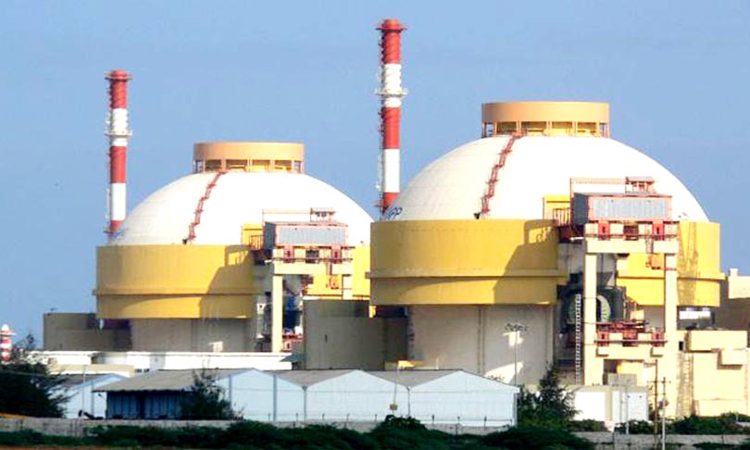
The Parliament recently passed the Sustainable Harnessing and Advancement of Nuclear Energy for Transforming India Bill 2025, now pending President's assent, aiming to accelerate private nuclear expansion in the country's nuclear regime. This will be the first for any nuclear related legislation of the country but at the same time it is neglecting the established environmental regulatory architecture thus presenting a very nuanced relationship between the two. Nuclear energy in all its discussion amongst other things raises fundamental questions on its impact on humanity and environment. In future this Act may not be seen as a pathway laid down by the Government of the day for private players by neglecting integration of Environmental laws, creating voids in waste management, mining regulation and long term impact on ecology.
A very lackadaisical environmental attitude of this bill is evident from the onset as the Section 2 sub section (12), merely defines the environment via Section 2(a) of the Environment Protection Act 1986.
Undermines Polluter's Pay Principle
Section 13 has created a tier of absolute liability with caps on operators for nuclear damage. The tier is decided by the scale of reactor size but the liabilities are far below the global bench marks. This has diluted the principle developed by MC Mehta Case and other regulations in force as the Radiological death/property damage which earlier imposed Full Restoration liability now has been capped between Rs. 100-3,000 Crore. Similarly, thermal/bioaccumulation harm imposed absolute liability under earlier regime will now exclude Non Radiological damages. In short, the private firms will earn revenue from electricity sales whereas in case accidents occur, liability of the private firms will only be up to a certain limit and thereafter the taxpayers will bear the ultimate liability.


Section 81 bars civil courts jurisdiction and all claims will be tried exclusively by the Nuclear Damage Claims Commission and appeals will go to the Electricity Appellate Tribunal.
Environmental Clearance weakened
Section 3 and 4 which broadly deals with licensing and regulation of radioactive substances respectively which in turn are governed by duties as laid out in Section 10 of the bill are not in tandem with environmental statutes. Further, Section 87 provides an overriding effect with words “shall have effect notwithstanding anything inconsistent therewith in any other law”, thus preempting participants from essential clearances.
Nuclear Power Plants are classified as major projects under 2006 notification of Environmental Impact Assessment (EIA) by the Ministry of Environment, Forest and Climate Change (MoEFCC) specifically as Category A, Item 1(c) thereby requiring thorough assessment with respect to air, water, soil and floral-faunal effects. It also makes public hearings mandatory before getting environmental clearance. Section 7 of the bill allows the Atomic Energy Research Board (AERB) to approve safety without any need for an EIA report or public discussion. Section 10 sub section 3(a) allows AERB's own regulatory documents which mainly focuses on radiation safety and not on combined pollution from such plants.
Section 25 and 26 of Water Act 1974 requires consent of the State Pollution Control Board to discharge effluents that can raise temperature of water bodies adversely affecting aquatic life. Likewise, Section 21 and 22 of the Air Act 1981 requires stack emissions approval. Further, Forest Act 1980, Coastal Regulation Zone Notifications and Biological Diversity Act 2002 also provides for various monitoring mechanisms. Section 10 sidesteps these regulations, potentially unleashing unmonitored pollution from reactors and facilities which in large numbers are private.
Deficiencies in Waste Management
Section 3 sub section 5 reserves three crucial activities exclusively within the purview of the Central Government or entities which are wholly owned by it: (i) enrichment of radioactive substances, (ii) management of spent fuels and (ii) heavy water production. With respect to management of spent fuels the bill requires initial post irradiation cooling by the licensees and thereafter the spent fuels must be delivered to the government for further management. Unlike the US and France which have dedicated funding mandates there is no provision for legislated nuclear waste funds. The bill also bypasses EPA Rules with respect to off site incineration and National Green Tribunal's Zero Liquid Discharge Orders.
There is absence of decommissioning financial instruments, like that of National Regulatory Commission (NRC) Bonds in US and ANDRA escrow in France, for covering expenses related to site remediation which means that abandoned private plants will burden public exchequers in dealing with radionuclides thus also causing transgenerational inequity which is violative of Article 21.
Environmental Fallout
The SHANTI bill, soon becoming Act, provisions are legally flexible and beneficial for private players which was not the case before, allowing rapid infusion of investments to speed up the growth of the nuclear energy sector. But it should not be at the cost of irreparable environmental damage. If unchecked there can be rapid proliferation of nuclear plants which after a certain point of time in future will become environmental hotspots causing irreversible damage. Thorium processing thresholds as per SHANTI which excludes private joint ventures, risks unassessed acid mine drainage into aquifers contravening EPA's groundwater safety norms. SHANTI environmental oversights threaten irreversible ecological crises amid private nuclear proliferation.
Author is an Advocate at Allahabad High Court. Views Are Personal.


