



Madras Bar Association And Economic Cost Of Tribunal Dysfunction
Debarshi Chakraborty
7 Jan 2026 10:01 AM IST
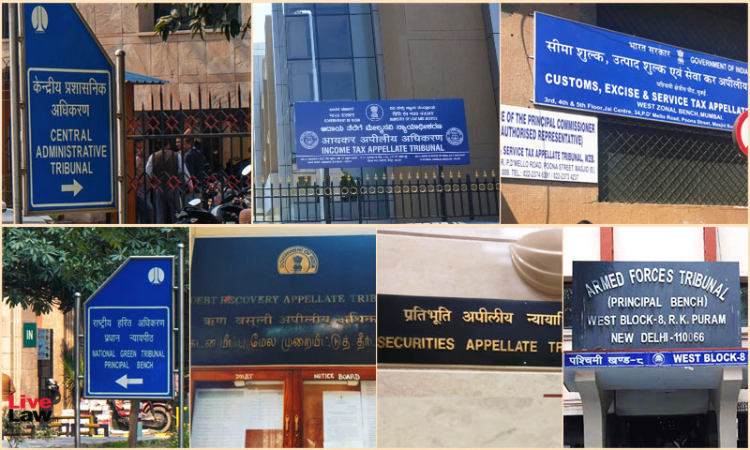
The Supreme Court of India's November 2025 judgment in Madras Bar Association v. Union of India (2025) may, at first glance, appear as yet another round in a familiar constitutional contest over tribunal independence. In substance, however, it carries consequences that extend well beyond doctrine. By striking down provisions of the Tribunal Reforms Act, 2021 – many of which were verbatim reproductions of the Tribunals Reforms Ordinance invalidated in July 2021 – the Court highlighted the gradual erosion of institutional machinery that sustains India's commercial adjudication system. While much commentary has focused on the reaffirmation of judicial independence, the judgment also exposes a more practical concern, which is the growing fragility of dispute resolution mechanisms on which markets quietly depend.
There can be no dispute that tribunals occupy a central place in India's economic governance. Insolvency resolution, debt recovery, company law disputes, tax appeals, and consumer remedies all pass through specialised fora designed to combine expertise with speed. When these institutions function well, they reduce transaction costs and bring predictability to commercial outcomes. When they do not, the consequences are immediate, such as delayed resolutions, declining asset values, prolonged uncertainty, and rising costs of capital. Seen in this light, Madras Bar Association is not merely a constitutional challenge; is also a critique of the health of India's commercial adjudication.


Over more than a decade, the case has repeatedly returned to the Supreme Court, each time questioning executive-led redesigns of tribunals marked by short tenures, restrictive eligibility criteria, and appointment processes dominated by the government. These features have been invalidated not as matters of policy disagreement, but because they undermine independence which is essential for credible adjudication. In its latest decision, the Court reiterated that tribunals constituted under Articles 323A and 323B of the Constitution are substitutes for courts, and ought to inspire comparable confidence in impartiality, continuity, and competence. For commercial actors, this confidence underpins enforceable contracts and predictable outcomes.
Importantly, the judgment did not stop with negation. It issued a strong directive for the establishment of a National Tribunals Commission by March 2026. This shows judicial recognition of the fact that fragmented executive control over appointments and service conditions has produced systemic outcomes, including vacancies, uneven capacity, and mounting backlogs, that courts alone cannot remedy incrementally through litigation alone.
The magnitude of institutional strain is visible in caseload patterns. As of 2025, these commercial tribunals were collectively handling over 3 lakh pending matters involving claims estimated at nearly Rs. 25 trillion. At the National Company Law Tribunal (NCLT) and its appellate body, insolvency proceedings dominate dockets, with over 18,000 pending cases and resolutions routinely exceeding statutory timelines. This has had a less discussed consequence – company law jurisdiction, including oppression and mismanagement proceedings, has been effectively sidelined. Matters unrelated to insolvency often wait months merely to be listed, let alone resolved.
Operational strains are particularly evident when vacancies are addressed through ad-hoc arrangements rather than structural reforms. The Debt Recovery Appellate Tribunals (DRAT) offer a telling illustration. As of late 2025, persistent vacancies required the Chairperson of the DRAT, Kolkata bench, to hold additional charge of Delhi and Hyderabad benches. This entails alternating periods away from Kolkata to hear matters in Delhi and Hyderabad, while urgent cases may be taken up intermittently in Kolkata. While administratively expedient, such arrangements inevitably leaves one or another bench under-served. Orders from Delhi and Hyderabad record adjournments owing to non-availability, and appeals arising from high-volume DRTs in major commercial centres linger far beyond intended timelines. These gaps are exploited, turning what are meant to be summary recovery proceedings into protracted litigation.
Parallel dysfunctions are visible in the NCLT system as well. RTI disclosures and administrative orders through 2023-24 reveal persistent vacancies in the NCLTs, compelling senior functionaries to hold additional charge of multiple benches. There was a time when the Chairperson of the NCLT was required to assume additional charge of the principal bench at New Delhi, the Chennai bench, alongside responsibilities over other southern benches, owing to acute member shortages. Even within multi-bench NCLTs the strain is unevenly distributed. Several benches function without a complete judicial-technical composition, while others remain entirely vacant. The institutional response has been improvisational.
In Delhi, for example, members from one bench are frequently borrowed to constitute another, resulting in the same members sitting in one configuration for part of the day and in a different composition for the remainder. A similar phenomenon has been seen at the appellate level. For extended periods, a judicial member of the NCLAT, New Delhi, would conduct proceedings during the first half of the day as part of the Chennai bench, and after the lunch recess, resume hearings as a member of the Delhi bench. The consequence is that neither list received sustained attention, continuity suffered, and adjournments multiplied. While hybrid hearings have offer marginal relief, they cannot compensate for the loss of stable bench strength.
But, what sustains delays is not merely vacancy or volume, but the fragmented design of India's tribunal system itself – an issue argued repeatedly in Madras Bar Association. Adjudicatory bodies exercising comparable commercial functions remain scattered across executive silos, each governed by ministry-specific priorities rather than a unified conception of commercial justice. Tribunals under the Ministry of Finance, such as NCLT, NCLAT, and the DRT framework, operate in an ecosystem where insolvency and recovery imperatives dominate docket management and as a result the time which could have otherwise been preserved for adjudicating upon company law matters is dedicated to insolvency disputes, implicitly subordinating company law adjudication to debt resolution.
Similarly, tribunals under the Ministry of Law and Justice, such as the Central Administrative Tribunal, continue to grapple with vacancy and rapid tenure churn, while consumer commissions – under the administrative aegis of the Department of Consumer Affairs – carry pendency running into several lakhs despite statutory timelines measured in months. The aggregate effect is not just delay, but divergence including inconsistent timelines, strategic forum-shopping, capital locked across forums, and contractual enforcements that varies by ministry rather than by law.
The proposed National Tribunals Commission is therefore best understood not as a constitutional abstraction, but as an efficiency reform. A single, independent authority overseeing appointments, tenures, and service conditions would arrest chronic vacancies, smoothen uneven capacity across tribunals, and restore predictability to adjudicatory timelines. By insulating tribunal administration from fragmented executive control, it would also relieve the High Court of constant supervisory firefighting and allow judicial resources to be deployed where they belong – towards adjudication, not institutional repair.
So, as the year turns, the Madras Bar Association offers a Janus-like prompt – to look back at a decade of repeated missteps in tribunal reform, and to look forward, more deliberately this time, towards establishing a National Tribunals Commission that aligns constitutional principle with economic necessity, and averts further rounds of litigation.
Author is an advocate at the Delhi High Court. Views Are Personal.


