



Citizen Engagement With Courts: Revisiting K.G Kannabiran's Arguments On Public Interest Litigation
Kalpana Kannabiran
9 Nov 2026 10:25 AM IST
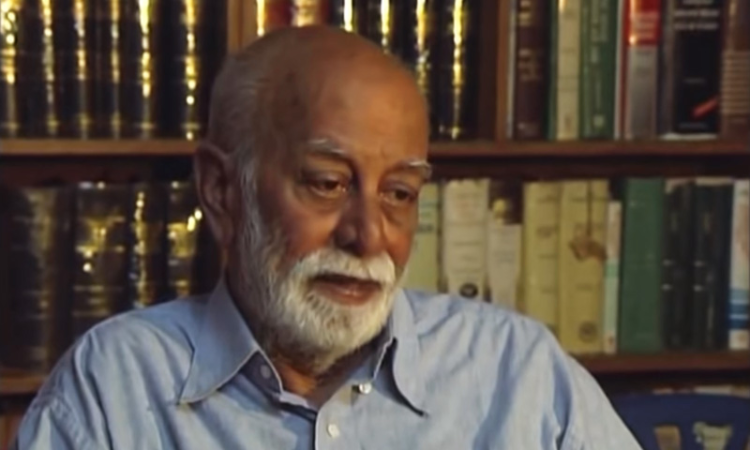
K G Kannabiran, Senior Advocate
(9th November 1929 to 30 December 2010)
By the time the issue of Public Interest Litigation came before courts in the period immediately after the Emergency, courts across the country had begun to contend with and deliberate on a cascade of cases that brought the concerns of ordinary citizens into hitherto sequestered appellate courtrooms. We witness this especially during and in the immediate aftermath of the Emergency where strict norms of locus standi were interrogated by petitioners. There were also a series of Commissions of Inquiry that enquired into large incidents of state arbitrariness, violence and extra-judicial murders. The early years of the PIL movement saw these concerns broaden to include importantly socioeconomic rights. While not attempting a review of the wealth of writing and insights on the PIL/SAL movements, this article presents K.G. Kannabiran's core concerns with respect to the guidelines on PIL referred by the Supreme Court to a constitution bench in 1982[1] -- remembering him on his 97th birth anniversary and 16 years after his passing.
The Supreme Court of India, in the case of Sudipt Mazumdar vs. State of Madhya Pradesh[2] referred ten questions regarding Public Interest Litigation to a Constitution Bench of the court. Two decades later, in August 2002, after much water had flowed below the bridge, the constitution bench decided it was not necessary any more to issue such guidelines. Intervening in the debate before the Constitution Bench, Kannabiran, on behalf of People's Union of Civil Liberties, submitted written arguments detailing his responses to each of the ten guidelines formulated in 1982, drawing on Upendra Baxi's work on social action litigation[3] organising his response to the ten questions under five broad heads: locus standi; procedural requirements; alternative remedy; costs; and jurisdiction of high courts and other courts.


On the first question of suo motu action by the Court in response to press reportage of fundamental rights infringements etc., Kannabiran observed that given the realities of violence against Dalits, displacement of adivasis, bonded labour, child labour and untouchability in India, he observed that 'there are certain issues where this court has to take suo motu action and laying down a rule of procedure for access might, like all rules of procedure, swallow the substance of the matter sought to be brought before the Court'.[4] The reiteration by the Supreme Court in Daryao vs. State of Uttar Pradesh[5] of the earlier observation of the court in Kochunni vs. State of Madras[6] provided support to this view: '…the right to move the Supreme Court where a fundamental right has been infringed is itself a fundamental right. Further it is not merely a right of the individual to move the Supreme Court but also a duty of the Supreme Court to enforce those guaranteed rights as the “protector and guarantor of the fundamental rights”'. By this token, he argued that 'the Court should take notice of letters complaining of violation of any fundamental right guaranteed under Part III.'
On the second question of delegating the function of determining whether a prima facie case is made out to the Supreme Court Legal Aid Society, he opposed the suggestion and advocated instead for 'a system of registration of Social Action Groups willing to assist the Court at various levels'.[7] Drawing a parallel between the possible outcomes of such interventions with the various commissions that had assisted the court in arriving at a decision on whether there was a prima facie case or not, he argues that delegating the task to the Supreme Court Legal Aid Society would be an abdication of its constitutional duty by the Supreme Courtm as the 'Constitution has cast an onerous responsibility and duty of protecting the fundamental rights of citizens on the Supreme Court and not the Supreme Court Legal Aid Committee'.[8] In advancing this argument, Kannabiran drew on his vast experience of fact finding, citizen engagement with courts of every jurisdiction and appearances before Commissions of Inquiry across the country – a subject he deliberates on at length in this book.
On the third question of locus standi – 'can a stranger to a cause…initiate action before this Court', he foregrounded Baxi's observation that between 1980-82 seventy-five writ petitions were filed under Article 32 in which the principal social action groups were Citizens for Democracy, People's Union for Civil Liberties and People's Union for Democratic Rights. The very framing of this question by the Court, he argued, undermined the basis of Social Action Litigation, especially because 'the categories enumerated in the question are not strangers but persons deeply involved with issues that are brought by them to the notice of the court…[T]o treat them as strangers would be to regress into colonial practices.'[9]
The fourth question on whether a prima facie case was made out or not, he observed briefly, was a matter of judicial discretion.
The fifth question concerned the fact that since in most of these cases remedies were available under civil, criminal and revenue courts, what would be an effective intervention by the Supreme Court. While court fees and legal costs were a major stumbling block, Kannabiran observed that the revenue administration and criminal justice machinery in India functioned largely in support of the status quo and in a colonial-feudal system: 'We assure you that there is no charm in rushing to the Supreme Court. If this Court takes the initiative and activates the subordinate criminal judiciary to function as human rights institutions at the grass root level the pressure on this court will automatically cme down. But till this becomes a habit this court may activate them by sending the matter for enquiry and call for a report'.[10]
The sixth question concerned the feasibility of the court taking action in a case with insufficient information disclosed through letters. Pointing out that commissions appointed by the court had worked satisfactorily, and in cases where district magistrates and district judges had been entrusted with enquiry into matters to ascertain facts, courts had in fact been brought closer to the people, he argued that this practice, already honed, should be further strengthened to provide the court with the full facts of cases brought before it.
On the seventh question of penalties for baseless complaints, Kannabiran suggested registration of social action groups with the Registry of the Supreme Court as a way of regulating litigation. The eighth question concerned exemption of court fees especially when the affected party was not an individual alone but a large cohort. 'Exemption from payment of Court fees and relaxation of other rules of procedure,' Kannabiran argued, 'should not be viewed as a concession given to the poor but as a method of furthering the constitutional goals of equality, social and economic justice and a fulfilment of the obligation and responsibility of the Supreme Court under Article 32'.[11]
The ninth and tenth questions concerned the 'informality' that such epistolary petitioning might inaugurate – can all officers at every level be entrusted with the responsibility of acting on complaints, and will the consideration of such complaints by the court place these cases on a different footing than cases which traversed the normal route. Kannabiran argued that no social action group can object to high courts and lower courts taking up and adjudicating issues of public interest. This would in his view go a long way in strengthening democracy, by making people aware of their rights and giving them the courage to confront authority at the local level. However, local politics and bureaucracy would be a force to contend with in a situation where the subordinate judiciary rarely 'commands respect in comparison to the other limbs of government and do not have the kind of support they require'. Of utmost urgency therefore was the transformation of the judiciary at the lower levels. He further marked a distinction between 'informality' (as the Supreme Court put it) and 'non-formal' and 'non-conventional' methods, the latter having the potential to enhance the possibilities of justice which must be seen to be done as he often asserted. The preoccupation with formality in court practices, was for him a sign of the fact that '[w]e are so fond of esoteric rituals (for we are very often Brahmins and the Colonial British rolled into one) that we feel lonely without them'.[12] On the court's anxiety that 'informality' might bring in bias, he reminded the court that merely resorting to a non-formal method will not increase the likelihood of the Court getting identified with the cause – the distance between courts and public causes, in his view, was deeply rooted in world views and social location, not on the formality or informality of procedure.
His detailed responses to the belated consideration of the guidelines on PIL bring together K.G. Kannabiran's longstanding concerns on public engagement with the constitution, the need to bridge the distance between courts and people, and importantly, the need to dismantle the hierarchy of judicial deliberation, investing more resources, responsibility and deliberative power in the subordinate courts of every jurisdiction.
Views Are Personal.
References:
Kannabiran, K.G. n.d. 'Written Arguments in the matter of Sudipt Mazumdar vs. State of Madhya Pradesh. From his unpublished personal papers. ↑
Sudipt Mazumdar vs. State of Madhya Pradesh. MANU/SC/0121/1982. ↑
Baxi, Upendra. 1985. 'Taking Suffering Seriously: Social Action Litigation in the Supreme Court of India.' Third World Legal Studies 4(6): 107–32 ↑
Kannabiran, K.G. n.d. 'Written Arguments in the matter of Sudipt Mazumdar vs. State of Madhya Pradesh, p. 4. ↑
AIR 1961 SC 1457. ↑
AIR 1959 SC 725 at 729. ↑
Kannabiran, K.G. n.d. 'Written Arguments in the matter of Sudipt Mazumdar vs. State of Madhya Pradesh, p. 5. ↑
Ibid., p. 6. ↑
Ibid., p. 7. ↑
Ibid., p. 9. ↑
Ibid., p. 10. ↑
Ibid., p. 11. ↑


