



Trump Tariffs And The Challenge Before The Supreme Court Of The United States
Kaustubh Tiwari
2 Feb 2026 8:00 PM IST
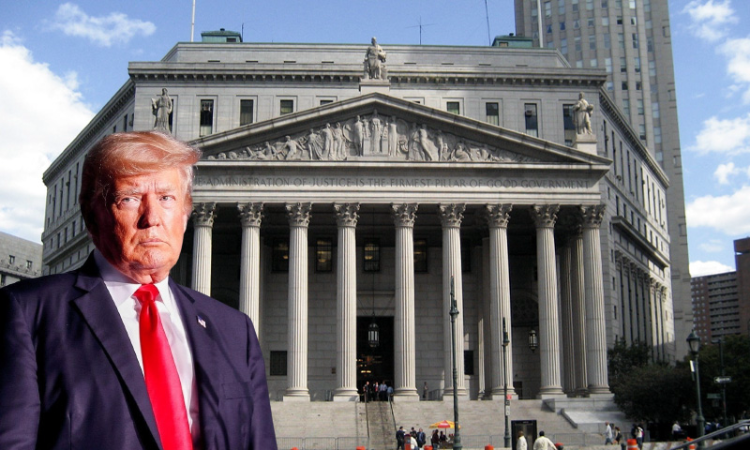
On April 2, 2025 US President Donald Trump calling it a 'Liberation Day', unveiled a reciprocal tariff chart to be imposed on countries across the globe, with the ostensible objective of reducing crippling American trade deficit. For achieving this objective, the Trump administration invoked the International Emergency Economic Powers Act of 1977 that confers the Federal Executive with a broad range of authority to regulate international economic transactions, subject only to a declaration of a national state of emergency as a condition precedent.[1] Upending international trade, the Trump administration imposed unfair, arbitrary and whimsical tariffs exercising powers under the aforesaid Act.
The concomitant effect of these tariff measures resulted in fiscal harm to many US States and several businesses (“plaintiffs”) who preferred a lawsuit seeking to overturn the executive action. Consequently, lawsuits were filed in the US Court of International Trade (“CIT”) at New York, which is vested with jurisdictional authority to review civil actions affecting international trade. The CIT, and, on appeal, the US Court of Appeals for the Federal Circuit (“CAFC”) upheld the claims made by the plaintiffs holding the imposition of tariffs to be an unlawful economic measure lacking authority. Now, the US Supreme Court (“SCOTUS”) is tasked with settling this controversy of seminal importance that will have a ripple effect on the world economy and international trade at large.


Origins of the International Emergency Economic Powers Act of 1977
In the wake of World War I, the US Congress enacted a slew of legislative measures empowering the President to take control of the economy. The Trading with Enemy Act (“TWEA”) which delegated the congressional authority to regulate international trade, migration, investment and communication to the President was one of them. In 1921, the Congress repealed wartime laws but kept the TWEA on the statute books to deal with alien property in custody.
Over the course of important historical events affecting the world economy such as the financial crisis of 1929 and World War II, the Congress was coaxed into further increasing discretionary powers under the TWEA. Through this measure, Presidential powers were broadened to include declaration of national emergency in peacetime, enabling the assumption of effective control over the national economy, banking institutions and possession of precious metals, among other things, without any prescribed time limit. In particular, the congressional approval of section 5 (b) under the TWEA entrenched excessive discretionary power in the hands of the Federal Executive. Even with the end of World War II, such unfettered power was perceived imperative to deal with the great power rivalry of the Cold War era. Evidently, this blurred the distinction between wartime exigencies with peacetime economic crises.
In 1970s, with growing dissatisfaction over unchecked executive authority on account of the Vietnam War and Watergate scandal, a bipartisan congressional committee reviewed the excesses granted to the President. In its report, it found that the US was technically under a perpetual state of national emergency since March 9, 1933 when President Franklin D. Roosevelt invoked the TWEA to declare bank holidays. Taking a reformist approach, the Congress circumscribed the overwhelming discretion wielded by the President by introducing a mechanism of congressional consultation and oversight as a counterbalancing measure.
Paring back the TWEA, the Congress enacted the National Emergencies Act, 1976 (“NEA”) and the International Emergency Economic Powers Act, 1977 (“IEEPA”) placing certain procedural limitations on the exercise of presidential power relating to, inter alia, international trade. However, the emergencies declared under section 5 (b) were hedged in with exceptions. Consequently, a pre-existing emergency continued to prevail.
Under the legislative framework of the IEEPA, its provisions can only be invoked while dealing with “an unusual and extraordinary threat with respect to which a national emergency has been declared”. It also makes it obligatory for the President to specify the provision of law intended to deal with such threats. This precisely means that declaration of a national emergency is a necessary precondition for the President to take control over international trade under the IEEPA. Further, the NEA in tandem provided for congressional review and oversight mechanism by requiring the President to intimate the Congress about the declaration of such national emergency which, has to be reviewed by it bi-annually, and can be terminated by a concurrent resolution passed by both the Houses, or emergency so declared gets automatically terminated on the lapse of one year unless renewed. In essence, these legislative measures had a fettering effect on the unbridled discretionary power previously enjoyed by the President.
Verdicts of the CIT and CAFC
Challenging the legality of the tariff orders, the main thrust of plaintiffs contention rested on the submission that the words 'regulate importation'[2] do not include the authority to impose tariffs as it would amount to delegation of legislative authority by the Congress offending the principles of separation of powers. These words, as argued, do not confer unbounded authority on the President to make decision having 'vast political and economic' consequences as they lack any intelligible statutory principle providing any meaningful constraint on such power. Regulate importation also do not signify any unbounded legislative delegation of authority to impose tariffs and the IEEPA can only invoked on grounds of 'unusual and extraordinary threat'. The Trump administration, on the contrary, emphasised on the inherent limitations already encompassing IEEPA as being self- sufficient, and the wide meaning attached to the word 'regulate'. Further, the administration, relying on Yoshida II, stressed the recognition of presidential authority to exact tariffs.
The CIT returned a verdict affirming the contentions of the plaintiffs. There were three limbs of its decision— historical, contextual, and constitutional.
On an historical analysis, the CIT opined that though the provisions of TWEA and IEEPA (sections 5(b) and 1702, respectively) are facsimiles in content, their nature completely differs in application. The Congress while postulating the IIEA intended to place important guardrails to temper executive authority. Accordingly, giving a wide construction to the IEEPA to mean that the President has the unchecked authority to impose desirable tariffs would frustrate its objective.
Contextually, the CIT observed that equating the present case of reciprocal tariffs and Yoshida II (a TWEA case) that emerged during the Nixon Presidency when the administration took a temporary and limited measure to address balance-of-payments crisis would be an incongruous interpretation because the case itself permits only temporary and limited tariff. It behooves the President to exercise his powers within permissible delegated stretch and asserts that the authority to impose tariff is not unchecked.
Constitutionally, the CIT held that to interpret IEEPA in a way that clears the path for the President to effectively assume the role of a tariff- making authority shall result in “such a reading (which) would create an unconstitutional delegation of power”. Thus, the separation of power doctrine gets offended with unbounded delegation of power to impose tariffs in absence of any 'clear intelligible principle' under which the executive works within meaningful constraints. Unbridled delegated authority is antithetical to constitutional principles.
The CAFC while agreeing with the CIT affirmed that it wasn't contemplated by the Congress to vest sweeping powers of such magnitude in the President to enable him to impose unbounded reciprocal tariffs by framing the words 'regulate importation'. For delegation of such broad powers, the Congress ought to have provide it explicitly as in through other legislative acts like under section 338 of the Tariff Act, 1930. Absence of any clear and unequivocal term cannot be construed to authorise the executive to encroach upon the core functioning of the Legislative Branch. For this purpose, the delegation of authority must be unambiguous and explicit which, is absent in the present case.
CHALLENGE BEFORE THE SCOTUS AND THE ROAD AHEAD
After two rounds to litigation, the Trump administration has been outrightly unsuccessful in its endeavour to legalise one of the most contentious and politically sensitive set of actions. Certainly, the SCOTUS stands at a decisive and pivotal turn that would shape and enormously impact international trade and global economy.
SCOTUS which is currently republican- appointee-dominated will have to walk a tight rope in order to secure President Trump his crowning- glory— unbounded authority to wield tariffs as a geopolitical weapon in order to coerce nations to his will. However, any legal incantation by the SCOTUS for President Trump will risk putting the entire legal landscape into a pre- IEEPA era which has been effectively outlawed by the Congress through a valid expression of legislative intent. Consequences of such an interpretation will be far reaching and will dilute separation of powers doctrine.
The main challenges before the SCOTUS hinges on the interpretation of section 1702 of the IEEPA to read (or not to read) 'regulate importation' to include wide discretionary power to levy tariffs and delegation of excessive authority in explicit or implicit terms. The interest of US States and businesses will have to be kept in mind while coming to a definitive conclusion. The aftermath— including the possibility of declaring tariff actions as unconstitutional— is yet to be reckoned with. The road ahead for the United States and the world has become morass, wherein executive expression of an economic policy (or a geopolitical tool) will have to be weighed and balanced against permissible constitutional limits to exercise discretionary authority vested in the President under the IEEPA.


