



NLU Uttarakhand: A Long wait Continues
Gyaaneshwar Joshi
14 May 2026 4:00 PM IST
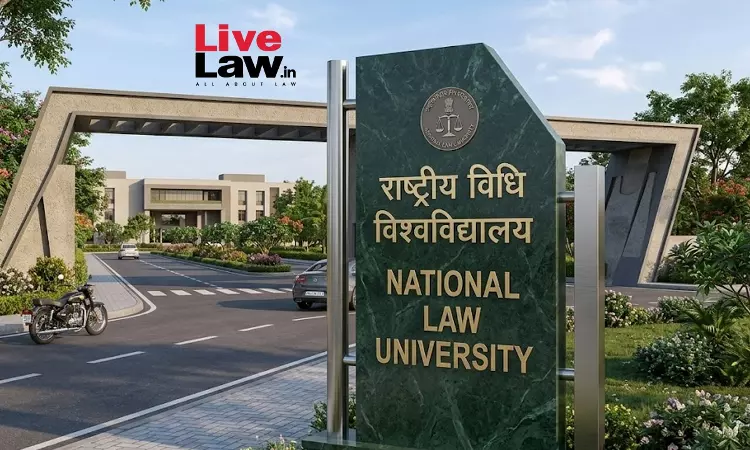
The National Law University of Uttarakhand Act, 2011 was passed with a vision to establish an NLU for the advancement of legal education in Uttarakhand. However, the inability of the Uttarakhand government to operationalize the National Law University even after more than a decade reflects a troubling lack of accountability and administrative effectiveness. This inordinate delay has not only denied aspiring law students access to quality legal education within the State but has also eroded public trust in the government's willingness to implement its own statutory commitments.
In March 2019, there was a significant milestone in the field of legal education in Uttarakhand when the former Chief Minister, Shri Trivendra Singh Rawat, laid the foundation stone for the state's first National Law University. The proposed institution was planned to be operational at Rani Pokhri, a location situated approximately 50 kilometers from Dehradun, the state capital. The initiative reflected the government's vision to strengthen higher education infrastructure and position Uttarakhand as a hub for quality legal studies. With an initial project budget of Rs. 26 crores and an allocation of 10 acres of land, the university was envisioned as a premier institution that would cater to aspiring law students not only from the state but from across the country. The university project was well conceived and supported by the governance framework established under the Uttarakhand National Law University Act, 2011. It reflected a clear institutional commitment and a transformative vision aimed at strengthening legal education within the State. However, the aspiration of Uttarakhand having its own NLU remains unfulfilled, despite prior commitments being made by the State Government. What was once envisaged as a landmark educational initiative continues to exist largely on paper, with the project yet to take a concrete shape. As a result, the State still lacking an NLU campus, notwithstanding the legislative framework and earlier assurances that were intended to bring the institution into existence.


The issue of inordinate delay was taken up by the Uttarakhand High Court in Bhupal Singh Bhakuni vs. State of Uttarakhand & Others, Writ Petition (PIL) No. 127 of 2014, wherein the establishment of a National Law University in Uttarakhand was treated as a matter of public importance. The Learned Counsel for the State submitted that the delay was due to the inability of securing 10 acres of land for the university campus. Later, a four-member committee was formed to resolve this issue. However, the Court at the final stage found these reasons unconvincing and observed that the claim of land unavailability reflected serious administrative inefficiency. The Court in Paragraph 28 of the judgment expressed serious concern over the delay on the part of the State Government: The Court stated that:
28. “It is strange that till date, the University has not been established. There is a long unfruitful correspondence entered into between the various functionaries of the State Government with the Director, UJALA. The consistent stand of the respondent-State, as per the affidavits, is that the land is not available at Bhowali or at Pant Nagar (District U.S. Nagar). It may be that the land is not available at Bhowali but it is difficult to believe that the land is not available in the entire State for the establishment of the University.”
Later, the Uttarakhand High Court directed the State Government to lay the foundation of the National Law University in Udham Singh Nagar district within three months from the date of judgment which was passed in 2014. The Court further observed that about 1,800 acres of land is already available, which is far in excess of the requirement for the project. However, despite these clear instructions issued by the High Court, there has been seen a continued lack of progress in its implementation. This persistent delay raises a serious concern regarding the State's compliance with the judicial orders of the High Court.
It was around the time when Uttarakhand became the 27th State of the Union, alongside Jharkhand and Chhattisgarh, all three came into existence in November 2000. However, within the decades of their existence, Hidayatullah National Law University in Chhattisgarh and the National University of Study and Research in Law in Jharkhand were established and have since grown rapidly into well-recognized national law universities. Their growth has significantly contributed to strengthening the overall legal education infrastructure and has also attracted a large number of meritorious students from across the country to pursue their legal studies in both the State. This development has not only enhanced their overall academic environment but has also positioned the State as an emerging destination for quality legal education.
Several States have advanced significantly in establishing NLUs and strengthening their legal education infrastructure. Maharashtra currently leads with the highest number of NLUs having total number of three, while Uttar Pradesh and Madhya Pradesh each have two NLUs. The most recent addition to this expanding network is the National Law University, Tripura, which commenced its operations in 2022. In contrast, Uttarakhand's continued delay in establishing its own highlights a missed opportunity to keep pace with other States in the development of legal education. This gap underscores the growing disparity in institutional growth and reflects the need for timely implementation of long-envisioned educational initiatives.
It is, therefore, imperative that the Government of Uttarakhand not only takes immediate steps towards establishing the NLU but also provides clarity regarding the prolonged delay in its implementation over the past decades. The establishment of a world-class institution of national repute requires careful consideration of various significant factors to ensure that it is capable of attracting meritorious law students from across the country. Firstly, the campus must have strong connectivity or be located in close proximity to an airport or railway station to facilitate ease of access for students arriving from different States. Further, locating the campus near to the High Court complex would significantly enhance the learning opportunities, as it would provide students with greater exposure to practical training, internships, and meaningful engagement with the legal fraternity. In Uttarakhand, the High Court is situated in Nainital, rather than in the capital city of Dehradun, which could be a relevant consideration in determining the suitable location for opening the university campus.
The establishment of an NLU in Uttarakhand would yield far-reaching benefits, particularly in terms of expanding access to quality legal education for aspiring law students of the State. One of the significant advantages would be the provision of domicile-based reservations for students, a practice already followed in almost every State NLUs. This would enable law students from Uttarakhand to access high-quality legal education and improved career opportunities within their own State. Furthermore, the commencement of such a premier institution would significantly enhance the State's legal aid infrastructure and encourage deeper engagement with local legal issues.
A comprehensive review of the situation reveals that the establishment of a National Law University in Uttarakhand is critical for bridging the existing gap in the State's legal education infrastructure. Addressing this long-standing issue would not only provide much-needed opportunities for aspiring law students but would also contribute meaningfully to the broader development of the State's judicial and academic ecosystem. Over time, this would not only strengthen the justice delivery system but also contribute to the overall development of a more robust and accessible legal ecosystem in Uttarakhand.
Author is an advocate practicing in the Supreme Court of India.
Views Are Personal.


