



What If Your Weight Could Make Your Holiday Illegal?
Shuma Talukdar
7 April 2026 8:00 PM IST
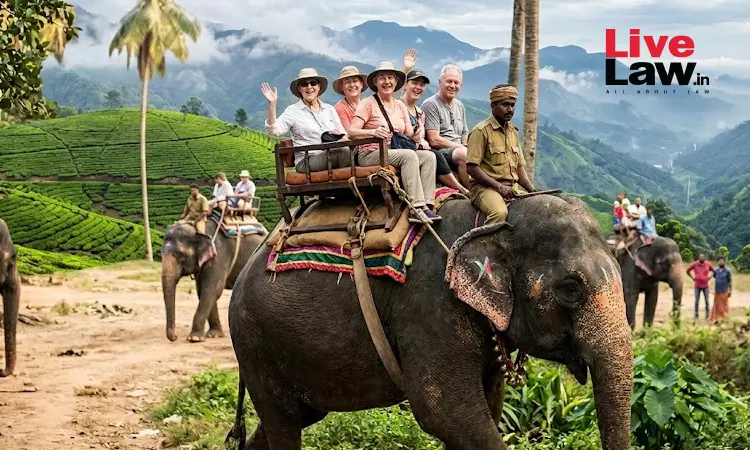
From Santorini to Shimla, the question is no longer just about holiday and travel, but about the invisible weight animals are forced to carry.
On the steep stone paths of Santorini, something quietly radical has entered the tourism economy: a weighing scale. Since 2018, tourists over 100 kg (200 pounds) have not been allowed to ride donkeys, and no animal may carry more than one-fifth of its body weight. What seems like a minor inconvenience is, in fact, a profound legal shift. For decades, animal rides have been sold as harmless cultural experiences, donkeys climbing cliffs, camels posing against pyramids, horses trotting through hill stations. But these scenes have always depended on an invisible truth: animals are pushed beyond their limits to sustain the illusion of effortless travel. Today, the law in places like Santorini is beginning to interrupt that illusion by asking a simple question: how much weight is too much?
This question is no longer confined to one Greek island. In Mijas Pueblo, Spain, the donkey taxis adhere to specific regulations. These include limits on how many people can ride at once and enforced breaks for the animals. The law limited the weight the donkey could carry to 80 kg. At the Giza Pyramids, scrutiny of camel rides found camels, donkeys, and horses were forced to carry visitors around Egypt's top tourist sites in the intense desert heat, without any access to food, water, or shade. These animals are regularly beaten, whipped, and often collapse to the point of exhaustion. Thus, the Tourism Ministry has banned the use of camels, horses, and donkeys at all tourist sites. In Petra, Jordan, donkey and horse rides were being replaced with electric vehicles, following sustained advocacy by Vienna-based international animal charity Four Paws and Jordan's Princess Alia Foundation.


These changes are not driven by sentiment alone. Veterinary science has long established that overloading leads to spinal injuries, joint damage, and chronic pain among animals. Researchers at the Ohio State University Agricultural Technical Institute found that horses should carry no more than 20% of their body weight. A similar study on donkeys at the University of Edinburgh found that an average donkey of approximately 11 hands high or 160 kg can carry up to 50kg (8 stone) on its back or can pull up to twice its bodyweight on level ground. A camel can carry 90 kg while walking 20 miles (32 km) a day in the harsh desert. What is new is not the knowledge, but the willingness to translate it into enforceable rules.
In India, however, this shift remains largely confined to paper. Laws do exist. The Prevention of Cruelty to Animals Act, 1960, and the accompanying Draught and Pack Animals Rules, 1965, prescribe load limits of 50 kg for donkeys, 70 kg for ponies, and 250 kg for camels. It also restricts continuous working hours for animals. In August 2025, the latest Guidelines for Working Equines during Religious Pilgrimages came with recommendations on weight limits. It recommended 25 kg for donkeys, 50 kg for ponies, and 80 to 90 kg for horses and mules. Additionally, prohibiting overnight movement and restricting the use of injured, pregnant, and sick equines, along with mandatory health checks and rest periods. Yet on the ground, enforcement is weak and often invisible. In tourist economies, from the horse rides of Shimla and Mussoorie to camel safaris in Rajasthan, weight limits are rarely communicated, rarely monitored, and rarely questioned. The result is a familiar paradox: cruelty is illegal, but everyday harm continues because it has been normalised.
The consequences are not abstract. During pilgrimage seasons in Uttarakhand, hundreds of mules die from overwork, exhaustion, and disease. Alone in early 2025, within a week of starting the Char Dham Yatra, multiple deaths were recorded. In Matheran, where hundreds of horses and ponies are used for transport, welfare organisations have reported malnutrition, injuries, and poor living conditions. In Kolkata, inspections of carriage horses near Victoria Memorial and Maidan have revealed anaemia, fractures, and chronic neglect. These are not isolated incidents; they are symptoms of an unseen system that depends on animals working beyond their physical limits. The absence of clear, enforced weight limits is central to this problem. Weight is measurable. It turns suffering into something that can be regulated. Without it, responsibility becomes diffuse, and animals continue to carry the burden.
Globally, the emerging legal trend is clear: those who profit from animal labour are held accountable, not the tourists who ride them. But ethically, the line is harder to draw. If a system allows an overloaded animal to carry a paying customer, responsibility is shared between operators, regulators, and travellers themselves. Weight-limit laws matter not only because they protect animals, but because they disrupt the logic of tourism. They introduce friction into an industry built on ease. They force a pause where there was none. And in places like Petra, they point toward an even more uncomfortable possibility: that the most humane animal ride may be no ride at all. As these debates slowly reach India, the question is no longer whether such limits are necessary; science has settled that. The real question is whether we are willing to let that knowledge change how we travel. The next time a horse, camel, or donkey is offered as part of the experience, the choice may feel personal. But it carries a weight far beyond the ride itself.
Author is a Doctoral Researcher, Mahindra University, Hyderabad. Views are personal.


