



When Paneer Is Not Paneer: Emerging Law On Dairy Analogues In India
Dr. Ranjith Krishnan
12 Oct 2026 11:15 AM IST
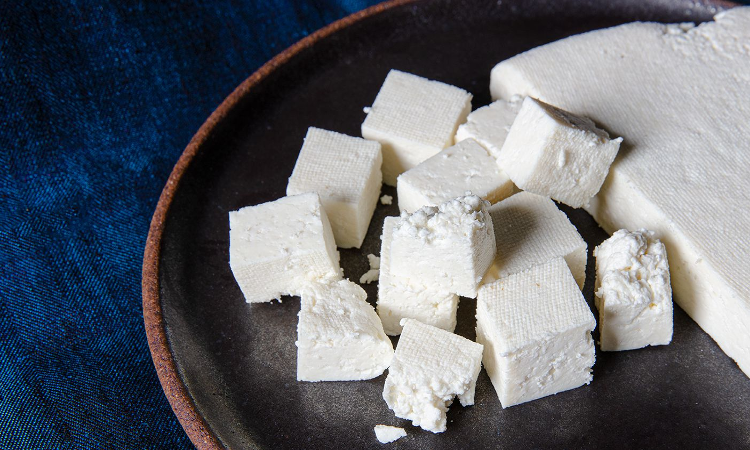
Image Courtesy : Serious Eats
Few foods are as familiar in the Indian kitchen as paneer. Yet its familiarity can obscure a legal question of some importance: when may a product be sold under that name?
The Food Safety and Standards Authority of India (FSSAI) has now placed that question squarely in the regulatory domain. A notification dated 22 September 2026, published in the Gazette of India on 23 September and listed by FSSAI on 24 September, contains the draft Food Safety and Standards (Prohibition and Restrictions on Sales) Amendment Regulations, 2026. The draft proposes to insert clause (12) in Regulation 2.1.1 of the 2011 Regulations in relation to “paneer made of constituents not derived from milk”. It also states that products already licensed or registered under the “Analogue in Dairy Context” category shall discontinue the term “Paneer” in their nomenclature, labelling or marketing.
This is not yet final law. The draft has been published under Section 92 of the Food Safety and Standards Act, 2006 and is open to objections and suggestions for the statutory sixty-day period. It should not be described as though an all-India prohibition on every dairy analogue has already come into force.
Paneer already has a legal identity
The existing standards define chhana or paneer as a product obtained from a variant of milk, with or without added milk solids, by precipitation with permitted acidulants and heating. Milk and milk solids are the stipulated raw materials.


An “analogue in the dairy context” is different. FSSAI describes it as a product in which constituents not derived from milk replace, partly or wholly, milk constituents, while the final product resembles a milk or milk product organoleptically or functionally. The distinction separates the identity of a standardised dairy product from a product designed to resemble or replace it. It is therefore legally imprecise to use “analogue”, “synthetic”, “fake”, “adulterated” and “unsafe” as though they mean the same thing. Section 3(1)(zf) of the Food Safety and Standards Act covers, among other cases of misbranding, food sold by a name belonging to another article and an imitation or substitute presented in a manner likely to deceive without its true character being plainly disclosed. Sections 26 and 27 address responsibility and liability across the food chain. Sections 52 and 53 deal with misbranding and misleading advertisements. Section 59, by contrast, concerns unsafe food. Misdescription and unsafety are distinct legal conclusions.
Why Tofu Matters?
Tofu provides a useful comparator. FSSAI separately standardises tofu as a soybean product made by coagulating liquid obtained from soybean and pressing it into blocks. FSSAI guidance also states that products made exclusively from non-dairy ingredients are not, merely for that reason, “analogues in the dairy context”. Tofu therefore does not become “fake paneer” because it may look similar or be used in a similar dish. It has its own food identity. The comparison shows what the law should expect from substitutes: they may compete with familiar foods, but under a description that tells the consumer what the product actually is.
The September draft goes further than a mere ingredient-disclosure rule. It seeks to prevent a product made from non-milk constituents from using the commercial identity of paneer. The controversy is therefore as much about representation as composition.
The problem becomes harder at the restaurant table
Packaged food is only part of the story. A manufacturer may correctly describe a product, but that information can disappear down the chain. A restaurant may procure an analogue and offer “Paneer Butter Masala”; a caterer may serve it as paneer without the consumer ever seeing the original package; an online platform may simply repeat the restaurant's description.
FSSAI had already recognised this gap in its 2025 consultation paper, which considered clearer disclosure when dairy analogues are used by restaurants and other food-service establishments. The Bombay High Court encountered the issue in August 2026 in proceedings involving Udupi Swaad Restaurant and the Maharashtra FDA. While declining interim relief against suspension of the restaurant's licence, the Court questioned the serving of analogue paneer without adequately informing customers. The proceeding is important because it shows where deception may occur: at the point of representation, not only manufacture.
The Consumer Protection Act, 2019 adds another dimension. Consumer rights include the right to be informed about quality, quantity, potency, purity and standard. An unfair trade practice includes a false representation that goods are of a particular standard, quality or composition. Depending on the facts, a misleading food description can therefore engage both food law and consumer law.
The consultation should matter
The proposed amendment is significant, but implementation will raise difficult questions. How should partially substituted products be described? What terminology should restaurants use? How should online menus identify the ingredient? What transition should apply to businesses already licensed in the analogue category? How should enforcement distinguish deliberate deception from a technical labelling lapse?
These are precisely the questions for which a draft consultation exists. Food businesses, consumer organisations, professionals, academics and members of the public with a reasoned view should consider placing it before FSSAI within the prescribed consultation period. The official draft-notifications page contains the notification and prescribed format and should be referred to for the applicable procedural requirements.
The larger principle is uncomplicated. Food law protects consumers not only from products that are unsafe, but also from descriptions that are materially untrue. An alternative product may be perfectly legitimate. What becomes difficult to defend is an alternative product acquiring the name, and with it the consumer expectation, of paneer when its essential constituents are not derived from milk.
Author is an Associate Professor at Christ University, Delhi NCR. Views are personal.


