



Why Should Divorce On Ground Of Irretrievable Breakdown Of Marriage Now Become Statue In India?
Nitish Banka
19 Sept 2026 8:00 PM IST
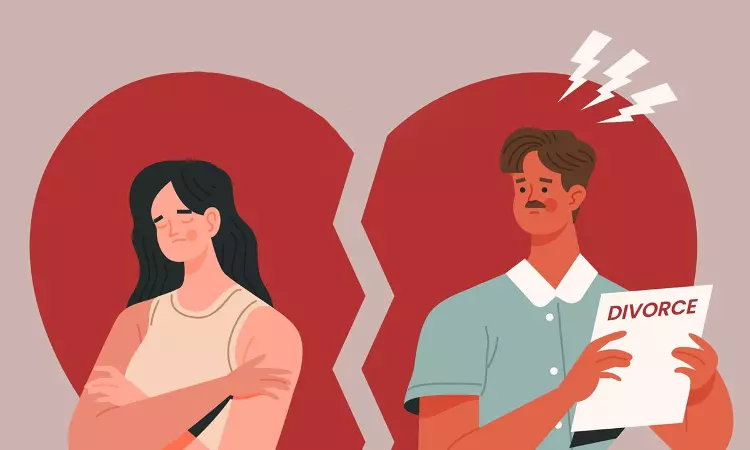
Matrimonial proceedings in India are often prolonged and complicated by procedural delays. Marriage is a personal relationship between two parties, and when it has completely broken down, the law should provide a peaceful and practical way out. Under the Hindu Marriage Act, 1955, divorce is generally available either on fault-based grounds—such as cruelty, desertion, or adultery- which must be proved, or by mutual consent. But if one spouse refuses to consent, the other is left with no option except to pursue a contested divorce on one of the statutory grounds. This can allow one party to keep the other trapped in a dead marriage. Judicial delay further aggravates the hardship, making matrimonial litigation emotionally exhausting and uncertain for the parties involved.
The divorce process burdens the judicial system; the multi-tier system further complicates matters. In any case, after a few years of matrimonial litigation, the matter may reach the Supreme Court, where, under Article 142, if the Hon'ble Court deems fit and, in its discretion, grants divorce and fixes alimony on the ground of irretrievable breakdown of marriage. If such a ground is available statutorily at the family court level, a lot of judicial time of the family court, High Court and Hon'ble Supreme Court will be saved.


The Article142 Anomaly
Article 142 of the Constitution gives the Hon'ble Supreme Court power to pass an order to do complete justice. What must be fixed statutorily is now being done in many cases by the Supreme Court. The Highest court of the land is now fulfilling the gap which a statute must fulfill. In the Judgment of Shilpa Sailesh V. Varun Srineevasan.
The Hon'ble Supreme Court upheld its power of granting divorce under irretrievable breakdown of marriage. The matters in which there is huge separation and hotly contested matters in which multiple litigations are pending is finally being resolved by the Hon'ble Supreme Court. Now the question is how much judicial time is getting wasted. A single matrimonial case usually results in multiple litigations. Every order against a spouse is also further challenged. A lot of frivolous litigations are also common. Precious judicial time is also wasted.
The interesting thing about the relief by the Hon'ble Supreme Court is that the entire pending proceedings as well as the issues about alimony and child custody/visitation inter se parties are also resolved by a single order. But there is a limitation to Article 142; the procedure must be sparingly used and cannot resolve issues which require detailed appreciation of evidence on disputed facts. The jurisdiction of the Supreme Court also cannot be used often to resolve disputes to be tried by the trial court.
The requirement to fill the gap in the statute cannot be replaced completely by the extraordinary powers of the Supreme Court. Further, the process of Article 142 cannot be invoked as a matter of right.
The position of supreme court being the constitutional court is already being diluted by lot if SLP's being admitted, and now further the burden of resolving matrimonial disputes while resorting to Article 142 of the constitution taking away a lot of precious judicial time. What can be fulfilled through the legislature is being done by the judiciary. Therefore, there is a strong need for the legislature to do its job and pass a law.
Some History of the ground Irretrievable breakdown of marriage
The faults and limitations of fault-based divorce are many; firstly, the process is cumbersome and depends heavily on evidence. The standard of proof varies. It is true that for proving cruelty, the litigant may not know the chances of success; a cruelty in one case is not cruelty in another. As far as divorce based on mutual consent, the limitation is the consent of the other spouse. Whereas the ground of irretrievable breakdown of marriage is simple, it is whether marriage needs to be preserved. However, this ground has its own limitation, that is, it cannot resolve any other inter-se disputes between the parties, and further, as per the Law Commission reports and bill introduced by the parliament, it needs further look on the point of safeguarding the interest of the spouse on issues pertaining to alimony and child custody/visitation.
In New Zealand, a provision resembling desertion was first introduced through the Matrimonial Causes Act, 1920, which made three years of separation a ground for divorce. Although this was not strictly a no-fault divorce provision, the concept developed further in Lodder v. Lodder in 1921. In that case, the court recognized that, after a prescribed period of separation, a matrimonial relationship may be treated as having ceased to exist unless special circumstances justify its continuation. This marked one of the earliest judicial steps toward recognizing marital breakdown as a basis for divorce, shifting from a concept of fault-based recognition. In 1980, New Zealand introduce family proceedings act and formally incorporated irreconcilable differences as a ground for divorce and brought down the period of separation to 2 years instead of 3.
The ground of irretrievable breakdown of marriage, or no-fault divorce, was introduced in the United Kingdom in the 1970s, and in the United States of America it was first adopted by State of California in 1970, and New York became the last state to adopt this law in the year 2010. Canada introduced no- fault divorce in 1968, which required a separation of 3 years, and later it was modernized in 1986 and required a 1-year separation to invoke the ground of no-fault divorce. Australia introduced this ground in the year 1976, and the most interesting thing about Australia is that this is the sole ground for divorce, and fault-based divorce was abolished in Australia. The only condition to show a breakdown of marriage is 12 months' separation. The separation can also be shown if spouse living under the same roof. The question is why Australia abolished the system of fault-based divorce. Why Australian Parliament think that fault-based divorce is flawed? Some of the reasons were that fault-based divorce makes the divorce process complicated, keeps the other spouse trapped, increases costs, delays, and harms dignity further; the evidence required the use of private detectives and public exposure of intimate facts. The deeper philosophy is that the state cannot decide whether a spouse deserves a divorce or not. The state should only determine if the marriage is dead. These are some of the reasons where fault-based divorce does more harm than good.
Position of Divorce on the ground of irretrievable breakdown of marriage law in India
India's 71st and 217th Law Commission reports recommend that irretrievable breakdown of marriage should be introduced as a law and efforts were made in Parliament by introducing the Marriage Laws (Amendment) Bill, 2010, which proposed relevant amendments in the Hindu Marriage Act and the Special Marriage Act. The bill was passed in the Rajya Sabha with certain amendments but was still pending in the Lok Sabha and eventually lapsed in the year 2014. The bill introduced that, for invoking the ground of irretrievable breakdown of marriage as a ground for divorce, the parties to the divorce must remain in separation for at least 3 years; the marriage must be broken down irretrievably, and there is no realistic marital relationship to preserve. There was a certain safeguard given to the wife that if she faces financial hardship or, in all circumstances, prevents dissolving the marriage, then the petition on this ground can be rejected or stayed. Further, the bill also had safeguards related to maintenance and suitable arrangements for the children. The bill was also referred to the Standing Committee, which introduced more provisions to safeguard the interests of women, like the rights of women in immovable/movable properties of husband.
In India, marriages that are effectively broken down are either litigated or are silent. In many cases, people don't have the resources to litigate for years. When adequate arrangements and safeguards are there in the proposed law with respect to alimony and maintenance, litigating on a dead marriage not only increases divorce cases but also a bunch of other cases. The Supreme Court has already recognized the misuse of sections like 498a. A cleaner exit from the marriage will reduce the burden on the trial courts as well as high courts/supreme courts. Because a huge pendency of cases pending are matrimonial.
Even today, divorce on the ground of irretrievable breakdown is considered only in cases where prolonged delay in the proceedings shows that justice has been substantially delayed. In this sense, the judicial process itself has become one of the reasons for invoking this ground before the Supreme Court.
Author is an Advocate practicing at Supreme Court of India. Views are personal.


