



Written Down Or Left Out: Biodiversity Amendment And Northeast's Oral Knowledge
Aaditya Bajpai
11 Nov 2026 10:00 AM IST
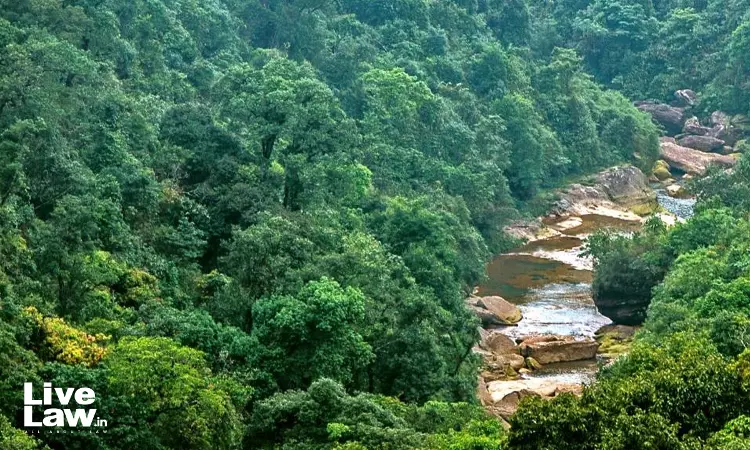
The Biological Diversity (Amendment) Act, 2023 was presented as a modernisation of a two-decade-old law, one that would ease compliance for the traditional-medicine industry and tidy up a cumbersome benefit-sharing regime. Less remarked upon is the line it draws through traditional knowledge itself. The amendment sorts such knowledge into two kinds. One is “codified,” and the law treats it generously. The other is everything else, and the law leaves it in a far weaker place. The Northeast India, one of the world's richest storehouses of plants and the knowledge of their use, holds that knowledge almost entirely in memory rather than in books, and so sits on the wrong side of that line.
The region falls within the Indo-Burma biodiversity hotspot, and its communities hold a vast, largely unwritten pharmacopoeia built up over generations. Yet the distinction the law draws is not between knowledge that is valuable and knowledge that is not. It is between knowledge written down centuries ago in a handful of classical texts and knowledge still carried orally by living communities. A Khasi healer's use of a forest herb, a Mishmi household's remedy for fever, the cultivation practices behind the Naga chilli, none of it was ever entered in the authoritative books the statute recognises. That omission, a matter of form rather than worth, now decides how much protection the law will extend.


The Line the Amendment Draws
The amended Act, in Section 2(ea), defines “codified traditional knowledge” as knowledge derived from the authoritative books listed in the First Schedule to the Drugs and Cosmetics Act, 1940, the classical texts of Ayurveda, Siddha and Unani. Having defined it, the Act lifts it out of the benefit-sharing system. Users of such knowledge, and practitioners of the AYUSH systems dealing in cultivated medicinal plants, are relieved of the obligation to share benefits with local communities, and holders of codified knowledge are expressly dropped from the definition of “benefit claimers.” The effect is clean. The knowledge contained in these texts becomes a freely usable national resource, and the industry that commercialises it owes nothing back.
What Falls on the Other Side
What the texts do not contain falls outside this favoured category, and the Northeast's knowledge is almost all of this kind. Consider Coptis teeta, locally called Mishmi teeta, an endemic and threatened herb of the eastern Himalayas that the Mishmi and neighbouring tribes of Arunachal Pradesh have long used against malaria, dysentery and stomach ailments, and whose active compound, berberine, is of real pharmaceutical interest. Or the Naga chilli, Bhut Jolokia, grown for generations across Assam, Nagaland and Manipur, carrying a geographical-indication tag and a commercial value that reaches as far as the oleoresin the Defence Research and Development Organisation extracts for riot-control munitions. None of this knowledge sits in the classical books. It is therefore “uncodified,” and it stays inside the benefit-sharing regime rather than being exempted from it. On paper, that keeps the Northeast's communities as benefit claimers. In practice, the regime they are left inside has just been hollowed out.
A Weaker Regime to Be Left Inside
The same amendment that exempted codified knowledge also thinned the protection around everything else. Offences under the Act have been decriminalised, replaced by penalties that a government-appointed adjudicating officer imposes rather than a court. The point at which the National Biodiversity Authority's approval is required for a patent has shifted from before the application to before the grant, narrowing the window in which misuse can be caught. The access-and-benefit-sharing fee is now tied to turnover under regulations notified in 2025, which critics read as centralising control and shrinking the community's hand in fixing the terms of sharing. A community whose knowledge stays within this regime is not, in any strong sense, protected by it. It is enrolled in a scheme that has lost much of its force.
The High-Water Mark the Amendment Rolled Back
This matters more once the amendment is read against the judgment it answered. In Divya Pharmacy v. Union of India, the Uttarakhand High Court held in 2018 that even a purely Indian company, with no foreign shareholding, is bound to share benefits with the local and indigenous communities whose resources and knowledge it uses. Biological resources, the Court said, are the property of the nation, and the rights of communities must be protected from appropriation within the country as much as from outside it. Divya Pharmacy was itself an Ayurvedic manufacturer, and the Court made it pay. The 2023 amendment, prompted in no small part by industry's resistance to that line, now exempts the very category the judgment had brought in. Its sponsors defended the change as a way to ease the compliance burden on the traditional-medicine sector and attract investment; what it also did was withdraw the benefit-sharing obligation from the kind of user the Court had just held liable. The communities left squarely inside the benefit-sharing net are therefore the ones whose knowledge the texts do not record, which in the Northeast is nearly all of it.
Documentation Is Not a Right
The obvious answer is that the law already offers these communities a remedy. Every Biodiversity Management Committee must maintain a People's Biodiversity Register chronicling local resources and the knowledge attached to them, so the Northeast, it might be said, need only write its knowledge down. But a register is a record, not a right. Entering knowledge in a People's Biodiversity Register does not make it “codified” within the meaning of Section 2(ea), which is tied to the Drugs and Cosmetics Act's classical texts and not to community registers. The documentation therefore unlocks neither the exemption nor, more importantly, the defensive protection that codified knowledge enjoys. India's Traditional Knowledge Digital Library, the prior-art database that defeated the turmeric and neem patents abroad, covers only the codified systems, Ayurveda, Unani, Siddha, Sowa-Rigpa and Yoga. The Northeast's oral knowledge is in neither the authoritative books nor the digital library that guards them.
A Double Exposure
The result is a double exposure, and it falls hardest on exactly the knowledge most worth protecting. At home, the Northeast's communities hold benefit-sharing rights that the amendment has drained of much of their bite. Abroad, their knowledge sits outside the one mechanism India built to stop its traditional knowledge being patented by others. A foreign applicant claiming a Mishmi remedy would not be met by any Traditional Knowledge Digital Library entry, because none exists. The very orality that keeps this knowledge alive and in use is what renders it, in the architecture the amendment has now completed, legally invisible.
The line between codified and uncodified reads, on the page, like a neutral matter of documentation. On the ground it is a line between the knowledge of the established textual systems and the oral knowledge of the forest and hill communities who have kept India's richest biodiversity alive. A law that rewards what was written down and forgets what is still remembered does not merely overlook the Northeast. It leaves its most valuable and most vulnerable knowledge with a seat in a weakened regime and no shield against misappropriation. The remedy is not to force oral knowledge into a form it was never kept in. It is to attach a real benefit-sharing entitlement, and a genuine defensive-protection mechanism, to the register the law already asks these communities to maintain, so that what is remembered is protected as surely as what was written.
References
The Biological Diversity (Amendment) Act, 2023 (No. 10 of 2023), Sections 2(aa), 2(ea) and 7, https://egazette.gov.in/WritereadData/2023/247815.pdf.
Divya Pharmacy v. Union of India, Writ Petition (M/S) No. 3437 of 2016, High Court of Uttarakhand, judgment dated 21 December 2018, https://www.livelaw.in/share-profits-with-local-communities-under-biodiversity-act-uttarakhand-hc-to-baba-ramdevs-divya-pharmacy-read-judgment.
LiveLaw, “Lok Sabha Passes Biological Diversity (Amendment) Bill” (exemption of codified traditional knowledge and AYUSH from benefit-sharing), https://www.livelaw.in/news-updates/lok-sabha-passes-biological-diversity-amendment-bill-2021-233609.
Mongabay India, “New regulations define access benefit-sharing from biological resources” (2025 ABS Regulations; turnover-linked fees; concerns on community rights), https://india.mongabay.com/2025/06/new-regulations-define-access-benefit-sharing-from-biological-resources/.
Kumar, S., & Sharma, J. (2026). Access and Benefit Sharing in India: Reconciling Biodiversity Conservation, Sustainable Development and Community Rights. International Journal of Law Management & Humanities, 9(V), 1213-1227, https://doi.org/10.63108/IJLMH.12947.
IANS, report on the India–Australia Traditional Knowledge Digital Library access agreement (TKDL scope: Ayurveda, Unani, Siddha, Sowa-Rigpa and Yoga), https://ianslive.in/india-australia-sign-agreement-on-digital-library-access-to-protect-traditional-knowledge--20260710135753.
Temin Payum, “Distribution, Ethnobotany, Pharmacognosy and Phytoconstituents of Coptis teeta Wall.”, Pharmacognosy Journal (2017) — on Mishmi teeta and its use among the Mishmi tribes, https://phcogj.com/sites/default/files/PharmacognJ-9s-S28_0.pdf.
The Print, report on Northeast India's chillies and geographical-indication protection (Bhut Jolokia / Naga Mircha), https://theprint.in/neye/one-of-the-worlds-spiciest-chillies-sikkims-dalle-khursani-gets-gi-tag/496487/.
Author is a Legal researcher and a practicing Advocate. Views are personal.


