



- Home
- /
- Book Reviews
- /
- Dalits And The Indian Constitution
Dalits And The Indian Constitution
Abdur Raheem
23 Feb 2026 10:39 AM IST
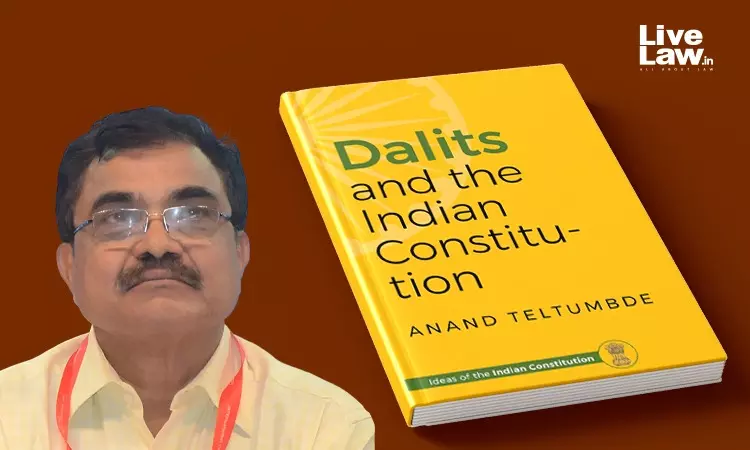
After seventy-five years, we continue to recognize the Indian Constitution as a transformative document that has contributed to justice, equality and fraternity. However, given that it remains, we can also question whether or not it has been able to attain its emancipatory promise for those who have been traditionally oppressed or who have experienced caste-based discrimination. For Dalits...
This is a premium content
Available exclusively to
Our subscribers
Subscribe Premium 
INR 1099+GST
Your support helps us to bring you more content at
an affordable subscription scheme !!!
All payment options available
After seventy-five years, we continue to recognize the Indian Constitution as a transformative document that has contributed to justice, equality and fraternity. However, given that it remains, we can also question whether or not it has been able to attain its emancipatory promise for those who have been traditionally oppressed or who have experienced caste-based discrimination. For Dalits in particular, the Indian Constitution not only serves as a legal framework but serves as a moral and political covenant based on the vision of B.R. Ambedkar. Even if the Constitution has provided the basis for constitutional democracy, the ongoing existence of structural or systematic inequality would require us to revisit whether the Constitution has actually dismantled the hierarchy of caste or simply moderated its manifestations.
Anand Teltumbde's recent work addresses this issue in his book titled "Has the Constitution of India Fulfilled the Emancipatory Promises of Dalits?" Teltumbde does not provide a conventional defence of the ideals of the Constitution nor does he assert that the failure of the Constitution can be attributed only to poor implementation. Instead, his focus is on discussing the structural failure found within the Constitution. He will assess if the institutional mechanisms of caste abolition, electoral representation, secularism and the state's authority have restrained substantial changes while creating an illusion of both inclusion and progress.
The foundational theme of argument is rooted in a critical engagement with the concept of constitutional morality. It is generally defined as criticize those who wield the power, not the constitutional document since the responsibility of any injustice, inequality, or any kind of oppression lies with those exercising state power. The author departs from this view; he contends that constitutional morality is not made in a vacuum; it should be cultivated through the process. It is the Constitution's job not only to set limits, but also to shape the moral habits of those who wield power. He argues that in every liberal democracy, criticism of the constitution must be examined from the standpoint of the oppressed sections.
In Teltumbde's analysis of the forty-five million underprivileged citizens who are classified as Dalits, there is proof that the Constitution has in reality been a catalyst for increased mobility and symbolic inclusion of Dalits; however, these developments have not fundamentally changed the existing social structures that perpetuate caste oppression and discrimination.
Layout of the Book
This structural critique of the book consists of a total of six substantive chapters, as well as an introduction and conclusion. Each chapter uses the primary question of whether constitutional design has allowed for true Dalit emancipation or simply reorganized caste within a democratic context.
The first few chapters review the historical and political development of the term “Dalit”. This chapter provides insight into how 'Dalit' has gained prominence as an identity, both literary and politically. Dalit assertion is positioned within a wider socio-economic context, and is analyses with respect to demographic composition, internal divisions, differences within the Dalit class and inter-Dalit hierarchies. Teltumbde disputes the claim made by supporters of Hindutva that caste was created by colonialism. Teltumbde argues that British colonization did not create caste, but changed the way it was represented and perceived by society as a more fixed and structured hierarchy, as well as making new limited forms of mobility available to the Dalit people through the creation of opportunities for recruitment into the British Army, administrative work and access to education.
Subsequent chapters, the author critiques Congress for prioritizing political self-rule over social reform. He argues that issues such as caste discrimination, untouchability, and women's rights were treated as secondary because Congress believed that these issues would divert from the goal of self-rule as well as weaken national unity.
Teltumbde discusses the Communal Award of 1932 under British rule, which granted separate electorates and double voting rights to Dalits. Gandhi opposed it through a fast unto death. This resulted in a political compromise in the Poona Pact. Gandhi feared it would fracture the Hindu varna system. He believed caste should be resolved through social reforms instead of political reforms and it could strengthen Muslim League's parity claims.
Chapter Three of the book explains the structural failure of Article 17, Abolition of Untouchability. It relies on empirical evidence including reports of Action Aid Survey (2001-2), Navsarjan Survey in Gujarat (2010), India Human Development Survey (2011-12). Despite a dense legal and judicial framework built around Article 17, untouchability remains entrenched in everyday life. As per the author, the main cause of this failure is that the Constitution banned untouchability but did not annihilate caste. Untouchability is merely a symptom; the root cause is caste distinction and unless it is removed, untouchability in different forms is bound to exist.
Further, the author questions whether the Constituent Assembly failed to take caste abolition seriously, or whether the 300 stalwarts of the Assembly understood that untouchability would continue without the annihilation of caste yet did not intend to abolish the caste system.
Dr. B.R. Ambedkar, however, was very clear: he had spoken about “annihilation of caste” more than a decade earlier. It is noteworthy that he was silent when this debate was taking place in the Constituent Assembly despite some members echoing his previous view about annihilation of caste.
Amid the euphoria of the Constituent Assembly over the abolition of “untouchability” there were some members who raised concerns as to how “untouchability” could be abolished when the castes were left untouched.
Pramatha Ranjan Thakur (the first barrister from the Namasudra community in Bengal) argued: “I do not understand how you can abolish “untouchability” without abolishing the very caste system.” Untouchability is nothing but the symptom of the disease, namely, the caste system. Along with him, there were a few other members, including Suresh Chandra Bannerjee, D.N. Datta and Naziruddin Ahmad also critiqued the proposal as missing the real questions.
The fourth chapter discusses the need for electoral reforms and how the current First Past The Post (FPTP) electoral system constrains the raising of genuine issues of Dalit emancipation, even though SCs and STs enjoy reserved seats under it. Despite this, it allows the emergence of Dalit elites without enabling Dalit emancipation. The author refers to empirical data that in the reserved seats candidates rely on upper caste proxies to win elections, which dilutes the Dalit struggle. These winning candidates show greater loyalty towards the parties rather than to their communities. As per the author's view, this symbolic inclusion obstructs Dalits from challenging the status quo and sustains faith in the system. Even Dr. Ambedkar's proposed separate electorates might not have prevented this tendency toward elite capture and dependence.
Teltumbde argues that due to the structural flaws of the FPTP electoral system, even reservation within the system may not be effective for Dalit emancipation. Thus, He explores the alternatives to the electoral system, namely, Proportional Representation (PR). In the Constituent Assembly, there was significant debate and support for adopting PR instead of FPTP. Somnath Lahiri, the sole Communist member, emerged as its strong advocate, arguing it would ensure representation of all political parties- ideological, regional, or communal commensurate with their electoral support. He was not alone. Members like Rajkumari Amrit Kaur, Hansa Mehta and D.H. Chandrasekharaiya also supported PR or cumulative voting as a non-communal mechanism to secure minority integration without relying on separate electorates or reserved seats. On January 4, 1949, Kazi Syed Karimuddin argued that PR was essential to avoid “tyranny of majority”. He emphasized that PR ensured every vote counted and could render communal reservations obsolete while still securing minority inclusion. Muslim members persistently demanded PR, and figures such as Mehboob Ali Baig, Muhammad Ismail Sahib, Pocker Sahib Bahadur, Syed Saadulla and Z.H. Lari invoked the successful use of PR in Ireland, Belgium, and Switzerland.
The Scheduled Castes Federation (SCF), in its 1944 Political Demands, had clearly demanded PR and separate electorates, alongside reservations in the executive and local bodies. Dr. B.R. Ambedkar spiritedly opposed PR in the Constituent Assembly, revealing his anxiety to lose the reservations. The chairman of the drafting committee remained a marginal figure because he lacked both political strength and institutional support. The Constituent Assembly was overwhelmingly dominated by upper caste members of Congress, so he could not negotiate without Congress support.
In the end, despite the vocal support from Socialists, Communists, Minorities and Liberal nationalists assembly settled on FPTP and rejected PR because of political unwillingness of Congress which wanted strong one-party government which could never be guaranteed by PR. However, New Zealand's 1996 shift from FPTP to mixed-member proportional (MMP) following public backlash demonstrates that structural reform is possible and effective.
In the last two chapters, the author elaborates serious issues such as reservations in educational institutions and public employment, Indian secularism preserves the caste hierarchy and state impunity. Teltumbde contends that it translates into routine terror, incarceration, and erasure for Dalits, Adivasis and Muslims. The denial of scheduled caste status from Dalits for religious exit from the Hindu fold into Islam and Christianity is not unintentional- it is a structural feature of the Indian secular project. In effect, Scheduled Castes status is denied to those Dalits who convert into Islam and Christianity even their social and economic status remains the same. Moreover, it delegitimizes Dr. Ambedkar's mass conversion as a political act. His message was unambiguous: Hinduism, with its graded inequality, was beyond reform; only religious exit could offer self- respect.
This exclusion destroys the possibility of a unified Dalit political identity and isolates converted Dalits, weakening any cross-religious solidarity that could threaten Brahminical dominance.
In the concluding chapter, the author argues that the Indian Constitution is celebrated for fundamental rights and its commitment to social justice. However, it contains deep contradictions. A set of provisions such as Articles 311, 312 and 33 to 35 along with preventive detention laws such as the UAPA and the NSA institutionalize impunity for state functionaries as legal shields, allowing the state to disregard accountability and provide a free hand to the officers to engage in coercive excesses. When it comes to the marginalized Dalits, Adivasis, Muslims and dissenters- this architecture of impunity reveals itself not as an aberration but as a central feature of India's Constitutional order.
In today's climate, anti -constitutional political forces openly seek to rewrite or replace the Constitution, such critical engagement with the constitution runs a risk of being misunderstood as aligning with their agenda. Nothing could be a graver misreading. The book stands firmly on the emancipatory promise of the Preamble- liberty, equality, fraternity, and justice- values that the Constitution pledged but has failed to deliver.
Views are personal


