




Civil Law
Tenant's Plea That Possession Was Never Delivered Requires Evidence; Can't Reject Rent Case Under Order 7 Rule 11: Allahabad High Court
The Allahabad High Court has held that a tenant's plea that possession was never handed over under an executed rent deed, and that no landlord-tenant relationship therefore came into existence, raises a disputed question of fact which cannot be decided on an application under Order VII Rule 11 CPC.Justice Dr. Yogendra Kumar Srivastava held,“The plea of non-delivery of possession raised by...
Urban Land Ceiling Act | Sale Of Surplus Land Rendered Void Under Old Act Can't Be Revived By Repeal Act: Allahabad High Court
The Allahabad High Court has held that sale of surplus land which has been declared void under the Urban Land (Ceiling and Regulation) Act, 1976 cannot be revived by the Urban Land (Ceiling and Regulation) Repeal Act, 1999.Section 10(4) of the Act deems any transfer of excess vacant land made during this period to be null and void. Noting that the Repeal Act is silent on such transfers, the...

Para Asian Games 2026: Karnataka High Court Directs Reconsideration Of Women's Doubles Table Tennis Selection
The Karnataka High Court has directed the Paralympic Committee of India (PCI) to reconsider the team selection process for the women's doubles events in table tennis for the upcoming Aichi-Nagoya 2026 Asian Para Games after finding the selection method “ex-facie contrary" to well known norms of selection for double events.The Asian Para Games are set to take place between October 18 -24,...
Division Of Cooperative Society Ends Delegates' Status; Retaining Old Name, Registration Number Don't Preserve Eligibility: Allahabad High Court
The Allahabad High Court has held that when a cooperative society is divided under Section 126 of the U.P. Cooperative Societies Act, 1965, the original society also becomes a new body corporate, even if it is allowed to keep its old name and registration number. It held that upon such division, the delegates of the original society cease to be delegates under Rule 87(ix) of the U.P....
Civil Suits Can Be Consolidated If Issues Are Similar And Common Evidence Sufficient To Decide: MP High Court
The Madhya Pradesh High Court has held that civil suits may be consolidated only when the issues involved in the suits are similar, and the common evidence is sufficient to decide those issues. [2026 LiveLaw (MP) 379]Dismissing a revision petition challenging the order that rejected the plea for consolidation, the bench of Justice Ashish Shroti observed: "Thus two suits can be, and should...
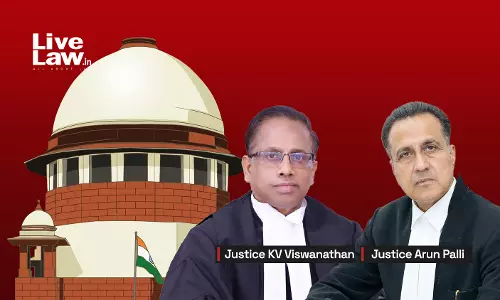
Once Trial On All Issues Has Started, One Issue Cannot Be Tried As Preliminary: : Supreme Court Explains Order XIV Rule 2(2) CPC
The Supreme Court today (21 September) held that a civil court cannot direct that an issue be tried as preliminary issue under Order XIV Rule 2(2) of the Code of Civil Procedure, 1908 once it has begun trying all the issues together.A bench of Justice KV Viswanathan and Justice Arun Palli set aside the orders of the trial court, the first appellate court and the Kerala High Court. The trial...
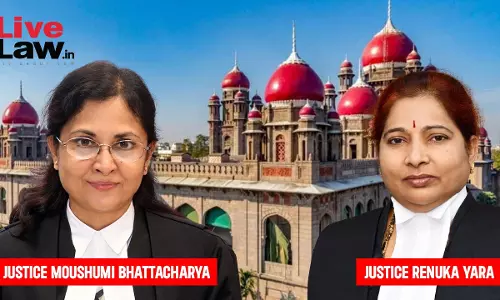
Child Custody | Father's Role Goes Beyond Financial Support, Can't Be Overlooked Due To Judicial Sympathy Towards Mother: Telangana High Court
The Telangana High Court has observed that a father cannot be deprived of a child's custody as a matter of course unless he is shown to be an unsuitable or undeserving parent. [2026 LiveLaw (Tel) 155]In doing so the court directed the return of a four-year-old girl to the United States, where her parents' custody dispute was already before a court.A Division Bench of Justice Moushumi...
Inequitable To Undo Sale Executed Pursuant To Specific Performance Decree Decades Ago By Ordering Refund: Supreme Court
The Supreme Court has held that once a decree for specific performance of an agreement to sell has culminated in execution of the sale deed and delivery of possession, the completed transaction cannot be undone by substituting it with an enhanced monetary refund merely to "settle equities".A bench of Justice JB Pardiwala and Justice K Vinod Chandran made the observation while restoring a...
Delhi High Court Issues Contempt Notice To Top Cops Over Alleged Failure To Comply With Order For Departmental Inquiry Against IO
The Delhi High Court has issued notice on a contempt petition alleging non-compliance with its directions to initiate and conclude a departmental inquiry against a police officer who had failed to complete investigation in an FIR registered in 2016.Justice Mini Pushkarna issued notice on the contempt petition filed against Anurag Kumar, Commissioner of Police, Delhi Police and Rakesh...
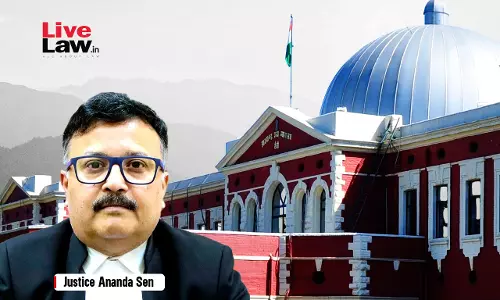
Property Sold In Auction Cannot By Itself Be Ground To Evict Existing Tenants: Jharkhand High Court
The Jharkhand High Court has held that the sale of a property by the Bihar State Financial Corporation (BSFC) cannot, by itself, be a ground to evict tenants occupying the premises, observing that eviction can only be sought in accordance with the grounds prescribed under the Jharkhand Building (Lease, Rent and Eviction) Control Act.A Single Judge Bench of Justice Ananda Sen was hearing...
CWC Has No Jurisdiction Over Child Who Is Not 'Orphan' Or 'Abandoned' Even If Adoption Procedure Was Not Followed: Bombay High Court
The Bombay High Court has held that the Child Welfare Committee (CWC) does not have the power to deal with a child who is neither an orphan nor abandoned. The Court observed that though due procedure was not followed in the adoption of the child, the CWC's order was not justified, and granted custody of the child back to the adoptive parents.A division bench of Justice Urmila Joshi-Phalke...
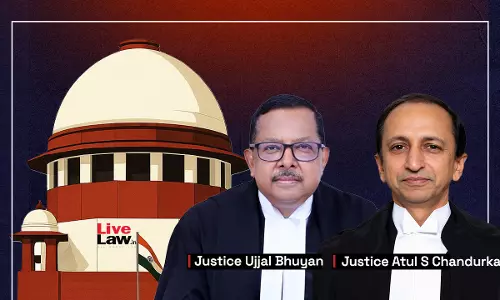
O 7 Rule 11 CPC | Admissibility Of Document Cannot Be Decided While Considering Rejection Of Plaint : Supreme Court
The Supreme Court has recently held that the question of admissibility of a document relied upon by a plaintiff is a matter to be adjudicated at the trial, and cannot be considered while seeking rejection of a plaint under Order VII Rule 11(a) or (d) of the Code of Civil Procedure, 1908 (CPC).A bench of Justice Ujjal Bhuyan and Justice Atul S Chandurkar ruled so while allowing an appeal filed...