



Provisions Of SC/ST Act Can't Be Used To Prevent Banks From Enforcing Security Interests: Delhi High Court
Sahyaja MS
24 Oct 2025 10:44 AM IST
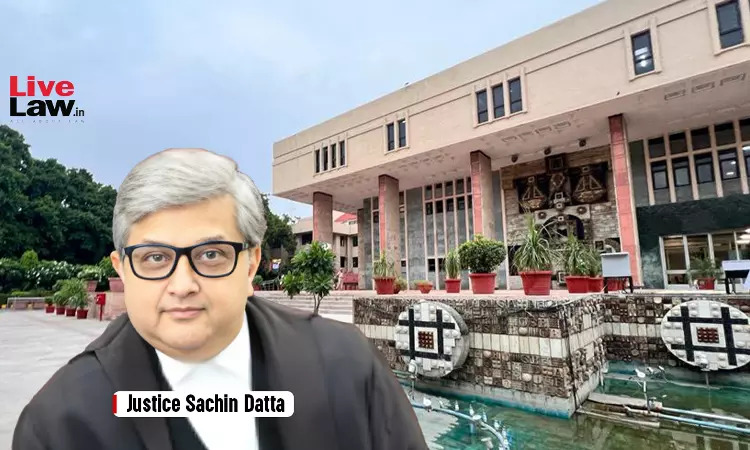
The Delhi High Court recently held that prima facie, the provisions of the Scheduled Castes and Scheduled Tribes (Prevention of Atrocities) Act, 1989 cannot be invoked to prevent the enforcement of a mortgage or security interest by a bank.A single bench of Justice Sachin Datta while staying a summons issued by the National Commission for Scheduled Tribes (NCST) to Axis Bank's top...
This is a premium content
Available exclusively to
Our subscribers
Subscribe Premium 
INR 1099+GST
Your support helps us to bring you more content at
an affordable subscription scheme !!!
All payment options available
The Delhi High Court recently held that prima facie, the provisions of the Scheduled Castes and Scheduled Tribes (Prevention of Atrocities) Act, 1989 cannot be invoked to prevent the enforcement of a mortgage or security interest by a bank.
A single bench of Justice Sachin Datta while staying a summons issued by the National Commission for Scheduled Tribes (NCST) to Axis Bank's top executives observed.
“Prima facie, in the context of the facts of the present case Sections 3(1)(f) and (g) of the Atrocities Act are not attracted inasmuch the same cannot be invoked to preclude/ prevent the exercise of mortgage right/security interest of the petitioner.”
The dispute stems from a Rs 16.68 crore credit facility sanctioned by Axis Bank in 2013 to Sundev Appliances Ltd. The loan was secured by an equitable mortgage on a property located in Vasai, Thane, Maharashtra.
When the borrower defaulted, the account was classified as a non-performing asset in 2017. The bank then invoked its rights under the SARFAESI Act to enforce the security and obtained an order from the District Magistrate, Palghar, in January 2024 to take physical possession of the mortgaged property.
While the recovery process was underway, a one of the respondents filed a civil suit in Vasai in 2025, claiming ownership of the property and sought to restrain Axis Bank from dealing with it. The civil court did not grant any interim relief. Subsequently, the same party approached the NCST, alleging that the bank's actions amounted to atrocities against a tribal person under the SC/ST (Prevention of Atrocities) Act.
The NCST then issued multiple summons to Axis Bank's Managing Director and CEO, directing them to appear in person. Axis Bank challenged these notices, arguing that the Commission had no authority to interfere in a commercial recovery dispute governed by the SARFAESI Act and that the complainant was neither the owner nor in possession of the property. The bank also pointed out that the issue of ownership was already pending before a civil court.
The High Court found merit in the bank's contention, staying the NCST's orders and the summons dated July 29 and October 6, 2025, until the next hearing. The court noted that no justification had been provided for summoning senior officials personally and relied on the Supreme Court's ruling in State of Uttar Pradesh v. Jasvir Singh (2011), which cautioned against calling top officers without necessity.
Case Title: AXIS BANK LIMITED V NATIONAL COMMISSION FOR SCHEDULED TRIBES & ORS.
Case Number: W.P.(C) 16123/2025
Appearances:
For Petitioner: Senior Advocate Satvik Varma, Advocates Manmeet Singh, Alok Shanker, Anugrah Robin Frey, Shantanu Parmar, Ajay Raj and Balram.
Click here to read/download order

Sahyaja MS
Reporter

