



Nyaay Kala: Nyaay Sabha 2026
Syed Nazarat Fatima
18 March 2026 9:01 PM IST
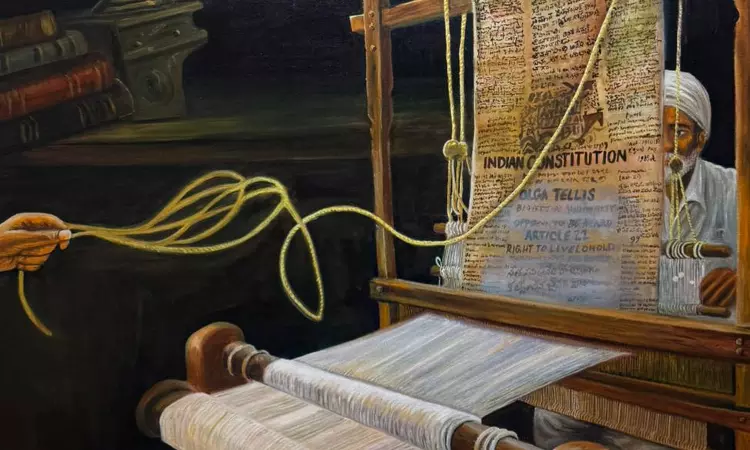
In a unique confluence of art and constitutional law, the 'Nyaay Kala' exhibition, organised as part of the Nyaay Sabha 2026, brought landmark judicial decisions to life through paintings and visual narratives. Hosted at the India Habitat Centre, the exhibition was launched by Senior Advocate and former Solicitor General of India Gopal Subramaniam, and sought to translate complex legal...
This is a premium content
Available exclusively to
Our subscribers
Subscribe Premium 
INR 1099+GST
Your support helps us to bring you more content at
an affordable subscription scheme !!!
All payment options available
In a unique confluence of art and constitutional law, the 'Nyaay Kala' exhibition, organised as part of the Nyaay Sabha 2026, brought landmark judicial decisions to life through paintings and visual narratives. Hosted at the India Habitat Centre, the exhibition was launched by Senior Advocate and former Solicitor General of India Gopal Subramaniam, and sought to translate complex legal principles into accessible artistic expressions.
The initiative was organised by the Migration and Asylum Project (MAP) and was conceptually mentored and inaugurated by Justice (Retd.) Anjana Prakash, Senior Advocate and former Judge, Patna High Court. The exhibition formed a key feature of MAP's Nyaay Sabha conference, which convenes members of the Bar, Bench, civil society organisations, and students to deliberate on issues relating to legal aid and access to justice.
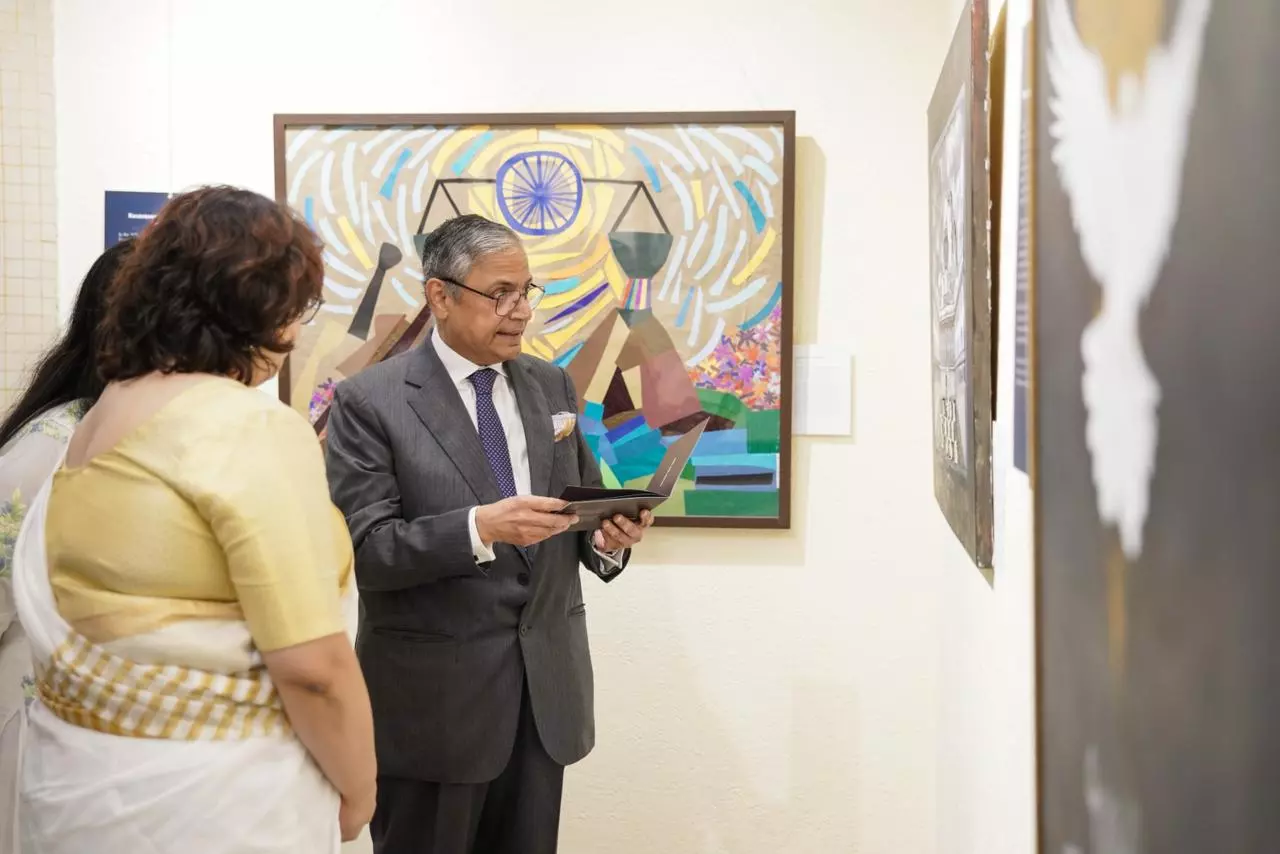
Law Through The Lens Of Art
The curated exhibition corridor featured works by nine contemporary artists, including Aban Raza, Chhering Negi, and Pashikanti Swami. Many of the artists approached the theme without formal legal training, bringing intuitive and personal interpretations to complex judicial decisions.
Explaining the vision behind the initiative, Roshni Shanker, Executive Director of MAP, said:
“The law can often feel distant or difficult to engage with, but art has the power to change that. By translating judgments into creative expression, we were hoping to open up space for curiosity, dialogue, and connection.”
Through visual storytelling, the artworks sought to capture the social context, emotional resonance, and long-term impact of landmark judgments. By moving beyond the textual language of law reports, the exhibition aimed to “humanise” legal doctrines and highlight the lived experiences of individuals whose lives have been shaped by these decisions.
Landmark Cases In Focus
Several paintings drew inspiration from some of the most significant rulings in India's constitutional history. Among them was the Supreme Court's decision in Kesavananda Bharati v. State of Kerala, which established the “basic structure” doctrine, limiting Parliament's power to amend the Constitution. Artists interpreted this doctrine through visual motifs representing balance, resilience, and the foundational pillars of constitutional democracy.
Another set of works reflected on the landmark maintenance rights case of Mohd. Ahmed Khan v. Shah Bano Begum, portraying the tensions between personal laws and gender justice while capturing the individual struggle for dignity within the legal system.
The exhibition also included artworks inspired by litigation arising from the Bhopal Gas Tragedy, associated with the Union Carbide disaster, highlighting the continuing quest for accountability and the profound human and environmental consequences of industrial negligence.
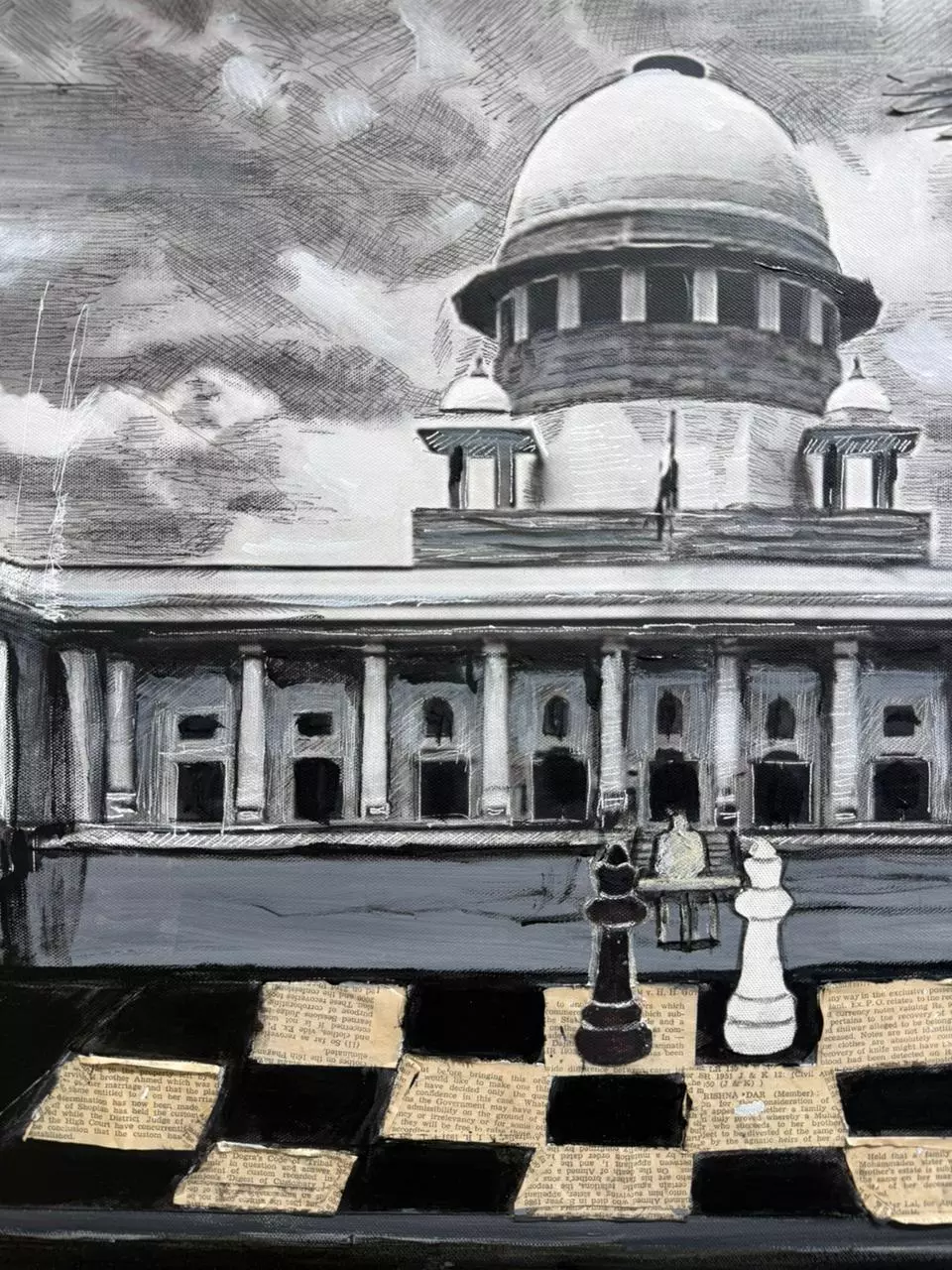
Bridging Law And Public Engagement
Accompanying descriptions provided visitors with brief backgrounds of the cases and explained the legal principles that emerged from them. The format enabled viewers, particularly students and young practitioners, to engage with complex constitutional ideas in a more intuitive and accessible manner.
Khushi Mishra, the exhibition curator and a lawyer-turned lens-based artist, emphasised the role of art in making law more relatable:
“Art has a unique ability to stir emotions and challenge perceptions. By translating legal decisions into visual expressions, it cuts through the complexity and makes abstract legal issues more emotionally resonant. This not only demystifies the law but also opens up new pathways for understanding and debating social justice issues, making them feel more immediate and personal to the public.”
A Dialogue Between Law And Humanities
Members of the legal fraternity who attended the exhibition noted that such initiatives bring a refreshing dimension to legal discourse. By transforming judicial history into visual narratives, the exhibition demonstrated how artistic expression can serve as a powerful medium to communicate legal ideas and reflect on the evolution of constitutional governance in India.
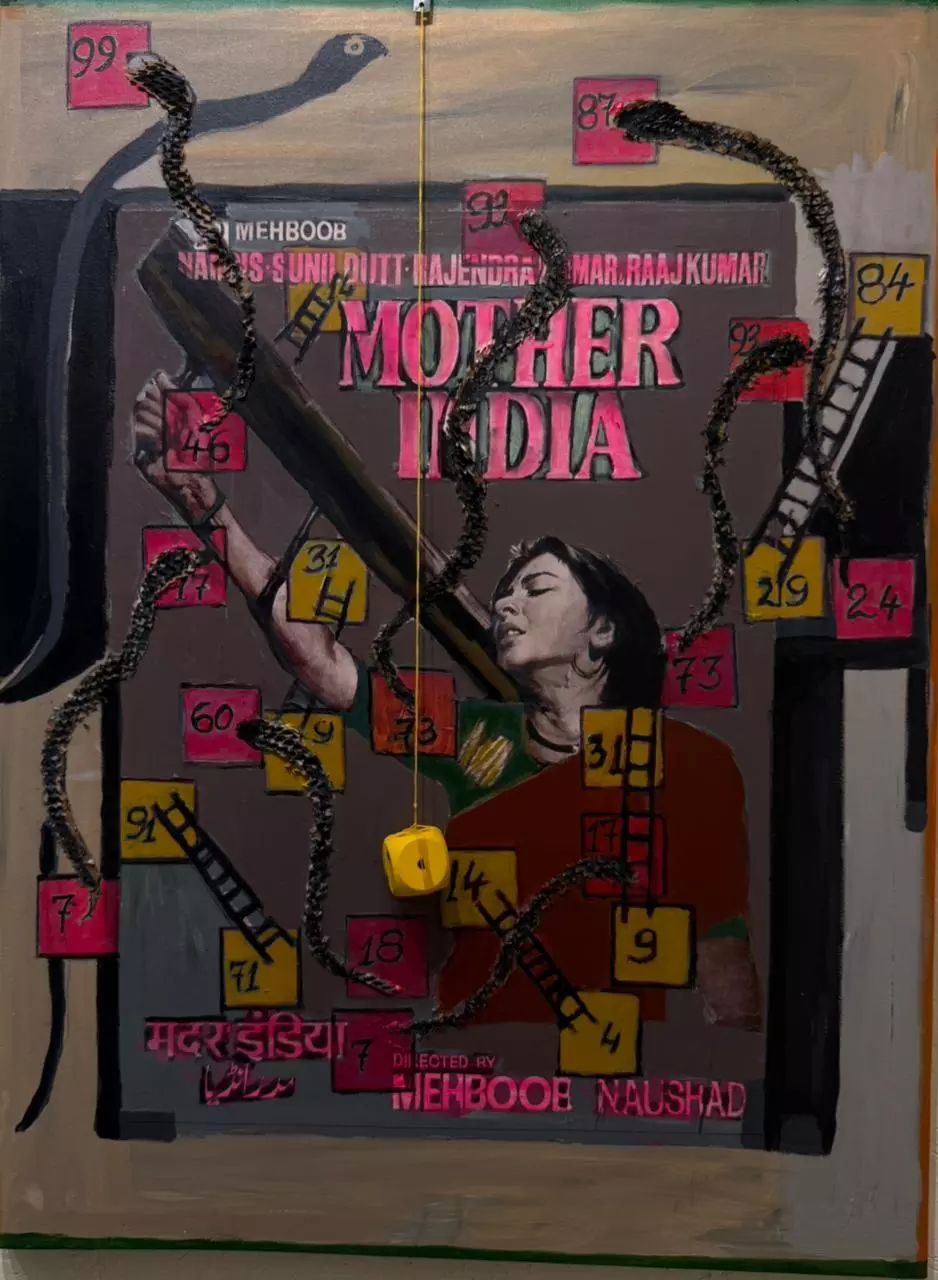
As a central feature of Nyaay Sabha 2026, Nyaay Kala underscored that the law is not merely a collection of statutes and judgments, but a living institution shaped by human stories, social struggles, and the enduring pursuit of justice.
Views are personal


