




Family Law/Matrimonial Cases
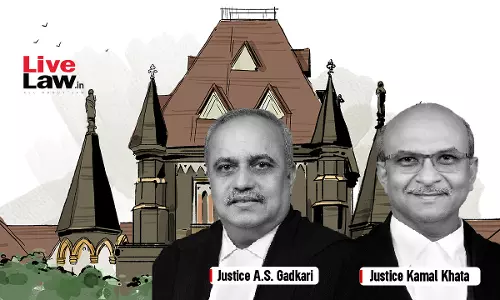
'Abuse Of Process': Bombay High Court Imposes ₹5 Lakh Costs On Son Seeking To Assess 78-Yr-Old Father's Mental Condition Amid Property Dispute
The Bombay High Court recently imposed a hefty cost of Rs 5 lakh on a man for dragging his septuagenarian father to court despite the fact of him (father) suffering from various ailments. The High Court held this to be an abuse of the process and severely reprimanded the son's conduct. A division bench of Justice Ajay Gadkari and Justice Kamal Khata noted that in February 2026 a single-judge...

Spouses Living In Separate Rooms Not Cruelty Per Se, But Cumulative Effect Of Prolonged Discord Relevant: Karnataka High Court
The Karnataka High Court has recently dismissed an appeal filed by a husband challenging a decree of divorce granted on the ground of mental cruelty, and permanent alimony granted to his wife by the Family Court. While doing so, the court made a crucial distinction that mere separate living within the same premises, by itself, cannot be treated as cruelty. [2026 LiveLaw (Kar)...
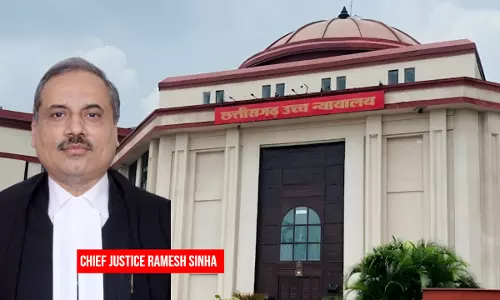
'Maintenance For Autistic Child Cannot Automatically Stop At 18 Yrs, Must Continue Till Child Is Capable To Earn': Chhattisgarh High Court
The Chhattisgarh High Court has held that mere attainment of majority cannot, by itself, result in automatic cessation of the right to receive maintenance in the case of a child suffering from a physical or mental abnormality or disability and unable to maintain himself. The Court observed that the relevant consideration would be whether, after attaining majority, such person is capable...
Monetary Claim Waived In Divorce Settlement Cannot Be Revived In DV Act Proceedings: Supreme Court
The Supreme Court on Monday (24.08.2026) has quashed proceedings under the Protection of Women from Domestic Violence Act, 2005 (DV Act) initiated by a wife and daughter against the husband. While quashing the proceedings, the Court held that once the wife had voluntarily relinquished all monetary claims, including maintenance, by a Settlement Agreement and a subsequent affidavit before...
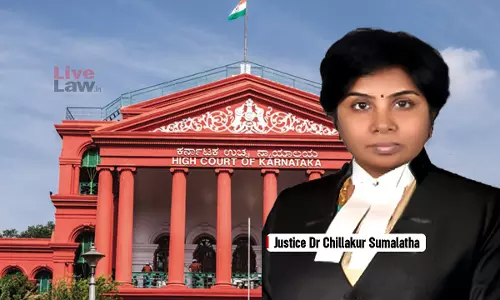
Wife Need Not Seek Permission To Visit Her Parents, Can't Be Forced To Look After In-Laws: Karnataka High Court
Primary duty to look after parents vests upon son or daughter, not son-in-law or daughter-in-law, Court said.

Wife's Enrolment As Advocate Does Not Prove Sufficiency Of Income To Deny Her Maintenance Claim: Telangana High Court
The Telangana High Court has held that merely being enrolled as an advocate and engaged in independent legal practice does not establish that a wife has sufficient independent income to disentitle her from maintenance under Section 24 of the Hindu Marriage Act, 1955. [2026 LiveLaw (Tel) 138]The Court stressed that the statutory test is the sufficiency of income actually available, and...

AP High Court Fines Mother ₹50,000 For Suppressing Grant Of Custody To Father Pursuant To Mutual Settlement
The Andhra Pradesh High Court has held that a habeas corpus petition seeking custody of minor children is not maintainable where the children are in the custody of their father pursuant to a mutually agreed settlement between the parents.[2026 LiveLaw (AP) 197]A Division Bench of Justice Ravi Nath Tilhari and Justice Purushottam Kumar Chintalapudi dismissed with costs the mother's...

Wife Earning No Reason To Reduce Father's Liability To Maintain Children : Supreme Court
"The obligation to maintain the children is shared by both parents,but it cannot be divided by arithmetic alone," the Court said.

Mere Annoyance Or Irritation In Marital Life Is Not Cruelty: Bombay High Court Denies Divorce To Husband
Mere annoyance or irritation between a couple will not amount to cruelty and cannot be a ground for seeking divorce under the Hindu Marriage Act, held the Bombay High Court recently while dismissing a husband's appeal against an order of a Family Court, which too had dismissed his plea seeking dissolution of his marriage on grounds of cruelty. A division bench of Justice Urmila Joshi-Phalke...
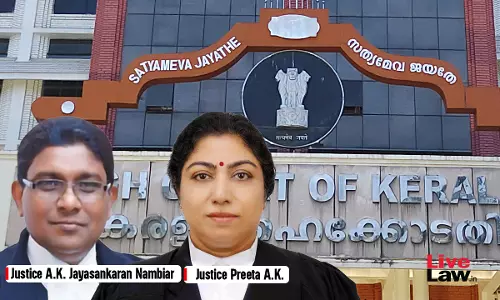
Christian Women Can File For Divorce At Their Place Of Residence: Kerala High Court
In a significant ruling, the Kerala High Court has held that as per Section 3 of the Divorce Act, Christian women can file for divorce in their places of residence. [2026 LiveLaw (Ker) 456]The Division Bench of Dr. Justice A.K. Jayasankaran Nambiar and Justice Preeta A.K. was considering an appeal filed by a wife after the Single Bench rejected her plea seeking a declaration that Section 3(3)...

Voter List Entry Showing Spouse's Name Not Proof Of Valid Hindu Marriage: Patna High Court
The Patna High Court has held that a person's name appearing as a spouse in the voter list does not, by itself, prove a valid Hindu marriage. Where the marriage itself is disputed, the party asserting it must prove that the marriage was solemnised through the rites and ceremonies required under Section 7 of the Hindu Marriage Act, 1955. A Division Bench of Justice Bibek Chaudhuri and Justice...
Loans Taken By Husband Cannot Reduce His Maintenance Obligation Towards Wife: Jharkhand High Court
The Jharkhand High Court has held that a husband cannot ordinarily rely on loans taken for “future wealth construction” to reduce his income for determining maintenance or permanent alimony. The Court held that voluntary loan repayments, particularly for creating assets, cannot override the obligation to maintain the wife.A Division Bench of Justice Sujit Narayan Prasad and Justice...