


High Courts

Arbitration Clause Mandates Reference, Question Of Appropriateness Can't Be Considered U/S 8 Of A&C Act: Calcutta High Court
The Calcutta High Court bench of Justices Arijit Banerjee and Rai Chattopadhyay has held that where an agreement between the parties contains a clear arbitration clause and disputes arise under that agreement, the Trial Court is bound to refer the parties to arbitration. The question of whether such reference is appropriate or not does not arise, as Section 8(1) of the Arbitration...
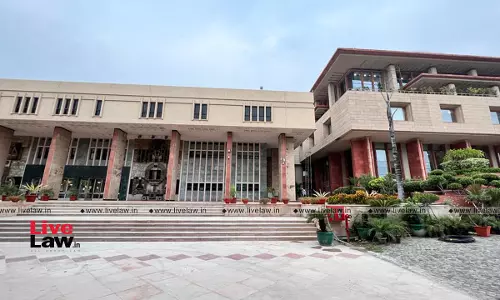
'Sad, Shocking State Of Affairs': Delhi High Court Orders MP Govt To Release Retiral Benefits Of Deceased IAS Officer
The Delhi High Court recently expressed shock at the conduct of Madhya Pradesh government in “victimising” a deceased IAS cadre officer by withholding his retiral benefits of almost 7 years.A division bench of Justices Navin Chawla and Renu Bhatnagar observed that the officer was first victimized back in the year 2000, when he was misallocated Chhattisgarh cadre upon reorganization...

When Earlier Appointment Of Arbitrator Is Defective, Court May Appoint New Arbitrator U/S 11 Of Arbitration Act: Telangana High Court
The Telangana High Court bench of Justice K. Lakshman has held that a substitute arbitrator must generally be appointed in the same mode and manner as the original arbitrator. When the appointment of an earlier arbitrator was done under a defective arbitration clause or an unlawful procedure was followed, in such cases a proper recourse is to seek appointment of a new arbitrator...
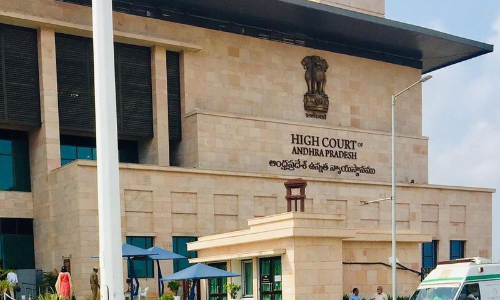
“Bidder Can't Dictate Tender Conditions”: AP High Court Upholds ₹10 Crore Turnover Threshold For Empanelment Of Textbook Publishers
In a judgment dated May 06, the Andhra Pradesh High Court has upheld the enhancement of the minimum annual turnover threshold for bidders—from five crores to ten crores—for qualification under a Government Tender issued for printing and distribution of school textbooks/workbooks for students studying in private schools for the Academic Years 2025-2026 & 2026-2027.Reaffirming the right...

Voluntarily Abandoning Service Is Not Retrenchment: Bombay HC
Bombay High Court: A single judge bench consisting of Justice Anil L. Pansare set aside multiple Industrial Court orders that had directed the reinstatement and back wages of several employees. These employees were absent from duty without notice. The court held that prolonged absence despite repeated calls amounted to voluntary abandonment of service, and not termination. Thus, the...
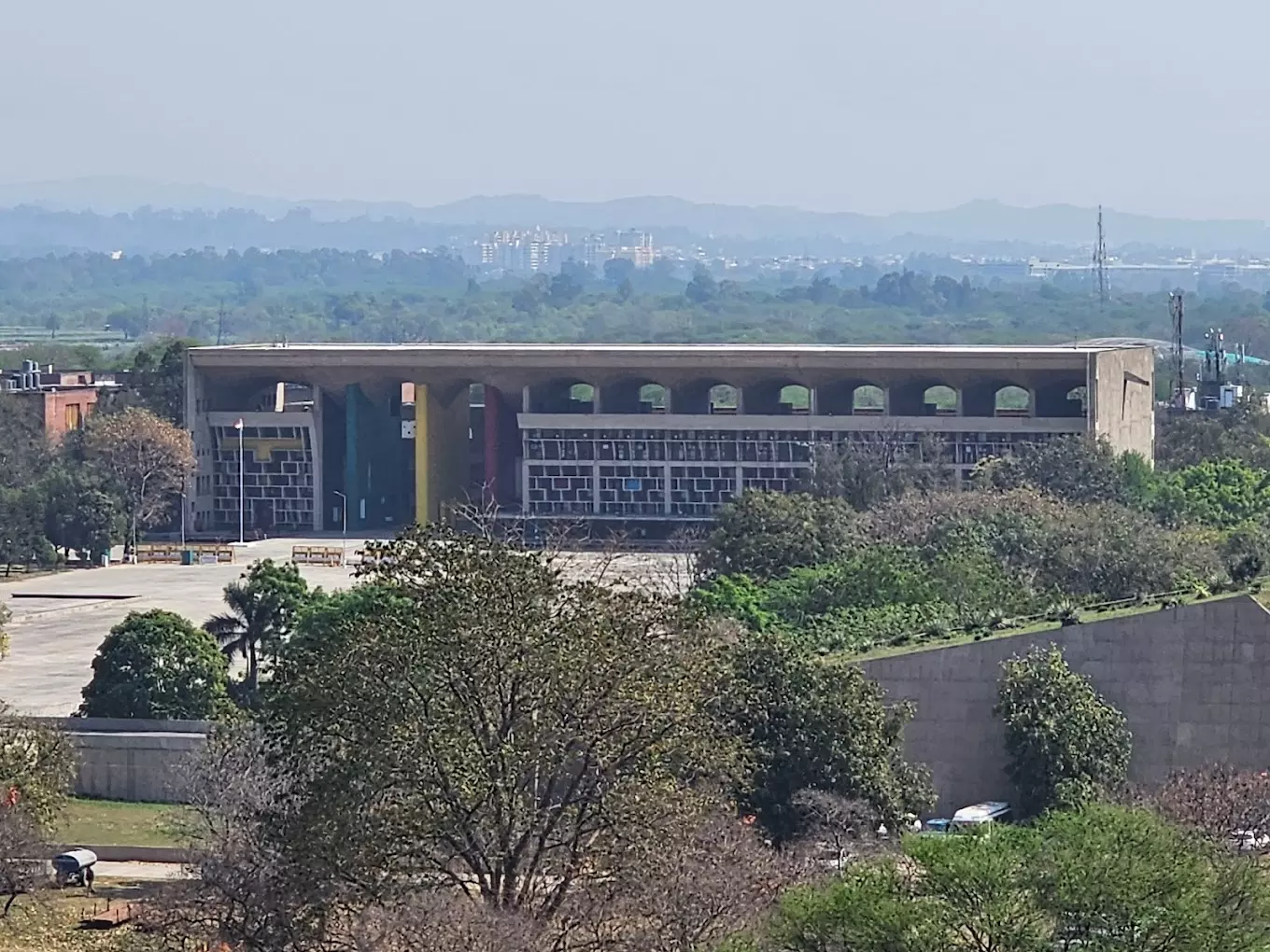
Court Flooded With Runaway Couple Protection Pleas Due To Ignorance Of SOP Framed By States: Punjab & Haryana High Court
The Punjab and Haryana High Court has remarked that ignorance of the Standard Operating Procedures (SOP) issued by the State Governments in pursuance of Kajal case has flooded the High Court with protection petitions by runaway couples.Justice Rohit Kapoor noted that the Standard Operating Procedures (SOPs) notified by the Government of Punjab, Haryana and the Union Territory of Chandiarh...
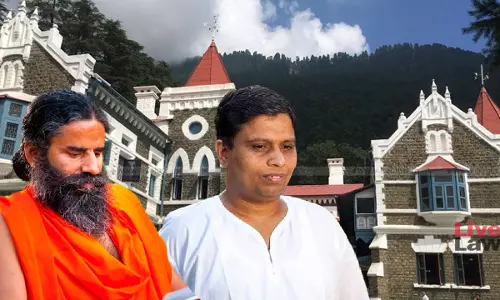
'No Allegation How Ads Were False & Misleading' : HC Quashes Uttarakhand Govt's Complaint Against Patanjali Ayurved
The Uttarakhand High Court quashed a criminal case against Patanjali Ayurved Ltd and its founders, Baba Ramdev and Acharya Balkrishna, over alleged publication of misleading medical advertisements.The complaint was filed in 2024 by the Uttarakhand Senior Food Security Officer for offences punishable under Sections 3, 4 & 7 of the Drugs and Magical Remedies (Objectionable Advertisements)...

Second Wife Appointed As Nominee Entitled To Compassionate Appointment After Husband's Death: Punjab & Haryana High Court
The Punjab & Haryana High Court has said that if the second wife who was appointed as nominee by the husband will be entitled for compassionate appointment by the Government even if the first wife was not legally divorced.In the present case the law officer of the concerned department had opined that first marriage of the deceased employee was dissolved by the Panchayat which had no...

Statutory Service Requirements Under Recruitment Rules Are Mandatory; Can't Be Overridden By Administrative Approvals : Himachal Pradesh HC
A Division bench of the Himachal Pradesh High Court comprising of Chief Justice G.S. Sandhawalia and Justice Ranjan Sharma, held that eligibility for promotion or recruitment through limited competitive examination must strictly comply with the statutory service requirement under the applicable service rules, and administrative approvals cannot override these mandatory...
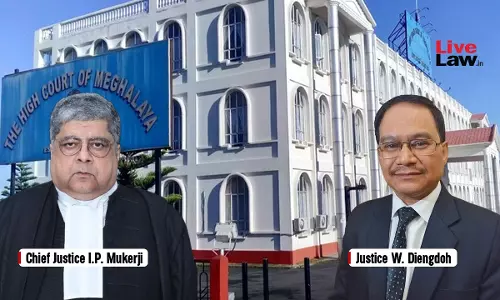
Meghalaya High Court Calls For State's Report On Action Taken Under 2023 Street Vendors Scheme
The Meghalaya High Court on Thursday (June 12) asked the State Government to show, by July 1, action taken by it under Meghalaya State Vendors (Protection of Livelihood and Regulation of Street Vending) Scheme, 2023.The division bench comprising the Chief Justice I. P. Mukerji and Justice W. Diengdoh was hearing a PIL involving identifying street vending areas, relocating areas permitted to...

Madras High Court Issues Notice To DGP And Commissioner In Suo Motu Case Against Ponmudi's Speech
The Madras High Court has issued notice to the Director General of Police and the Commissioner of Police (Greater Chennai) on a suo motu case initiated by the court against former Tamil Nadu Minister Ponmudi for his recent remarks on Vaishnavism and Saivism.Justice P Velmurugan issued notice to the officers returnable by June 25th. The suo motu case was initiated based on an order by...

Madras High Court Dismisses Google's Plea To Reject Plaint By Testbook Edu Solutions Against New Play Store Billing Policy
The Madras High Court has dismissed an application filed by Google India Private Limited and Google India Digital Services Private Limited to reject a plaint filed by Testbook Edu Solutions Private Limited challenging Google's new billing policy. Justice Senthilkumar Ramamoorthy noted that Testbook's plaint was different from the earlier plaints filed by other startups on the...