


High Courts
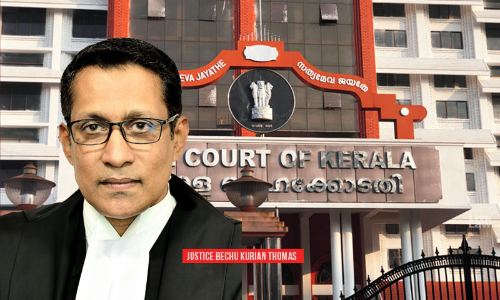
Kerala High Court Denies Anticipatory Bail To Intelligence Officer Accused Of Abetting Girlfriend's Suicide
The Kerala High Court on Monday (May 26) denied anticipatory bail to Sukanth Suresh, an intelligence officer allegedly involved in the suicide of his girlfiriend/colleague.Justice Bechu Kurian Thomas noted that the investigation has revealed that the officer had relationships with other women. Further, it was also found out that the deceased got pregnant from the petitioner and she had...

Octogenarian Crawls To Panchayat Office For Old Age Allowance: District Admn Ensures Help After Orissa High Court Judge Intervenes
Justice Sangam Kumar Sahoo, senior-most Judge of the Orissa High Court and Executive Chairperson of Odisha State Legal Services Authority (OSLSA) has directed the District Administration of Kendrapara to provide old-age allowance to an octogenarian at his doorsteps and also to ensure a pucca house for the ailing senior citizen, who was living in a dilapidated thatched house without...
Mother Hiring Maid To Look After Child Not Ground To Deny Custody: Bombay High Court
A mother appointing a maid servant to take care of the child is not a ground to deny her the custody of the said child, the Bombay High Court held recently.Single-judge Justice RM Joshi pointed out that appointing maid servants to take care of children is not an 'uncommon' practice. "For last about 8 months, the child is with mother. Nothing absolutely is brought on record to indicate...

Bombay High Court Weekly Round-Up: May 19 - May 25, 2025
2025 LiveLaw (Bom) 193 to 2025 LiveLaw (Bom) 197Nominal Index:Ram Shankar Sinha vs Ritesh V. Patel, 2025 LiveLaw (Bom) 193Balasaheb Gurushantappa Arawat vs State of Maharashtra, 2025 LiveLaw (Bom) 194Kisanlal Bairudas Jain vs Union of India, 2025 LiveLaw (Bom) 195Arjun Amarjeet Rampal vs Income Tax Department, 2025 LiveLaw (Bom) 196The Board of Mumbai Port Authority vs Official Liquidator of...
Interim Directions Under Order 39 Rule I & II Of CPC Cannot Be Passed Against Non-Parties: J&K High Court
Reinforcing procedural rigour in civil litigation, the High Court of Jammu and Kashmir and Ladakh has ruled that interim directions under Order 39 Rules 1 and 2 of the Civil Procedure Code (CPC) cannot be passed against a person who is not a party to the suit or appeal.“.. there can be no justification for grant of an interim injunction in respect of a claim which is not even projected by...

Krishna Janmabhoomi Case | 'Pauranic Illustrations Considered Hearsay Evidence': Allahabad HC Rejects Deity-Radharani's Impleadment Plea
The Allahabad High Court last week rejected an application moved by Deity-Shriji Radha Rani Vrishbhanu Kumari Vrindavani (Goddess Radha) seeking impleadment as a party to one of the 18 suits pertaining to the Mathura Krishna Janambhoomi-Shahi Idgah dispute pending in the HC. The application, moved through next friend (Advocate Reena N Singh), claimed that the...

Kerala High Court Weekly Round-Up: May 19 – 25, 2025
Nominal Index [Citations: 2025 LiveLaw (Ker) 279 - 293]Kurian Abraham and Others v State of Kerala and Others & Connected matters, 2025 LiveLaw (Ker) 279State of Kerala v the Chancellor and Others, 2025 LiveLaw (Ker) 280Dr. Joseph John MD v. The State of Kerala and another, 2025 LiveLaw (Ker) 281State of Kerala and Others v T. R. Vijayakumar & Connected cases, 2025 LiveLaw (Ker)...

Uttarakhand High Court Expunges 'Adverse' Remarks In Transfer Order Concerning Son Of Nainital Rape Accused
The Uttarakhand High Court last week expunged the 'adverse' remarks made in the order transferring Rizwan Khan, an additional assistant engineer in PWD Uttarakhand, who happens to be son of Nainital rape accused.A bench of Justice Manoj Kumar Tiwari and Justice Ashish Naithani passed this order while hearing Khan's plea against an order passed by the Engineer-in-Chief and...

WhatsApp Moves Allahabad HC Against SCDRC's Order Holding A Consumer Complaint To Be Maintainable Against It
Meta-owned instant messaging app WhatsApp has moved the Allahabad High Court challenging a recent order of the Uttar Pradesh State Consumer Disputes Redressal Commission (UPSCDRC) wherein it held that since WhatsApp provides 'services' to its 'users' in India, a consumer complaint against it would be maintainable. In its petition under Article 227 of the Constitution of India,...
Can't File Miscellaneous Application To Seek Interest On Gratuity After Disposal Of Writ Petition: Allahabad HC
Allahabad High Court: A single judge bench of Justice Prakash Singh dismissed an application seeking interest on delayed gratuity, filed by a retired office assistant. The court held that once a writ petition is finally decided, a miscellaneous application seeking substantive reliefs like interest, is not maintainable. The court explained that gratuity and pension are statutory rights...

Madras High Court Monthly Digest - April 2025
Citations: 2025 LiveLaw (Mad) 123 To 2025 LiveLaw (Mad) 162 NOMINAL INDEX The Principal & Secretary, Women's Christian College and Others v. State of Tamil Nadu and Others, 2025 LiveLaw (Mad) 123 NS Krishnamoorthi and Others v. The District Collector and Others, 2025 LiveLaw (Mad) 124 S Ramya v. The Union of India and Others, 2025 LiveLaw (Mad) 125 The...
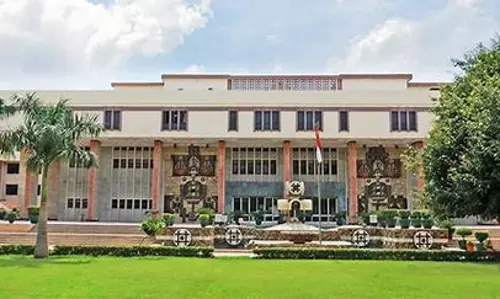
Fresh Cause Of Action Cannot Accrue U/S 18 Of Limitation Act If Liability Is Acknowledged After Expiry Of Period Of Limitation: Delhi High Court
The Delhi High Court bench of Justices Subramonium Prasad and Harish Vaidyanathanshankar has held that for a valid acknowledgment under section 18 of the Limitation Act, 1963 certain essential requirements must be met. Firstly, the acknowledgment must be made before the relevant period of limitation has expired. Secondly, it must pertain specifically to the liability concerning the right...