



- Home
- /
- High Courts
- /
- Allahabad High Court
- /
- S.106 BNS | Landlord Not Liable For...
S.106 BNS | Landlord Not Liable For Accidental Death In Rented Premises If No Attributable Negligence: Allahabad High Court
Sparsh Upadhyay
8 Sept 2026 3:05 PM IST
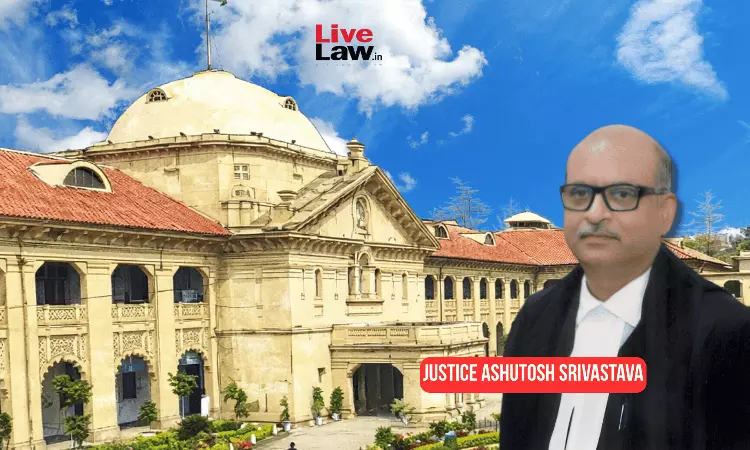
The Allahabad High Court has held that mere ownership of premises cannot create vicarious criminal liability on a landlord for an accidental death unless the prosecution material discloses a legally attributable negligent act or omission on the part of the owner. A bench Justice Saurabh Srivastava made the observation while quashing the chargesheet, cognizance/summoning order and entire...
This is a premium content
Available exclusively to
Our subscribers
Subscribe Premium 
INR 1099+GST
Your support helps us to bring you more content at
an affordable subscription scheme !!!
All payment options available
The Allahabad High Court has held that mere ownership of premises cannot create vicarious criminal liability on a landlord for an accidental death unless the prosecution material discloses a legally attributable negligent act or omission on the part of the owner.
A bench Justice Saurabh Srivastava made the observation while quashing the chargesheet, cognizance/summoning order and entire criminal proceedings against a landlord in connection with the January 2025 death of a young student, an IIT Aspirant, in a bathroom where a gas geyser was installed.
The case was lodged in January 2025 against the landlord (Applicant) under Section 106 of the BNS (Causing death by negligence) at a police station in Kanpur Nagar.
The applicant had moved the High Court seeking quashing of the chargesheet dated September 7, 2025 and cognizance/summoning order dated November 15, 2025.
Case in brief
According to the FIR, the deceased was residing as a tenant in the applicant's house for about eight months while preparing for the IIT examination.
On January 9, 2025, his father allegedly received information regarding his son's death and reached the place of occurrence, where he was informed that the body had been found inside the bathroom under suspicious circumstances.
The FIR alleged that a gas geyser was installed in the bathroom and that it might have emitted carbon monoxide. It was further alleged that there was hardly any ventilation in the bathroom and that the deceased died due to inhalation of the gas.
After investigation, the police submitted a chargesheet against the landlord under Section 106 BNS, following which the Magistrate took cognizance.
Before the High Court, the landlord's counsel argued that there was no gross rash or negligent act attributable to the applicant and that the prosecution material did not disclose any specific participation by him in the alleged offence.
The State, opposing the plea, relied on the post-mortem doctor's statement that the death had occurred due to carbon monoxide emission.
High Court's observations
At the outset, the High Court observed that the mere occurrence of death in the premises of the applicant would not, by itself, be sufficient for fastening criminal liability under Section 106 BNS.
The Court said that while the death of a young student is unfortunate, however, for fastening criminal liability under this provision, mere occurrence of death in the premises of the applicant would not, by itself, be sufficient. The bench further added thus:
"There must be prima facie material showing a rash or negligent act attributable to the accused which had a direct and proximate nexus with the death".
The Court noted that apart from the applicant being the owner/landlord of the premises, no specific act of gross negligence had been attributed to him.
There was no material to show that the geyser had been installed in violation of prescribed safety standards, was defective to the applicant's knowledge, or that any complaint regarding leakage or malfunctioning had previously been made to him.
Nor was there material showing that, despite being aware of any defect or danger, the landlord deliberately failed to take corrective measures.
The Court further noted that the deceased had lived in the premises for about 8 months and no complaint concerning the geyser, bathroom ventilation or any other hazardous condition had been communicated to the landlord during that period.
The Court held that an inference of criminal negligence could not be drawn merely because the incident occurred in a bathroom situated in the applicant's house. It observed thus:
"The criminal law cannot be set in motion merely on the basis of conjecture that, since a gas geyser was installed in a bathroom having insufficient ventilation, the landlord must necessarily be held criminally responsible for the resultant death".
The Court further found that the essential link between the alleged negligent condition and any specific rash or negligent act on the part of the applicant was absent in the present case.
"Mere ownership of the premises cannot create vicarious criminal liability for an accidental death unless the prosecution material discloses a legally attributable negligent act or omission on the part of the owner", it said.
Holding that the ingredients of Section 106 BNS were not prima facie made out, the Court quashed the chargesheet, cognizance/summoning order and entire criminal proceedings pending before the Judicial Magistrate, Court No. 1, Kanpur Nagar.
The application was accordingly allowed.
Case Title - Avdhesh Singh vs. State of U.P. and Another 2026 LiveLaw (AB) 673
Case Citation: 2026 LiveLaw (AB) 673
Tags

Sparsh Upadhyay
Sparsh Upadhyay is an Associate Editor with LiveLaw.

