



- Home
- /
- High Courts
- /
- Allahabad High Court
- /
- Advocates Act | Only Enrolled...
Advocates Act | Only Enrolled Advocates Can Practise Law; Power Of Attorney Holders Can't Plead As A Matter Of Right: Allahabad HC
Sparsh Upadhyay
16 April 2026 9:27 PM IST
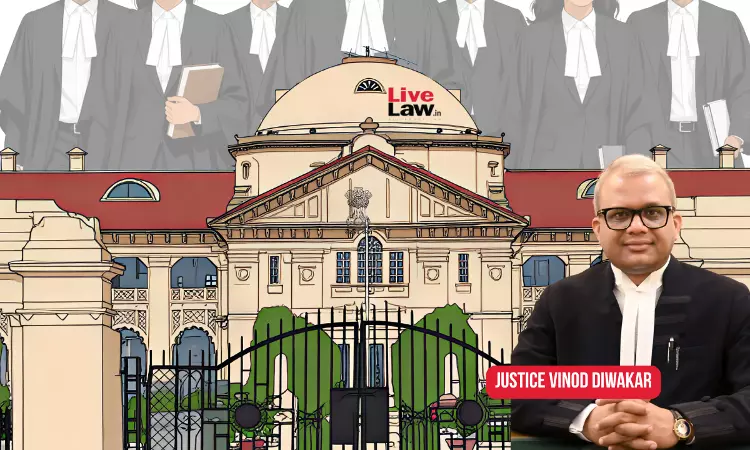
The Allahabad High Court has categorically held that a person, even if holding a Power of Attorney, cannot appear and plead as a pleader or attorney for and on behalf of litigants as a matter of right in defiance of the provisions of the Advocates Act, 1961. Referring to Sections 29 and 33 of the Advocates Act 1961, a bench of Justice Vinod Diwakar effectively held that only...
This is a premium content
Available exclusively to
Our subscribers
Subscribe Premium 
INR 1099+GST
Your support helps us to bring you more content at
an affordable subscription scheme !!!
All payment options available
The Allahabad High Court has categorically held that a person, even if holding a Power of Attorney, cannot appear and plead as a pleader or attorney for and on behalf of litigants as a matter of right in defiance of the provisions of the Advocates Act, 1961.
Referring to Sections 29 and 33 of the Advocates Act 1961, a bench of Justice Vinod Diwakar effectively held that only "enrolled advocates" can appear and argue before the Court on behalf of another person.
The bench added that while an individual can appear and plead another's case for a limited purpose with the sanction of the Court, but not as a matter of right [Section 32].
With these observations, the bench dismissed a plea moved by the seeking to plead and contest cases for and on behalf of litigants despite not being a qualified law graduate and consequently not registered with the Bar Council.
Case in brief
Briefly put, petitioner-in-person [Vishram Singh] claimed that he has been regularly appearing in the trial court as an Advocate on behalf of his clients.
However, in 2019, when an accused filed an application before the Additional District & Sessions Judge/Small Causes Court, Kanpur Nagar, seeking the appointment of the petitioner as his Advocate to contest his case, the said plea was dismissed.
Hence, the petitioner moved the HC challenging the said order with the present plea.
The petitioner's core argument was that he can appear as a 'Mukhtiyar' and 'Pleader' for and on behalf of the litigant(s) without being registered as an Advocate with the Bar Council of Uttar Pradesh after obtaining a written power of attorney in his name.
To substantiate his claim, he placed reliance upon various legal provisions, including Article 227(3) and Article 233(2) of the Constitution of India, Rule 21 of the General Civil Rules, 1957, as well as Section 2(15) read with Order III Rule 4 of the Code of Civil Procedure, 1908.
On the other hand, the Counsel for the High Court submitted that, post the enactment of the Advocates Act, a single class of legal practitioners known as 'Advocates' has been established, and, as per Section 29 of the Act, only Advocates are entitled to practise the profession of law.
The bench was also apprised of a 2003 judgment of the Allahabad HC in Siyanand Tyagi v. Additional District Judge Ghaziabad and others, wherein it was held that non-advocates, even with a power of attorney, have no right of audience unless the court grants leave, which is a discretionary power.
High Court's observations
Against the backdrop of these submissions, the bench, at the outset, undertook a detailed historical analysis of the legal profession in India. It noted that before 1961, multiple classes of practitioners, such as pleaders, mukhtars, and vakils, existed.
However, it further noted that the enactment of the Advocates Act in 1961 unified the profession, and that only advocates are now recognised as a class entitled to practice law.
Furthermore, the Court termed the situation as “unfortunate and regrettable" that the petitioner, despite not having any formal legal education or a proper understanding of law, had continued to argue in the Courts.
"Half-baked knowledge of law is akin to a self-inflicted injury, not only to himself but also to the litigants whom he represents, and it ultimately results in a casualty of justice", the bench remarked.
The Court stated that words like 'pleader' and 'attorney' appearing in pre-1961 statutes and the Constitution have lost their relevance in view of the enabling provisions of Chapter III and Chapter IV of the Advocates Act, 1961, which deal with the admission and enrolment of Advocates, as well as the right to practice.
The Court stated that such terms must be read and understood in alignment with the objective of the Advocates Act, noting that "when interpretation stretches constitutional language beyond its structural and textual limits...law risks becoming an elastic instrument rather than a principled framework."
The Court further rejected the petitioner's prayer to strike down the relevant provisions of Chapter IV of the Advocates Act, 1961, insofar as they are inconsistent with Articles 22(1), 227(3) and 233(2) of the Constitution of India.
The Court, however, said that when an unaware citizen finds such words [pleader, attorney, etc] in the statute book, he gets confused by semantic ambiguity, and asserts his right in the Court of law.
The bench added that such ambiguity needs to be clarified by the Legislative Department, Ministry of Law, Government of India, and the Ministry of Home, Government of India.
“I leave it to their wisdom to take cognizance of the issues deliberated herein above or put it into the office rack, to settle the dust”, the bench said.
Against this backdrop, the Court opined that an individual (who isn't an enrolled lawyer) can appear and plead another's case for a limited purpose with the sanction of the Court, but "not as a matter of right".
Consequently, finding the arguments of the petitioner to be devoid of merit, the petition was dismissed as the Court remarked thus:
"The petitioner cannot appear and plead as pleader or attorney for and on behalf of litigants as a matter of right in defiance of provisions of the Advocates Act, 1961, and the petitioner could not even have been eligible to be appointed as Mukhtar, Pleader, or Attorney, post 1961…(and he is not) permit to take up the legal profession without having complied with the terms of Chapter-III of the Advocates Act, 1961".
Case title: Vishram Singh vs State Of U.P. And 2 Others 2026 LiveLaw (AB) 221
Citation: 2026 LiveLaw (AB) 221
Tags

Sparsh Upadhyay
Sparsh Upadhyay is an Associate Editor with LiveLaw.

