Advocates 'Casual' In Preparing Cases: Allahabad High Court Criticises Lawyer For Withholding Part Of Victim's Statement
Sparsh Upadhyay
25 Nov 2026 10:55 AM IST
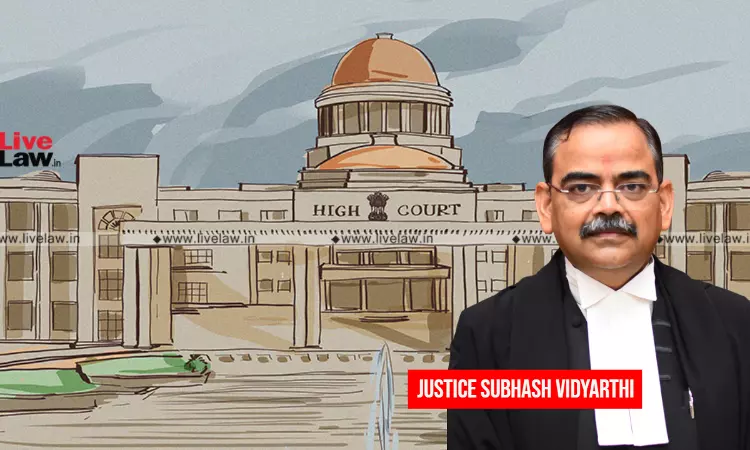
HC said it is repeatedly experiencing casual approach of Advocates in preparing cases and annexing documents
The Allahabad High Court has strongly deprecated what it described as the recurring "casual approach" of advocates in preparing cases and annexing documents.
The observation was made after the Court found that a lawyer, appearing for an Accused, annexed only part of a victim's statement to a criminal revision petition while withholding the remaining portion from the Court.
A bench of Justice Subhash Vidyarthi observed that the incomplete statement was particularly significant because the revisionist's entire case was based on the allegation that the victim had not implicated him in her statement.
The Court said that such a casual manner of providing assistance to courts results in a wastage of precious judicial time and creates hurdles in arriving at a proper decision.
"This court is repeatedly experiencing the casual approach of Advocates in preparing the cases and annexing documents", the Court remarked.
It added that annexing only part of the victim's statement while concealing the rest from the Court adversely affects the dispensation of justice and was "strongly deprecated".


The Court thus dismissed the criminal revision filed by an accused, who had challenged an order summoning him to face trial as an additional accused under Section 319 CrPC.
Case in brief
Briefly put, an FIR was lodged on April 9, 2017, against one named accused (Dhirendra). The complainant alleged that his daughter, who was studying in Class 12, was being molested by Dhirendra.
According to the prosecution's case, on the night of September 7, 2017, Dhirendra went to the rooftop of the house and engaged in obscene activities with the complainant's daughter. When she resisted, he allegedly poured kerosene on her and set her ablaze.
The investigating officer recorded the victim's statement. However, the revision petition annexed only a part of that statement and the remaining portion recorded by the investigating officer had not been placed before the High Court.
The Court specifically noted that the revisionist's case rested on the allegation that the victim had not implicated him in her statement, even though the petition did not contain the complete statement.
The High Court further noted that a copy of the victim's dying declaration had been annexed to the revision petition. In that declaration, the victim had categorically stated that Dhirendra and his brother Virendra (applicant) had committed the offence.
Taking note of the dying declaration, the trial court had summoned the applicant to face trial on the basis of this dying declaration.
Challenging the same, the applicant moved the HC.
High Court's observations
The Court explained that, while deciding an application under Section 319 CrPC for summoning an additional accused, the trial court is required to examine whether the material on record gives rise to a strong suspicion against the person, which, if left unrebutted, could lead to conviction.
It said that the victim's dying declaration, which unequivocally implicated Applicant-Virendra along with his brother Dhirendra, certainly gave rise to such a strong suspicion and made out a case for summoning him to face trial.
Finding no error or illegality in the trial court's order, the High Court dismissed the criminal revision.
In related news, Justice Vidyarthi recently criticized a lawyer for relying on an online article written by another advocate to support his client's case.
"An article written by an advocate does not amount to law and is not binding on any Court of law, more particularly the High Courts," Justice Vidyarthi had observed.