



- Home
- /
- High Courts
- /
- Allahabad High Court
- /
- 1981 Acid Attack On Father |...
1981 Acid Attack On Father | Allahabad High Court 'Anguished' As Trial Judge Ignored Homicide Charge, Awarded Son Mere 3-Yr Term
Sparsh Upadhyay
15 July 2026 10:14 PM IST
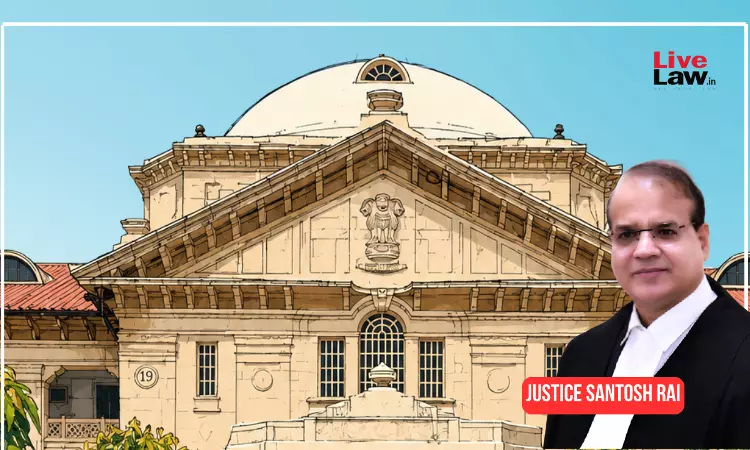
The Allahabad High Court on Wednesday expressed its "deep anguish" over a Gorakhpur trial court's decision to convict a man under Section 326 of the IPC and sentence him to a mere 3 years of imprisonment for causing the homicidal death of his own father by pouring acid upon him. "…Trial Judge, by a manifest misappreciation of the evidence and a complete failure to apply the...
This is a premium content
Available exclusively to
Our subscribers
Subscribe Premium 
INR 1099+GST
Your support helps us to bring you more content at
an affordable subscription scheme !!!
All payment options available
The Allahabad High Court on Wednesday expressed its "deep anguish" over a Gorakhpur trial court's decision to convict a man under Section 326 of the IPC and sentence him to a mere 3 years of imprisonment for causing the homicidal death of his own father by pouring acid upon him.
"…Trial Judge, by a manifest misappreciation of the evidence and a complete failure to apply the settled principles governing the offence of murder/culpable homicide, recorded a conviction only under Section 326 IPC and imposed a sentence of merely three years' rigorous imprisonment”, a bench of Justice Santosh Rai observed.
The High Court remarked that the trial judge gave no legally sustainable reason for discarding the charge of murder or for extending such extraordinary and unwarranted leniency.
However, noting that the State Government never filed an appeal to enhance the sentence, the bench clarified that it could not convert the conviction to a higher provision or enhance the punishment in an appeal preferred solely by the accused.
Therefore, the Court dismissed the 43-year-old criminal appeal filed by the convict (Razzak), and directed him to surrender within two weeks to serve out the remainder of his three-year sentence.
Case in brief
Briefly put, on September 5, 1981, Appellant-Razzak had a quarrel with his father (deceased Gulam Husain) at their home, and he deliberately poured acid on his father's vital parts. Though he tried to flee, he was apprehended by independent witnesses, and he was found to have superficial acid splashes on his own hands.
The father sustained 60% burn injuries involving the face, neck, chest, and upper part of body and around 20 days later, he succumbed to septicaemia at a Hospital.
In his dying declaration, recorded by the Investigating Officer, the deceased had specifically named his son as the attacker.
In 1983, the Sessions Judge in Gorakhpur framed charges under Section 302 IPC (Murder). However, the trial judge ultimately convicted Razzak only under Section 326 IPC (voluntarily causing grievous hurt by dangerous weapons or means) and sentenced him to 3 years of Rigorous Imprisonment without imposing a fine.
Challenging his conviction, the appellant moved the High Court, contending that the death of his father was purely accidental.
It was argued that the appellant himself made every effort to save his father's life and, in the process, sustained burn injuries on his hands while trying to rescue him.
Furthermore, his counsel submitted that, since the appeal has remained pending since 1983 and the appellant is now more than 60 years of age, if convicted, the benefit of probation must be extended to him.
High Court's observations
At the outset, the bench observed that acid is a substance whose corrosive and dangerous nature is a matter of common knowledge.
The bench noted that if someone deliberately uses it on the body of another person, as was done in the present case, it can be presumed that he has the knowledge that his act was likely to cause death or such bodily injury as was likely to cause death.
In view of this, the bench discarded the reasoning adopted by the trial court, which gave findings that the appellant did not possess the requisite knowledge to attract the offence of murder or culpable homicide.
"On the basis of evidence fact & circumstances available on the record in totality, it appears that applicant was required to convict under section 304 of IPC on the ground that he had knowledge that what he is doing at the time of commencement of offence against his father by way of pouring the acid over the vital part of the body of deceased", the bench observed.
The High Court also noted that although Section 326 IPC mandates the imposition of a fine alongside imprisonment, the trial court failed to impose one.
"The omission to impose the statutory sentence of fine, which formed an integral part of the punishment prescribed under Section 326 IPC, further reflects patent non-application of mind to the mandatory provisions of law and the settled principles governing sentencing", the bench remarked.
Though the bench noted that the trial judge has likely demitted office, it issued a stern reminder to current judicial officers:
"Judicial discretion is never synonymous with judicial arbitrariness. Sympathy or misplaced leniency has no place where the statute and the evidence demand a reasoned and lawful adjudication. Such lapses have the potential to erode public confidence in the administration of criminal justice".
The bench added that this judgment shall serve as a reminder that failure to discharge these fundamental judicial obligations may invite serious judicial criticism and, where the officer is in service, appropriate administrative consequences in accordance with law.
The Court also rejected appellant's plea for leniency as it emphasizing that the crime was committed by the appellant against his own father within the sanctity of their shared home, resulting in a prolonged and painful death.
In view of this, finding no merit in the appeal, the Court upheld the conviction and directed the appellant to serve out the remaining sentence.
Case Title - Razzak Versus State of U.P. 2026 LiveLaw (AB) 415
Case citation: 2026 LiveLaw (AB) 415
Tags

Sparsh Upadhyay
Sparsh Upadhyay is an Associate Editor with LiveLaw.

