



- Home
- /
- High Courts
- /
- Allahabad High Court
- /
- Biological Father Can Adopt His Own...
Biological Father Can Adopt His Own Illegitimate Son Under 'Hindu Adoption And Maintenance Act': Allahabad High Court
Sparsh Upadhyay
3 Sept 2026 6:42 PM IST
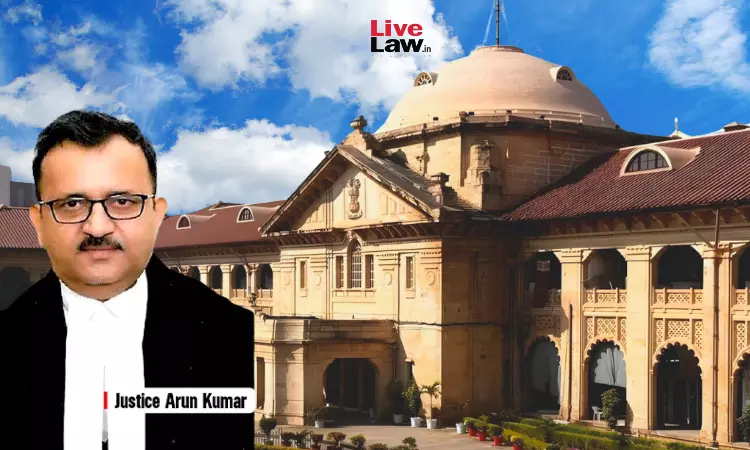
The Allahabad High Court has held that a Hindu male is not prohibited under the Hindu Adoptions and Maintenance Act, 1956, from adopting his own illegitimate son merely because he is the child's biological father.A bench Justice Arun Kumar held so while deciding a second appeal concerning an adoption allegedly made in 1970. The Court upheld the concurrent findings of the courts below that...
This is a premium content
Available exclusively to
Our subscribers
Subscribe Premium 
INR 1099+GST
Your support helps us to bring you more content at
an affordable subscription scheme !!!
All payment options available
The Allahabad High Court has held that a Hindu male is not prohibited under the Hindu Adoptions and Maintenance Act, 1956, from adopting his own illegitimate son merely because he is the child's biological father.
A bench Justice Arun Kumar held so while deciding a second appeal concerning an adoption allegedly made in 1970. The Court upheld the concurrent findings of the courts below that the original plaintiff (Ram Kesh), had been validly adopted by one Badlu, who was also his biological father.
Case in brief
The dispute concerned agricultural plots belonging to Badlu. The plaintiff claimed that although his mother was married to Budh Ram, Badlu was his biological father. According to him, Badlu subsequently adopted him on November 8, 1970.
The plaintiff also challenged sale deeds dated June 18/19, 1973, allegedly executed by Badlu in favour of the defendants. He alleged that the defendants had taken Badlu for medical treatment and fraudulently procured the sale deeds, seeking their cancellation.
The defendants denied the adoption and maintained that the sale deed was genuine and voluntarily executed by Badlu for consideration. Their case was that since the plaintiff was Badlu's biological son, it was legally impossible for Badlu to adopt him.
The trial court, however, found that the plaintiff was Badlu's adopted son and that the sale deed was invalid. The first appellate court affirmed these findings. The matter then reached the High Court in a second appeal.
The primary question before the High Court was whether Badlu, being the plaintiff's biological or putative father, could legally adopt him, particularly when the plaintiff was an illegitimate child.
High Court's observations
Referring to Section 10 of the Hindu Adoptions and Maintenance Act, which prescribes the persons capable of being adopted, the Court noted that the provision does not exclude an illegitimate child merely on the ground of illegitimacy.
The Court observed thus:
"Section 10, which prescribes the persons capable of being adopted, does not exclude an illegitimate child merely on the ground of his illegitimacy…Illegitimacy is conspicuously absent from the statutory disqualifications…The Act contains no express provision which disqualifies a Hindu male from taking in adoption a child who is his biological but illegitimate son".
It clarified that the capacity of a person to give a child in adoption and the capacity of the person taking the child in adoption are distinct matters. The validity of the adoption, therefore, had to be tested with reference to the statutory requirements applicable on the date of adoption.
The Court also addressed the capacity of the plaintiff's mother to give him in adoption. It noted that under the law applicable in 1970, the natural mother of an illegitimate child had the capacity to give the child in adoption to the person who desired to take him in adoption.
The Court found that the evidence accepted by both courts established that the plaintiff's biological mother gave him in adoption to Badlu and that Badlu took him in adoption. The Court therefore held:
"There is thus no occasion to invalidate the adoption merely because Badlu was also the biological father of the plaintiff".
The High Court found that Section 11(vi) of the 1956 Act was particularly significant in the present case. The provision requires the child to actually be given and taken in adoption with the intention of transferring the child from the family of birth to the family of adoption. The Court observed thus:
"The fact that the person who took the plaintiff in adoption was his biological father does not render that ceremony legally meaningless".
According to the Court, what mattered was whether the parties intended to create the legal relationship of adoptive father and adopted son and whether the statutory conditions were otherwise satisfied.
Relying on the Supreme Court's decision in Lakshman Singh Kothari v. Smt. Rup Kanwar, the Court further observed that “giving and taking is the operative part of the adoption” and that there must be a real act of giving and taking evidencing the transfer of the child.
The Court also rejected the argument that the absence of an adoption deed was fatal. The adoption took place in 1970, whereas the special provision introduced by the 1976 amendment to Section 16, requiring a registered document as the only admissible proof of giving and taking for adoptions made on or after January 1, 1977, was prospective and therefore did not apply to the present adoption.
Thus, for the 1970 adoption, the factum of giving and taking could be established through legally admissible evidence, the bench said.
The High Court did find that the District Judge had incorrectly invoked Section 9(4) of the 1956 Act while upholding the adoption.
The Court explained that Section 9(4) concerns the exceptional case of a guardian giving a child in adoption with prior court permission in circumstances such as death, renunciation, abandonment or incapacity of both parents, or where parentage is unknown.
The bench said that there was therefore "no occasion to invoke that provision in the present case merely because the plaintiff was illegitimate".
However, the incorrect reference to Section 9(4) did not make the adoption invalid because the evidence independently established the giving and taking of the child in adoption, the Court noted.
The second issue concerned the registered sale deed executed by Badlu in favour of the appellants (original defendants). The courts below had found that it was not a genuine and voluntary transaction and that the consideration pleaded by the appellants was not satisfactorily established.
The High Court upheld those concurrent findings, holding that the document's registered nature did not render it immune from challenge. The courts were entitled to consider the evidence and surrounding circumstances and hold that the transaction was fraudulent and liable to be cancelled, it said.
Hence, the Court dismissed the second appeal and affirmed the judgments and decrees of the courts below
Case title - Budhi Ram And Others vs. Ram Kesh 2026 LiveLaw (AB) 651
Case Citation: 2026 LiveLaw (AB) 651
Tags

Sparsh Upadhyay
Sparsh Upadhyay is an Associate Editor with LiveLaw.

