



- Home
- /
- High Courts
- /
- Allahabad High Court
- /
- UP Bureaucrats Using Goondas Act As...
UP Bureaucrats Using Goondas Act As 'Tool Of Oppression'; To Face Punitive Damages For Illegal Orders: Allahabad High Court
Sparsh Upadhyay
16 Sept 2026 10:54 AM IST
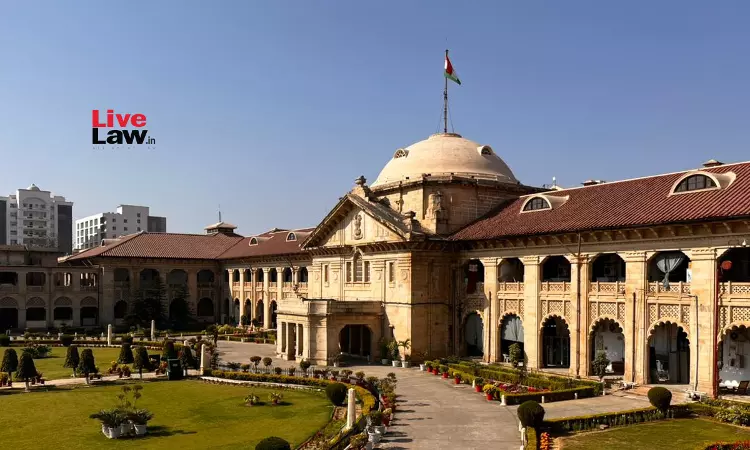
The Allahabad High Court has observed that the UP Goondas Act is being used as a tool of oppression by the Uttar Pradesh bureaucrats and the State despite the Court's consistent rulings on the issue. A bench of Justice Sandeep Jain held that the bureaucracy must stop issuing illegal and arbitrary orders, or else it will have to face punitive damages. "This Court has uptill now refrained...
This is a premium content
Available exclusively to
Our subscribers
Subscribe Premium 
INR 1099+GST
Your support helps us to bring you more content at
an affordable subscription scheme !!!
All payment options available
The Allahabad High Court has observed that the UP Goondas Act is being used as a tool of oppression by the Uttar Pradesh bureaucrats and the State despite the Court's consistent rulings on the issue.
A bench of Justice Sandeep Jain held that the bureaucracy must stop issuing illegal and arbitrary orders, or else it will have to face punitive damages.
"This Court has uptill now refrained from imposing damages on the bureaucrats who are continuously passing whimsical orders in purported exercise of power vested under the Act of 1970, but now time has come when a strong message is required to be sent to the bureaucracy to stop doing this or otherwise face punitive damages for arbitrary and illegal exercise of the power under the Act of 1970", the bench observed.
The single judge made the observations while allowing a writ petition filed by Abhishek Tyagi, who had challenged proceedings initiated against him under the Uttar Pradesh Control of Goondas Act, 1970.
The Court quashed the orders passed by the Additional Commissioner of Police, Ghaziabad and the Commissioner, Meerut Division, and awarded ₹50,000 as damages to the petitioner.
The Court also observed that the State was at liberty to recover the damages from the salaries of the concerned bureaucrats.
Case in brief
The proceedings against Tyagi were initiated on the basis of two criminal cases. The Additional Commissioner of Police, Ghaziabad, by order dated September 18, 2025, directed Tyagi to reside at his permanent address and mark his attendance at the concerned police station on every second and fourth Saturday for six months.
His appeal against the order was subsequently dismissed by the Commissioner, Meerut Division, on December 10, 2025.
Before the High Court, Tyagi argued that, on the basis of only two criminal cases, he could not be branded a “Goonda”.
The State, on the other hand, submitted that the two cases demonstrated that Tyagi was a habitual offender and justified the action under the Act.
High Court's observations
The High Court referred to a series of prior decisions that explain the meaning of 'habitually' under the Goondas Act.
In these cases, it has been held that the expression means 'repeatedly' or 'persistently' and requires a thread of continuity involving similar repetitive acts.
"Repeated, persistent and similar, but not isolated, individual and dissimilar acts" are necessary to justify an inference of habit, these decisions say.
The Court also referred to the Lucknow bench's recent decision in Rahul @ Rahul Saroj vs State of U.P. Thru. Prin. Secy. Home Lko. And 4 Others 2026 LiveLaw (AB) 378, wherein it was held that "one or two acts of the accused will not be sufficient" to hold that the accused is habitually involved in offences under the Act.
Applying these principles, the Court found that Tyagi had been branded a 'Goonda' merely on the basis of two criminal cases. Significantly, there was a 3-year gap between the occurrences in the two cases, which, according to the Court, showed that he was not a habitual offender.
The Court therefore held that the proceedings under the 1970 Act could not be sustained and quashed the orders dated September 18 and December 10, 2025.
In strong observations before concluding the judgment, the Court said that despite its "consistent stand" that merely on the basis of one or two cases a person cannot be branded a 'Goonda', the bureaucracy had "deliberately not noticed this" and was continuing to pass contrary orders.
The Court observed thus:
"It is apparent that the Act of 1970 is being used as a tool of oppression by the bureaucracy and the State, which is contrary to the objects of the Act of 1970".
The Court further said that the time has now come for a strong message to be sent to the bureaucracy to stop such conduct or face punitive damages.
Accordingly, the Court awarded ₹50,000 in damages to Tyagi for the suffering and agony caused by declaring him a 'Goonda'. The State was granted liberty to recover the amount from the salaries of the concerned bureaucrats. The damages were directed to be paid within one month.
On September 10, the Allahabad High Court strongly criticized the Uttar Pradesh government's use of the Goondas Act, observing that numerous cases before the Court indicate that the State is "persistent in its approach of using the Goonda Act as a tool of oppression".
Case Title - Abhishek Tyagi vs. Uttar Pradesh Rajya Dwara Grah Sachiv And 3 Others 2026 LiveLaw (AB) 707
Citation: 2026 LiveLaw (AB) 707
Tags

Sparsh Upadhyay
Sparsh Upadhyay is an Associate Editor with LiveLaw.

