



- Home
- /
- High Courts
- /
- Allahabad High Court
- /
- Complainant Can Move Plea U/S 311...
Complainant Can Move Plea U/S 311 CrPC To Summon Witnesses; Public Prosecutor's Application Not A Precondition: Allahabad HC
Sparsh Upadhyay
15 April 2026 2:49 PM IST
The Allahabad High Court recently observed that, in a state case, a court can exercise its power under Section 311 CrPC to summon witnesses or exhibit documents, even on an application filed by the complainant.The Court also clarified that filing of an application by the Public Prosecutor is not a 'precondition' for exercise of powers under this provision [now Section 348 BNSS] A bench...
This is a premium content
Available exclusively to
Our subscribers
Subscribe Premium 
INR 1099+GST
Your support helps us to bring you more content at
an affordable subscription scheme !!!
All payment options available
The Allahabad High Court recently observed that, in a state case, a court can exercise its power under Section 311 CrPC to summon witnesses or exhibit documents, even on an application filed by the complainant.
The Court also clarified that filing of an application by the Public Prosecutor is not a 'precondition' for exercise of powers under this provision [now Section 348 BNSS]
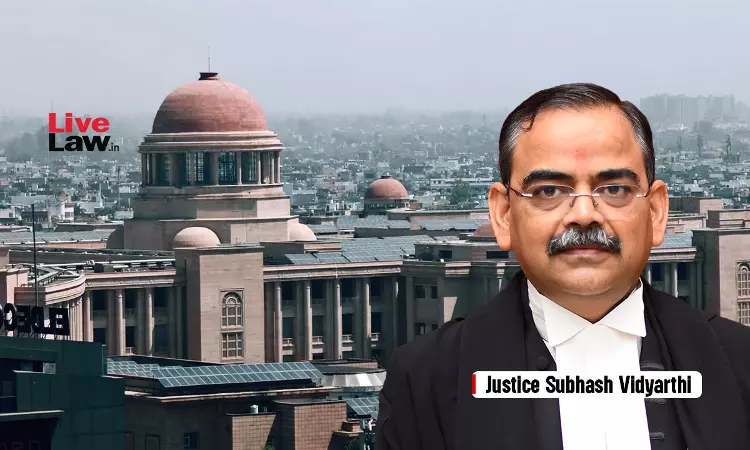
A bench of Justice Subhash Vidyarthi made this observation while dismissing a petition filed by an accused challenging a trial court's order.
Essentially, the Court of the Additional Sessions Judge in Lucknow had allowed the complainant's application to mark the left-out documents inadvertently as exhibits and to examine additional witnesses in connection with a murder trial.
This application was moved by the complainant after the closure of prosecution evidence and the recording of the accused's statement. The complainant sought to exhibit Google Search History, WhatsApp chats and media statements already available on record.
Furthermore, the complainant also sought the examination of the accused's sister and a neighbour to explain the mental condition of the accused at the time of the incident, as she claimed that the accused felt troubled by having a daughter and desired a son.
The accused, on the other hand, objected to this application, stating that the documents have not been proved and, therefore, they are not admissible in evidence.
It was also contended that the complainant couldn't file an application under Section 311 CrPC in a State case and that the plea should be dismissed as not maintainable.
The trial court had allowed the complainant's application, noting that at the stage of deciding Section 311 CrPC plea, the Court is not required to adjudicate upon the reliability, genuineness or the probative value of the materials sought to be exhibited, and these aspects are to be considered at the stage of appreciation of evidence.
The trial court had also noted that, as per the Supreme Court's judgement in P. Chhagan Lal v. M. Sanjay Saw 2003, this power can be exercised at any stage, even after the closure of evidence of both sides, provided the evidence appears to be essential for rendering justice.
Upholding the trial court's reasoning, the High Court noted that the complainant prayed the trial court to invoke its power and the court accepted the request based on sound reasons.
"Inherent powers of this Court acknowledged by Section 482 Cr.P.C. are meant to be exercised to prevent the abuse of the process of any Court or to secure the ends of justice. The filing and allowing of the application under Section 311 Cr.P.C. cannot be said to be an abuse of the process of law and there is no error or illegality in the impugned order which may be causing injustice to the petitioner."
HC also referred to the Supreme Court's judgment in Dhariwal Industries Ltd. v. Kishore Wadhwani, wherein it was held that a trial court has the power to grant permission to a complainant to conduct the prosecution independently.
"The Court can exercise power under Section 311 Cr.P.C. if it has reasons to believe that the circumstances for exercise of powers exist. It cannot be said that the reasons cannot be brought to the notice of the Court by the complainant", the High Court further remarked.
It also added that Section 311 doesn't say that the Court can only exercise these powers suo moto or that an application by the Public Prosecutor is a precondition for the exercise of powers under this provision.
In view of this, the Court rejected the accused-applicant's submission that the complainant had no locus standi to file the application. The Court thus held that the application filed by the complainant could not be dismissed as not maintainable.
Consequently, the Court dismissed the petition.
Case title - Shubhra Tiwari vs. State Of U.P. Thru. Addl. Chief Secy. Home Lko. And Another 2026 LiveLaw (AB) 216
Case Citation: 2026 LiveLaw (AB) 216
Tags

Sparsh Upadhyay
Sparsh Upadhyay is an Associate Editor with LiveLaw.

