



- Home
- /
- High Courts
- /
- Allahabad High Court
- /
- Confessions Can Guide Police...
Confessions Can Guide Police Investigations Even If They Can't Be Part Of Charge Sheet: Allahabad High Court
Sparsh Upadhyay
27 March 2026 8:06 PM IST
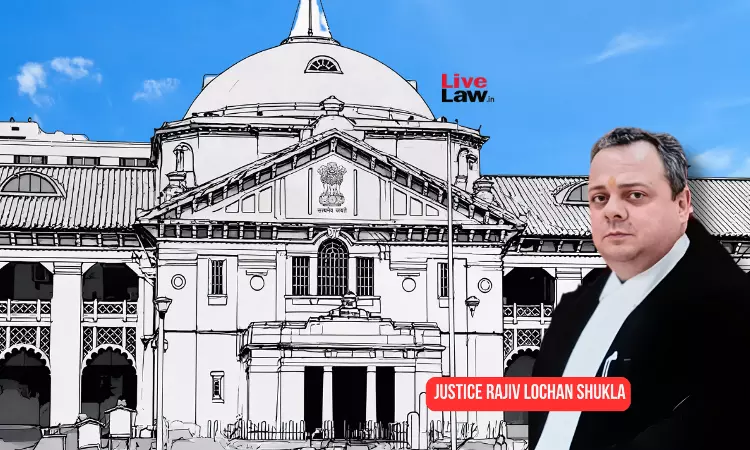
The Allahabad High Court has clarified that, as per the Supreme Court's ruling in Sanju Bansal v. State of Uttar Pradesh, even though police-recorded confessional statements can't be part of the charge-sheets, it does not prevent the police from relying on such statements to proceed in an ongoing investigation.A bench of Justice Rajiv Lochan Shukla observed so while rejecting the...
This is a premium content
Available exclusively to
Our subscribers
Subscribe Premium 
INR 1099+GST
Your support helps us to bring you more content at
an affordable subscription scheme !!!
All payment options available
The Allahabad High Court has clarified that, as per the Supreme Court's ruling in Sanju Bansal v. State of Uttar Pradesh, even though police-recorded confessional statements can't be part of the charge-sheets, it does not prevent the police from relying on such statements to proceed in an ongoing investigation.
A bench of Justice Rajiv Lochan Shukla observed so while rejecting the anticipatory bail application of one Kishan Yadav. The applicant is accused of committing the murder of a 20-year-old youth with diminished mental capacity in Gorakhpur.
It was the case of the applicant that he was falsely implicated in the present case solely based on the confessional statement given by the coaccused. It was also submitted that the applicant was not seen in the CCTV footage collected during the investigation.
Importantly, the counsel for the applicant relied heavily on the Supreme Court's recent order in the case of Sanju Bansal, wherein it was observed that confessional statements recorded by the Police Officers cannot remain part of the chargesheet and must be ignored.
On the other hand, the AGA for the state submitted that the investigation is still in progress. It was also apprised to the bench that in the confessional statement of the co-accused, it was found that it was the applicant who had also assaulted the deceased and the applicant had directed the other co-accused to confine the deceased.
At the outset, the bench observed that the Supreme Court's remarks in the Sanju Bansal case were strictly limited to the inclusion of confessional statements as a part of the formal charge-sheet.
Justice Shukla clarified that these observations do not mean that the police are barred from taking note of confessional statements recorded during the investigation phase.
"Confessional statement though inadmissible in evidence, recoveries or discovery of a new fact under Section 23 of the B.S.A., on the basis of such confessional statement and the part of the confessional statement, which leads to the discovery of a new fact is admissible in evidence", the bench noted.
Furthermore, taking into account the record of the case, the bench noted that the confessional statement of the co-accused clearly points out the complicity of the applicant and also the fact that the applicant had slapped the deceased.
It also stated that CCTV footage allegedly showing the co-accused transporting the deceased on a motorcycle to allay suspicion is yet to be examined in detail.
Thus, taking into account the fact that it was an unprovoked act against a youth with diminished mental capacity, the Court denied the anticipatory bail to the applicant.
Case title - Kishan Yadav vs. State of U.P. and Another 2026 LiveLaw (AB) 144
Case citation : 2026 LiveLaw (AB) 144
Tags

Sparsh Upadhyay
Sparsh Upadhyay is an Associate Editor with LiveLaw.

