



- Home
- /
- High Courts
- /
- Allahabad High Court
- /
- Denial Of Maintenance Forcing Wife...
Denial Of Maintenance Forcing Wife Into Destitution Violates Her Right To Live With Dignity Under Article 21: Allahabad High Court
Sparsh Upadhyay
11 Aug 2026 8:51 AM IST
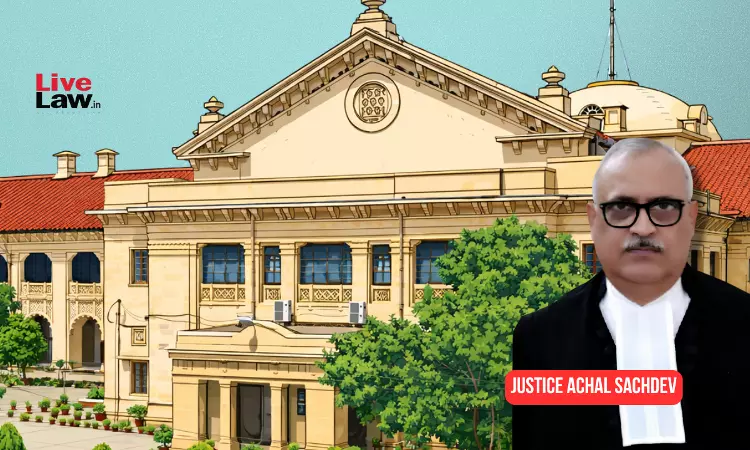
The Allahabad High Court last week observed that denial of maintenance, forcing the wife into destitution, violates the constitutional guarantee under Article 21, which includes the right to live with dignity.The Court added that the maintenance ensures that the wife is not compelled to lead a life of destitution for such deprivation would offend the dignity guaranteed under Article 21. A...
This is a premium content
Available exclusively to
Our subscribers
Subscribe Premium 
INR 1099+GST
Your support helps us to bring you more content at
an affordable subscription scheme !!!
All payment options available
The Allahabad High Court last week observed that denial of maintenance, forcing the wife into destitution, violates the constitutional guarantee under Article 21, which includes the right to live with dignity.
The Court added that the maintenance ensures that the wife is not compelled to lead a life of destitution for such deprivation would offend the dignity guaranteed under Article 21.
A bench of Justice Achal Sachdev made these observations while dismissing a criminal revision petition filed by the Husband challenging an order of the Family Court, Gautam Buddh Nagar, directing him to pay ₹20,000 per month as maintenance to his wife under Section 125 CrPC.
Briefly put, the couple had married according to Hindu customs in July 2017. The wife alleged that she was subjected to harassment and cruelty over demands for additional dowry, including a Swift car and a 100-square-yard plot.
She alleged that she was assaulted and confined by her husband and his family on March 30, 2018, following which she informed the police. Since April 2, 2018, she had been residing at her parental home and claimed to be dependent on her aged and financially weak father.
The wife further alleged that her husband was a software engineer earning approximately ₹70,000 per month and that he and his family possessed various properties and businesses and they generate around Rs.2,00,000/- per month.
She also claimed that she had no independent source of income and therefore, sought ₹30,000 per month as maintenance.
The High Court noted that the Family Court had found that the wife had sufficient reason to live separately, was unable to support herself, and that the husband was not maintaining her according to his status. The High Court found no error in these findings.
The High Court emphasized that the husband's responsibility to maintain his wife and minor child extends beyond a purely statutory obligation. It observed thus:
"It is the moral duty and social responsibility of husband to maintain his wife and minor child".
It further stated that the husband's duty is "not only a matter of legal obligation, but also social and moral responsibility", particularly where the wife has no independent source of income.
The Court explained that the husband's support sustains the family unit and ensures that the wife and children are not marginalised or forced into poverty. It observed thus:
"The right to maintenance is not a matter of charity, but a statutory right flowing from marital point and parental duty…Maintenance is not a bounty, but a right and its denial would compel the wife to lead a life of destitution which the law cannot countenance".
The Court then examined the constitutional basis underlying the maintenance provisions.
It referred to Articles 39(a) and 39(f) of the Constitution which deals with adequate means of livelihood and opportunities for children to develop in a healthy manner. The bench said that the maintenance provisions under Section 125 CrPC and Section 144 BNSS operationalise these directives.
The Bench also observed that Article 21 embodies the right to life and personal liberty, which includes the right to live with dignity. It added that denial of maintenance, forcing the wife into destitution, is a violation of this constitutional guarantee.
The Court further observed that the constitutional ethos embodied in Articles 15(3), 21 and 39 requires the husband's obligation to maintain his wife and minor child to be understood “not merely as a statutory duty but as a facet of social justice.”
The Court also noted that Articles 39 and 41 reinforce the purpose of maintenance provisions and place the husband's responsibility within the “constitutional conscience of the nation”.
The bench also referred to Supreme Court's 2014 ruling in the case of Bhuvan Mohan Singh Vs. Meena, wherein it was observed that maintenance is a means of social justice and meant to prevent vagrancy and destitution
It also referred to Supreme Court's 2007 decision in Chaturbhuj Vs. Sitabai to stress the proposition that the object of maintenance is to ensure that a wife is not left in penury and that the husband's responsibility flows from the very status of marriage.
The Court further noted that maintenance is a right intended to prevent penury and "is not conditional upon proof of neglect".
Against this backdrop, the High Court found that the Family Court had rightly considered the wife's lack of independent income and the husband's sufficient means to maintain her.
It held that the Family Court's order was very well reasoned and justified and found no ground for interference. The criminal revision was accordingly dismissed and the Family Court's order awarding maintenance was upheld.
Case title - Devansh Alias Chhotu vs State of U.P. and Another 2026 LiveLaw (AB) 560
Case Citation: 2026 LiveLaw (AB) 560
Tags

Sparsh Upadhyay
Sparsh Upadhyay is an Associate Editor with LiveLaw.

