



- Home
- /
- High Courts
- /
- Allahabad High Court
- /
- Allahabad High Court Seeks Judge's...
Allahabad High Court Seeks Judge's Explanation For Denying Bail To One Accused But Granting Relief To Identically Placed Co-Accused
Sparsh Upadhyay
27 Jun 2026 6:53 PM IST
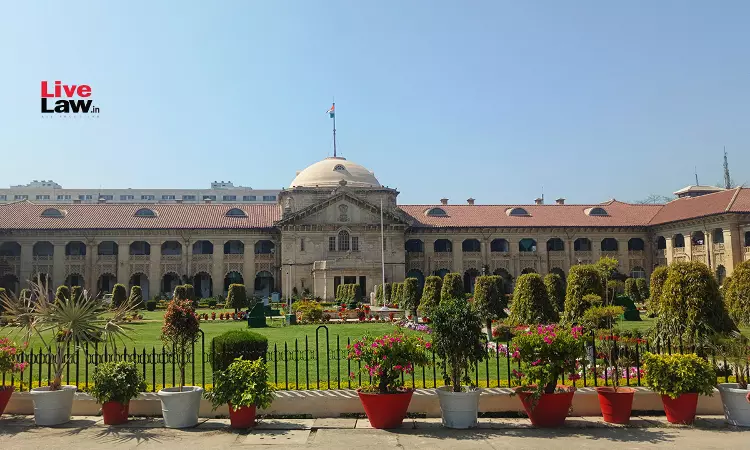
Judicial consistency and uniform application of legal principles are matters of institutional importance, Allahabad HC remarked.
The Allahabad High Court has called for an explanation from an Additional Sessions Judge in Ghaziabad regarding an apparent disparity in the handling of bail applications for 2 identically situated co-accused in the same criminal matter. A bench of Justice Vivek Kumar Singh sought an explanation, stressing that judicial consistency and the uniform application of legal principles are...
This is a premium content
Available exclusively to
Our subscribers
Subscribe Premium 
INR 1099+GST
Your support helps us to bring you more content at
an affordable subscription scheme !!!
All payment options available
The Allahabad High Court has called for an explanation from an Additional Sessions Judge in Ghaziabad regarding an apparent disparity in the handling of bail applications for 2 identically situated co-accused in the same criminal matter.
A bench of Justice Vivek Kumar Singh sought an explanation, stressing that judicial consistency and the uniform application of legal principles are matters of institutional importance.
For context, the Judicial Officer had refused bail to one accused despite the injuries (allegedly inflicted by him) being of a simple nature, but subsequently enlarged a similarly situated co-accused on bail, even though both were assigned substantially similar roles in the alleged offence.
The High Court was essentially hearing the bail application filed by one Mohammad Rafiq, alias Rafiqul Islam. Rafiq was booked under Sections 109(1), 352, 351(2), 115(2), 191(2), and 3(5) of the Bharatiya Nyaya Sanhita (BNS).
According to the prosecution, the applicant had caused a knife injury to the injured Noshad. However, his counsel submitted that the applicant was entirely innocent and had been falsely implicated in the case.
His counsel referred to the injuries sustained by Noshad, as reflected in the medical report. It was pointed out that while the victim sustained as many as 10 injuries on his body, only 1 injury was apparently inflicted by a knife, and the same was attributed to the applicant.
It was argued that the injuries were simple in nature and not dangerous to life.
Importantly, it was further pointed out that an identically situated co-accused (Anshu), who had also been accused of causing knife injury (to another injured person), had already been enlarged on bail by the court concerned vide an order dated June 9, 2026.
Thus, it was submitted that, since the applicant's case is identical to that of the co-accused and he has no criminal history, he may also be released on bail.
The State, however, strongly opposed the bail prayer, contending that there was ample evidence on record of the applicant's direct involvement in the offence.
Considering these submissions, the bench, at the outset, noted that the injury sustained by the injured was simple in nature and that the applicant is stated to have caused a single blow to the back of the shoulder of the injured.
The bench further considered that the coaccused, having an identical role of causing injury to another person, had already been granted bail by the learned court concerned.
Thus, without expressing any opinion on the merits of the case, the High Court granted bail to the applicant.
On the issue of disparity in bail orders, the bench noted that the Additional Sessions Judge, Court No. 7, Ghaziabad, in his order denying bail to the applicant, took note of the injuries and the prosecution's claim that the applicant attacked the informant with a knife with the "intention to kill", and concluded that the prosecution had assigned a "primary role" to the applicant.
On those grounds, the judge ruled that there was no sufficient basis to release Rafiq.
However, less than a month later, on June 9, 2026, the same Judge granted bail to co-accused (Anshu) despite noting the victim's statement that Anshu (co-accused) and Rafiq (accused-applicant) came armed with knives and launched an immediate attack with the intention to kill.
In doing so, the Judicial Officer simply observed that "without commenting on the facts, circumstances, and merits of the case, there is sufficient ground to release the accused on bail".
In view of this disparity in the bail orders, the High Court called for an explanation from the Judicial Officer concerned in the following terms:
"Therefore, Additional Sessions Judge, Court No. 7, Ghaziabad, is directed to furnish a detailed explanation, through Registrar General of this Court, within seven days from the receipt of this communication, indicating the distinguishing facts, circumstances, or legal consideration which weighed with the court in denying bail to the applicant-accused herein while granting bail to the similarly placed co-accused Anshu".
The Bench added that the explanation may specifically indicate the material factors that, in the court's considered opinion, justified the differential treatment in the orders passed.
Justice Singh, however, clarified that this order was being issued for administrative purposes and, right now, shall not be construed as expressing any opinion on the merits of the judicial orders concerned.
Case title - Mohammad Rafiq @ Rafiqul Islam vs State of U.P.

Sparsh Upadhyay
Sparsh Upadhyay is an Associate Editor with LiveLaw.

