



- Home
- /
- High Courts
- /
- Allahabad High Court
- /
- Juvenile Conviction No Bar To...
Juvenile Conviction No Bar To Issuance Of Passport: Allahabad High Court Invokes 'Right To Be Forgotten' & 'Fresh Start'
Sparsh Upadhyay
29 May 2026 4:36 PM IST
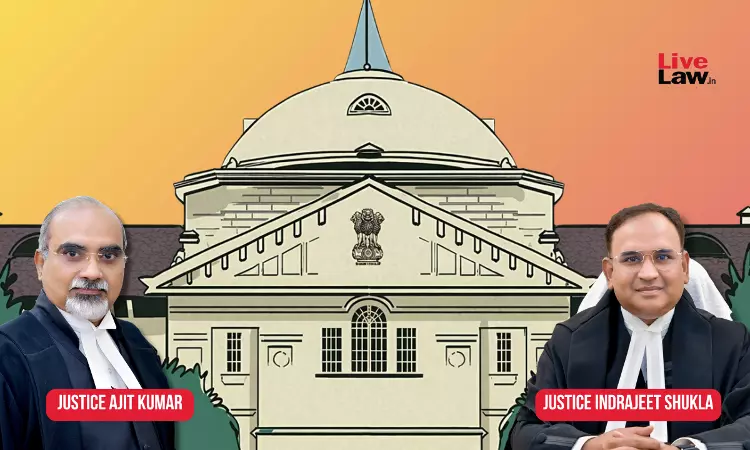
The Allahabad High Court recently observed that a conviction recorded against a person while he was a juvenile cannot be treated as a legal impediment to the issuance of a passport, by operation of law under Section 19 of the Juvenile Justice Act, 2000. A Bench of Justice Ajit Kumar and Justice Indrajeet Shukla stressed that the 'right to be forgotten' pertaining to a juvenile by removing...
This is a premium content
Available exclusively to
Our subscribers
Subscribe Premium 
INR 1099+GST
Your support helps us to bring you more content at
an affordable subscription scheme !!!
All payment options available
The Allahabad High Court recently observed that a conviction recorded against a person while he was a juvenile cannot be treated as a legal impediment to the issuance of a passport, by operation of law under Section 19 of the Juvenile Justice Act, 2000.
A Bench of Justice Ajit Kumar and Justice Indrajeet Shukla stressed that the 'right to be forgotten' pertaining to a juvenile by removing or destroying the record of juvenile delinquency, is an absolute right which allows them a 'fresh start'.
With these observations, the bench quashed a March 2021 order passed by the Regional Passport Officer, Lucknow, who denied the petitioner (Mohd Yunus Ansari) a passport on the grounds of an adverse police report citing a pending criminal case.
Briefly put, the petitioner applied for a passport on January 29, 2020. The application was ultimately rejected on March 19, 2021, by the passport authorities on the grounds that the petitioner had failed to respond to a notice regarding the final outcome of criminal cases pending against him.
The authorities noted that the petitioner had faced a criminal trial and was convicted in a Rape and Kidnapping case pertaining to the year 2010, when he was merely 16 years and 10 months old.
Challenging the impugned order, the petitioner moved the High Court in 2021.
The bench was apprised that he was tried as a juvenile in conflict with the law by the Juvenile Justice Board, Gorakhpur and was convicted in August 2013. However, the Board had placed the petitioner on a 6-month probation on the condition that he will maintain good conduct.
It was further submitted that the petitioner had completed this probation without any adverse reports and was issued a Character Certificate by the District Probation Officer on March 20, 2014.
His counsel argued that the conviction by the Juvenile Justice Board could not have formed the foundation for the refusal of a passport, as the conviction recorded against a juvenile cannot be read as a stigmatising one against the petitioner.
Lastly, it was contended that the refusal order was not only a cryptic one but also factually incorrect, as it referred to a pending criminal case, when in reality, no such proceedings were pending.
The Counsel for the UOI, on the other hand, submitted that the petitioner is a previous convict; as such, the application for issuance of a passport had rightly been turned down.
Taking note of these submissions, the Court observed that the rejection appeared to be the result of "sheer annoyance" at the contempt proceedings the petitioner had previously initiated against the authorities for their delayed response.
The Court went on to state that recording the pendency of a criminal case, when none existed, showed a completely non-serious attitude on the part of the authorities and was a "monument of non-application of mind".
In its 18-page order, the bench extensively analysed Section 19 of the 2000 Act, noting that this provision begins with a non-obstante clause, explicitly stating that a juvenile dealt with under the Act shall not suffer any disqualification attaching to a conviction.
Therefore, the Bench observed, even if a juvenile is convicted, the conviction cannot act to their detriment in any manner.
The Court also referred to the principle of "fresh start" as enshrined in Section 3(xiv) of the subsequent Juvenile Justice Act of 2015, which provides that all past records of a child under the juvenile justice system should be erased.
"The thrust of the legislation i.e. Act, 2000 as well as the Act, 2015 is that even if a juvenile is convicted, the same should be obliterated, so that there is no stigma with regard to any crime committed by such person as a juvenile. This is with the clear object to re-intigrate such juvenile into the society as a normal person without any stigma", the Bench observed.
The bench also referred to the principle of "Right to be forgotten" for juveniles, as it noted that if any criminal antecedent record of a juvenile is allowed to remain intact, the same may not only bring humiliation and discredit to the juvenile, but may also adversely impact the future prospects of the juvenile, amongst other things.
“This Court does not wish to enter into the realm of broader 'right to be forgotten', but, at present, is specifically considering the 'right to be forgotten' for a juvenile in the perspective of Section 24 of the Act of 2015 to be an absolute right for safeguarding future prospects of such juvenile,” the Court remarked.
Furthermore, the High Court strongly underscored that the right to travel abroad is an intrinsic part of personal liberty guaranteed under Article 21 of the Constitution of India.
The Court added that any restriction on the petitioner's right to hold a passport or travel abroad must satisfy the mandate of Article 21 of the Constitution of India, namely, fairness, reasonableness and proportionality.
Denying a passport based on an erased juvenile record fails this constitutional threshold, the court stressed.
Against this backdrop, the Court found that the petitioner is entitled to the protection of law mandated under Section 19 of Act of 2000.
The bench added that the respondents are further bound to give full effect to the principle of 'fresh start' embodied in the juvenile statute, so that past juvenile delinquency does not impair the petitioner's future prospects and rehabilitation/reintegration.
Hence, it directed the respondent-Regional Passport Officer to process the petitioner's application for issuance of a passport afresh, notwithstanding his conviction as recorded by the Juvenile Justice Board, Gorakhpur, and to issue him the requisite passport if there is no other legal impediment/hurdle.
The writ plea was thus allowed.
Case title - Mohd Yunus Ansari vs. Union of India and Another 2026 LiveLaw (AB) 299
Case Citation: 2026 LiveLaw (AB) 299
Tags

Sparsh Upadhyay
Sparsh Upadhyay is an Associate Editor with LiveLaw.

