



- Home
- /
- High Courts
- /
- Allahabad High Court
- /
- No Limitation Period For Filing...
No Limitation Period For Filing Writ Petition U/Article 226, But Inordinate Delay Can Be Fatal: Allahabad High Court
Sparsh Upadhyay
30 July 2026 1:49 PM IST
The Allahabad High Court on Tuesday reiterated that although no limitation period is prescribed for filing a writ petition under Article 226 of the Constitution, an inordinate delay in approaching the Court can be fatal. Observing that the extraordinary writ jurisdiction must be invoked within a reasonable time, the Court dismissed a petition challenging a 2023 order passed by...
This is a premium content
Available exclusively to
Our subscribers
Subscribe Premium 
INR 1099+GST
Your support helps us to bring you more content at
an affordable subscription scheme !!!
All payment options available
The Allahabad High Court on Tuesday reiterated that although no limitation period is prescribed for filing a writ petition under Article 226 of the Constitution, an inordinate delay in approaching the Court can be fatal.
Observing that the extraordinary writ jurisdiction must be invoked within a reasonable time, the Court dismissed a petition challenging a 2023 order passed by the Uttar Pradesh State Information Commission after finding that the petitioner had offered no explanation for the delay.
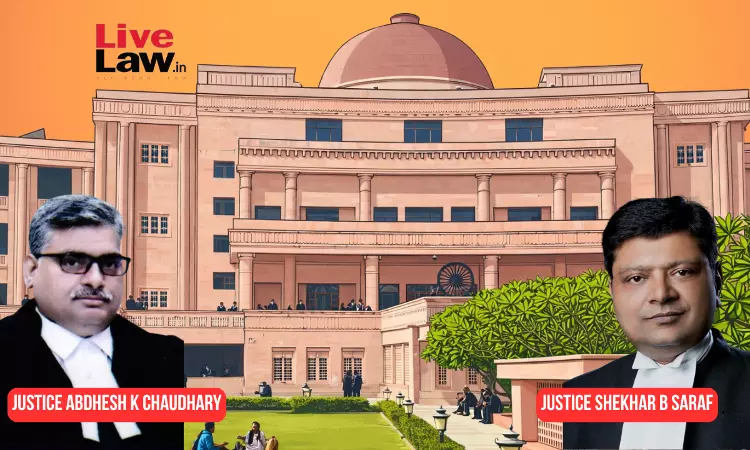
"Although there is no doubt that no limitation has been prescribed in law for filing a Writ Petition under Article 226 of our constitution. However, when the extraordinary jurisdiction of a writ is invoked, this court is called upon to satisfy itself as to whether within a reasonable time the jurisdiction has been invoked or not", a Bench of Justice Shekhar B Saraf and Justice Abdhesh Kumar Chaudhary observed.
The Bench added that if it is found that the writ petitioner is guilty of delay and laches, the petition can very well be dismissed on that ground alone.
The division bench also clarified that while there can be no waiver of a fundamental right, a High Court exercising its discretionary jurisdiction under Article 226 is nevertheless required to consider whether there has been delay and laches on the part of the applicant in approaching the writ court.
Relying upon the Supreme Court's decisions in Tridip Kumar Dingal vs State of West Bengal 2009 and Karnataka Power Corporation Ltd v K Thangappan 2006, the High Court observed that the power to issue writs under Article 226 is discretionary.
The Bench noted that the Supreme Court has consistently held that unexplained delay and laches constitute valid grounds for declining relief under Article 226, even in the absence of a statutory limitation period for filing a writ petition.
Applying these principles to the facts of the case, the Bench noted that the petitioner had approached the Court nearly 3 years after the impugned order.
While observing that a writ court is required to weigh the explanation offered for such delay keeping in mind that it exercises an extraordinary and equitable jurisdiction, the Court found that no explanation whatsoever had been furnished by the petitioner.
"We are clear in our mind that there had been an inordinate delay of close to three years in approaching this Court. The doctrine of delay and laches squarely applies to the facts of the present case and the same cannot be lightly brushed aside", the Court remarked.
The Court further observed that there was no attempt to explain the delay.
It underscored that although constitutional courts have a duty to protect citizens' rights, they must also remain alive to the principle that where an aggrieved person approaches the Court at his own leisure without any adequate reason, the Court is legally obliged to scrutinise whether such a belated challenge deserves to be entertained.
In view of these observations, the Writ Petition was dismissed as not maintainable on the ground of laches.
Counsel for Petitioner(s): Anil Kumar Tiwari, Ujjawal Tewari
Counsel for Respondent(s): Shikhar Anand
Case title - Hari Narayan Tiwari vs State Information Commission U.P. Thru. Chairman And 2 Others 2026 LiveLaw (AB) 496
Case citation: 2026 LiveLaw (AB) 496
Tags

Sparsh Upadhyay
Sparsh Upadhyay is an Associate Editor with LiveLaw.

